Lovable CTO:SaaS 的未来是 Agent 可调用的应用
英文标题:Lovable CTO: The Future of SaaS Is Apps That Agents Can Use
Lovable 正从 AI 驱动的网页应用构建平台,扩展为可将应用功能封装成 Agent 可调用「能力」的平台,并通过托管 MCP 服务器向 ChatGPT、Claude 等客户端开放。公司认为,未来企业用户将通过一个具备上下文的「公司大脑」统一访问工具与工作流,而非在大量 SaaS 标签页之间切换。Lovable 称其年化营收运行率已超过 5 亿美元,累计创建项目超过 6000 万个,Menlo Ventures 领投其 4 亿美元 C 轮融资后,公司估值达到 133 亿美元。对开发者和 SaaS 厂商而言,关键将不只是构建人类使用的界面,还要构建可靠、安全、可被 AI Agent 直接调用的垂直能力。
 1.5 KB
 13.3 KB
 1.3 KB
 61.6 KB
 201.5 KB
 42.1 KB
 109.5 KB
 406.2 KB
 46.7 KB
 128.6 KB
中文
Lovable 是一个广为人知的 AI 驱动应用构建平台。但颇具讽刺意味的是,它如今正迈向一个未来:使用传统应用的人会越来越少。当然,这源于 Agent 日益扩大的影响。
在近期的一篇博客文章中,Lovable 描绘了一个愿景:「连接团队日常工具的数字大脑。」
或者,正如 Lovable CTO Fabian Hedin 在接受 Latent Space 采访时所说:「你可以达到这样一种状态:通过一个入口完成你正在做的所有工作。」
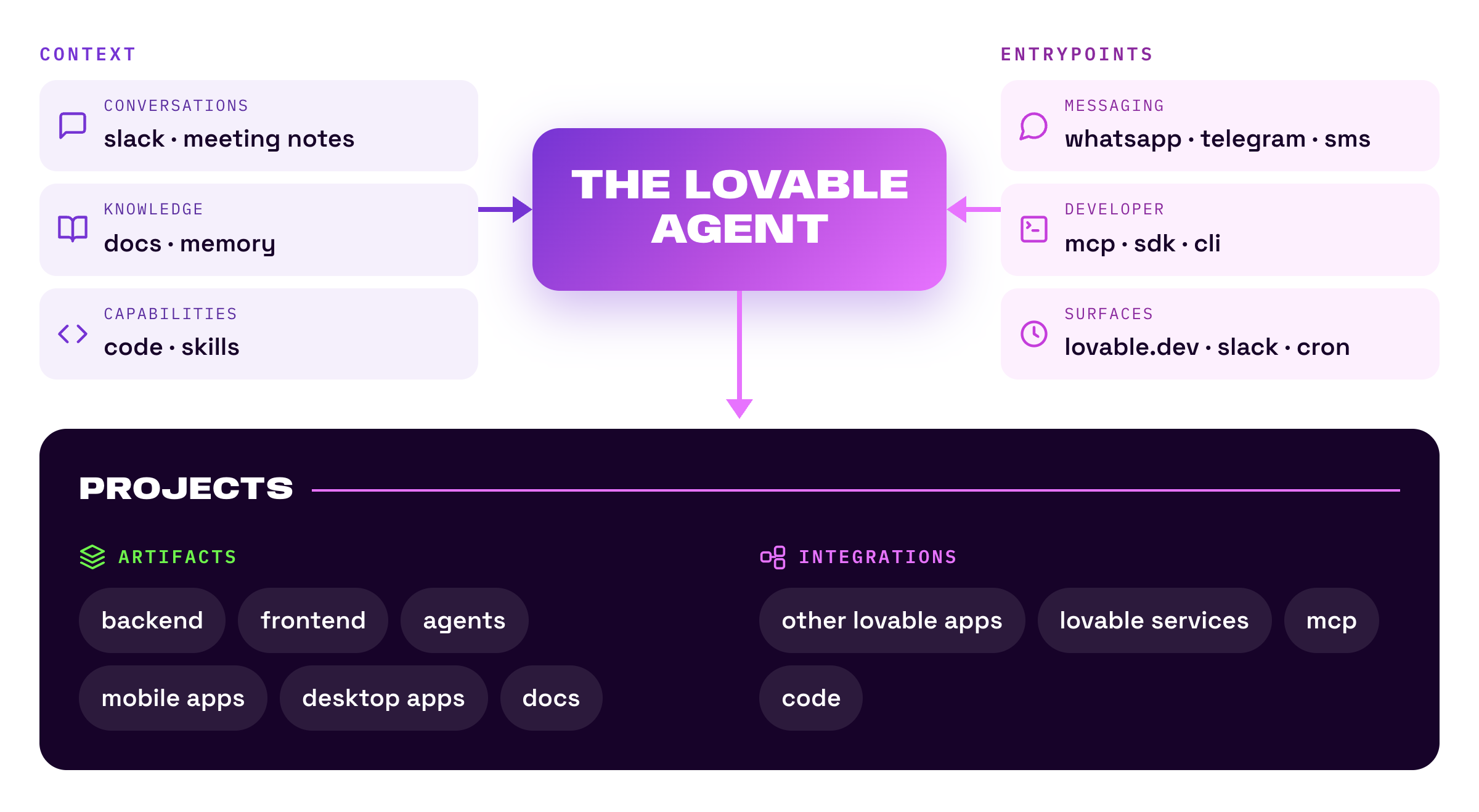
Latent Space 根据 Lovable 向我们展示的一张内部图表制作的示意图。
需要明确的是,Lovable 仍希望成为你用来构建应用的工具——但它将越来越多地支持你构建 Hedin 所称的**「能力」(capabilities)**。Lovable 对能力的定义是:应用中可由 Agent 直接调用的有用部分;这绕过了人类用户必须打开应用的需求。
Lovable 可以通过经由托管 MCP 服务器,将应用中选定的功能作为工具暴露出来,把已发布的应用转化为 Agent 可访问的能力。其结果本质上是一个应用拥有两套界面:传统的人类 UI,以及可从 ChatGPT、Claude 和其他兼容 MCP 的 AI 客户端使用的新 Agent 界面。
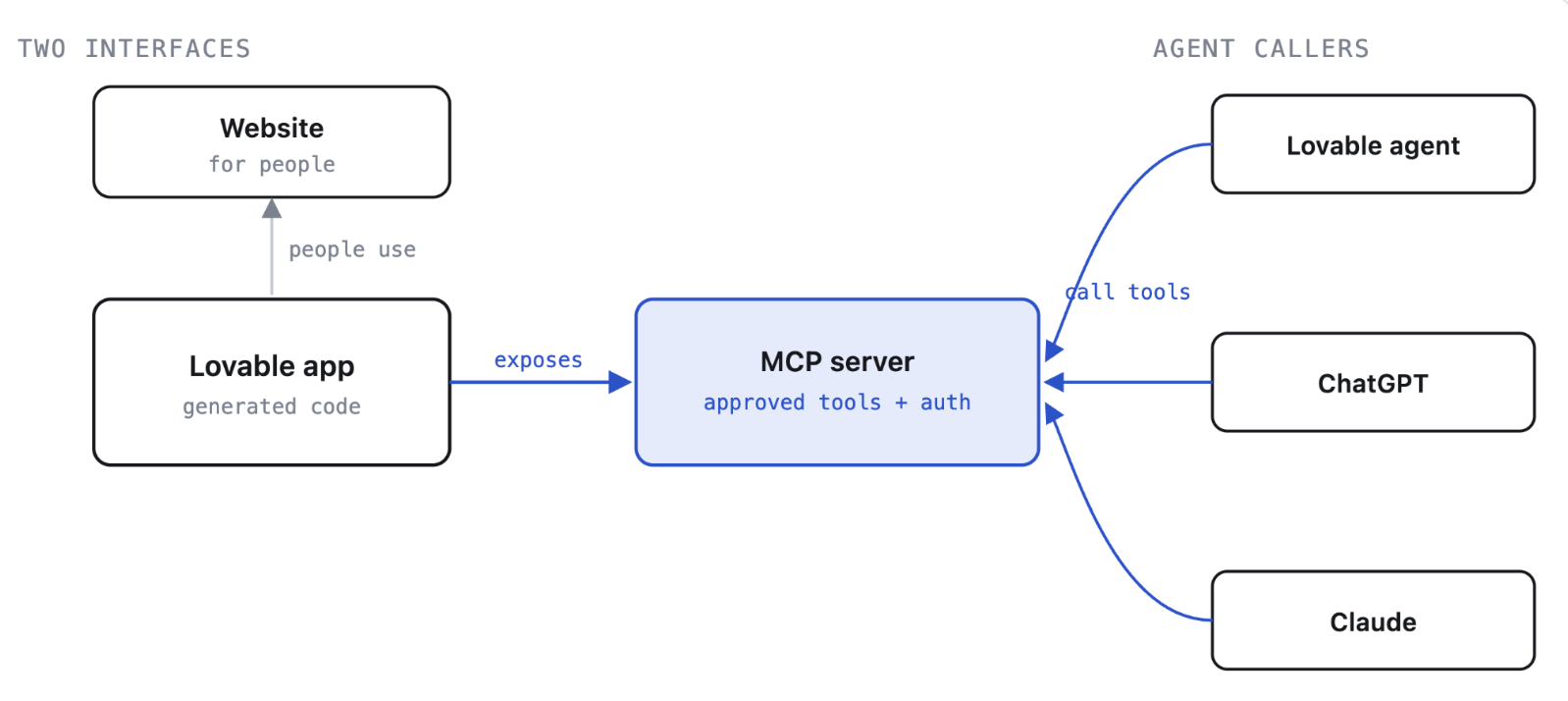
Lovable 提供的示意图
这种向能力转变的方向,是 Lovable 在其快速发展的三年创业历程中最新的一次演进。
Lovable 源于 GPT Engineer——一款于 2023 年推出的开源编程工具,最初专注于原型开发。2024 年 11 月,它成为商业产品;次月,品牌重塑为 Lovable。
到那时,他们开始注意到,一些用户正在 Lovable 上构建生产级应用——其中包括已经发展为真实业务的产品。
「我们开始看到平台上的人们构建的不只是原型,也不只是 MVP(最小可行产品),而是真正的东西——一款服务真实客户的实际产品。」Hedin 表示。
随后,Lovable 注意到用户正在创建内部软件:有时用于支撑面向公众的应用,有时则是为企业公司构建的内部应用。
「人们开始创建的不仅是通过面向客户的产品来支持业务的软件,也包括公司背后的运营软件。」Hedin 表示。
他说的是 CRM、管理后台或客户支持控制台之类的工具。
因此,在不到三年的时间里,Lovable 已成为一家全方位的软件创建与托管公司,这意味着它进入了与 Vercel、Cloudflare 等公司相同的领域。话虽如此,Lovable 相比基础设施更专注于 AI 生成的软件。但我们正在看到这些市场之间出现交叉——例如,Vercel 的 v0 与 Lovable 一样,都允许你通过自然语言生成应用。
同样类似于这家黑色三角形公司和那家橙色云朵公司,Lovable 也已扩展至 Agent 工作流领域。
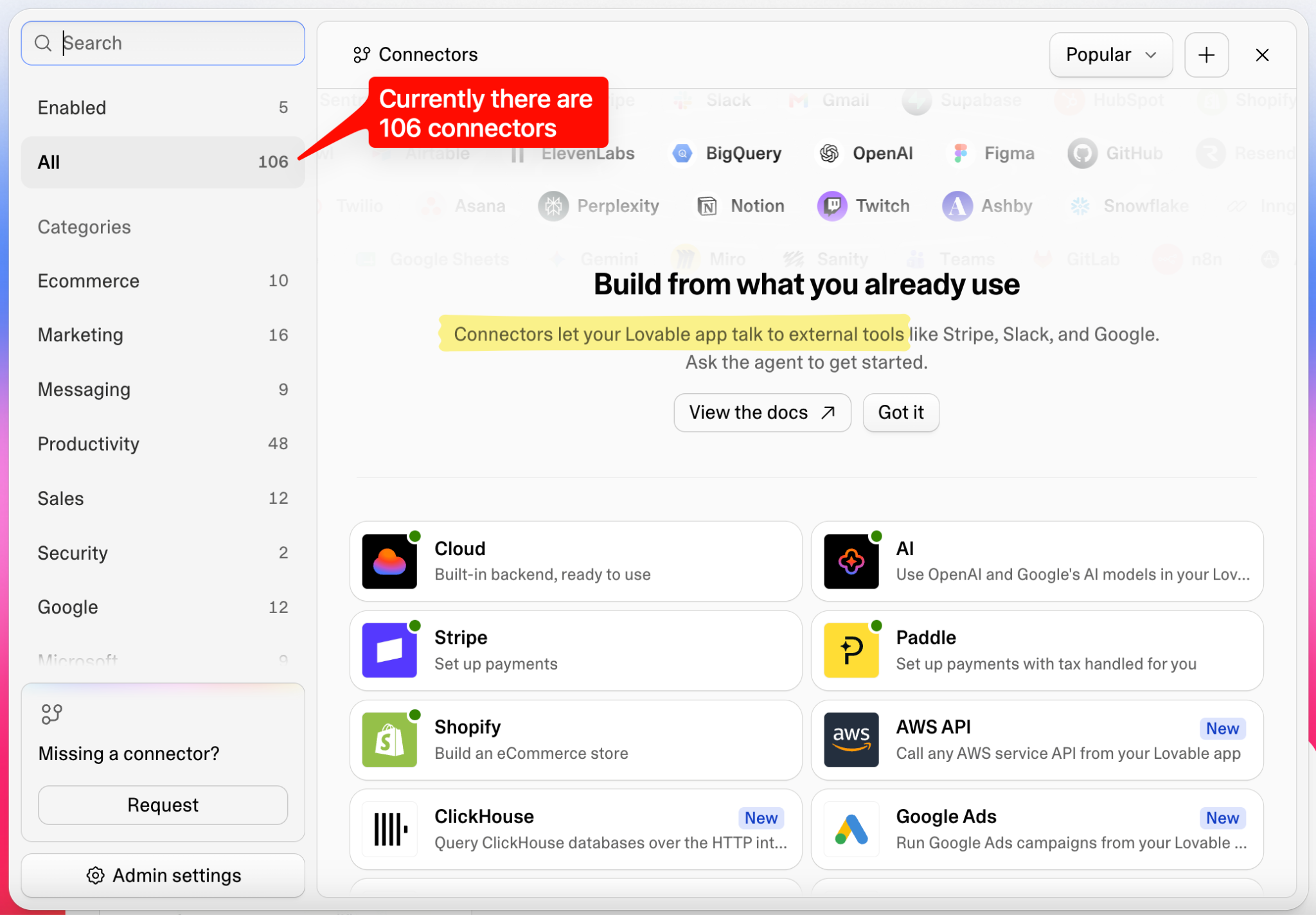
Lovable 连接器,可让你使用外部工具。
这种快速的产品演进伴随着强劲的用户和营收增长。根据领投方 Menlo Ventures 合伙人 Deedy Das 发布的一条推文,该公司年化营收运行率已超过 5 亿美元,创建项目超过 6000 万个,Lovable 构建的应用每月访问量超过 9 亿次。Lovable 还表示,近三分之二《财富》500 强企业的员工曾使用过该平台。
毫不意外,Menlo Ventures 正在加码投资。该机构与 EQT 管理的 Scaleup Europe Fund 一起,于本月领投 Lovable 的 4 亿美元 C 轮融资,公司估值为 133 亿美元。
Hedin 将这种变化速度归因于 Lovable 的创新,以及 LLM 快速提升的能力。
「每隔几个月,我们都会在应用层引入新能力,而大语言模型也在持续改进。这两件事会产生叠加效应。」
对 Lovable 而言,组织的数字大脑这一概念,本质上意味着一个可访问众多不同工具和工作流的统一界面。
Hedin 表示:「它应当尽可能多地了解你、你的公司以及你身边的世界。然后,它还需要具备执行通用任务,以及执行你所在组织特定行动的能力。」
他补充称,最终目标是:「你构建的一切都能以 Agent 化的方式被复用。」
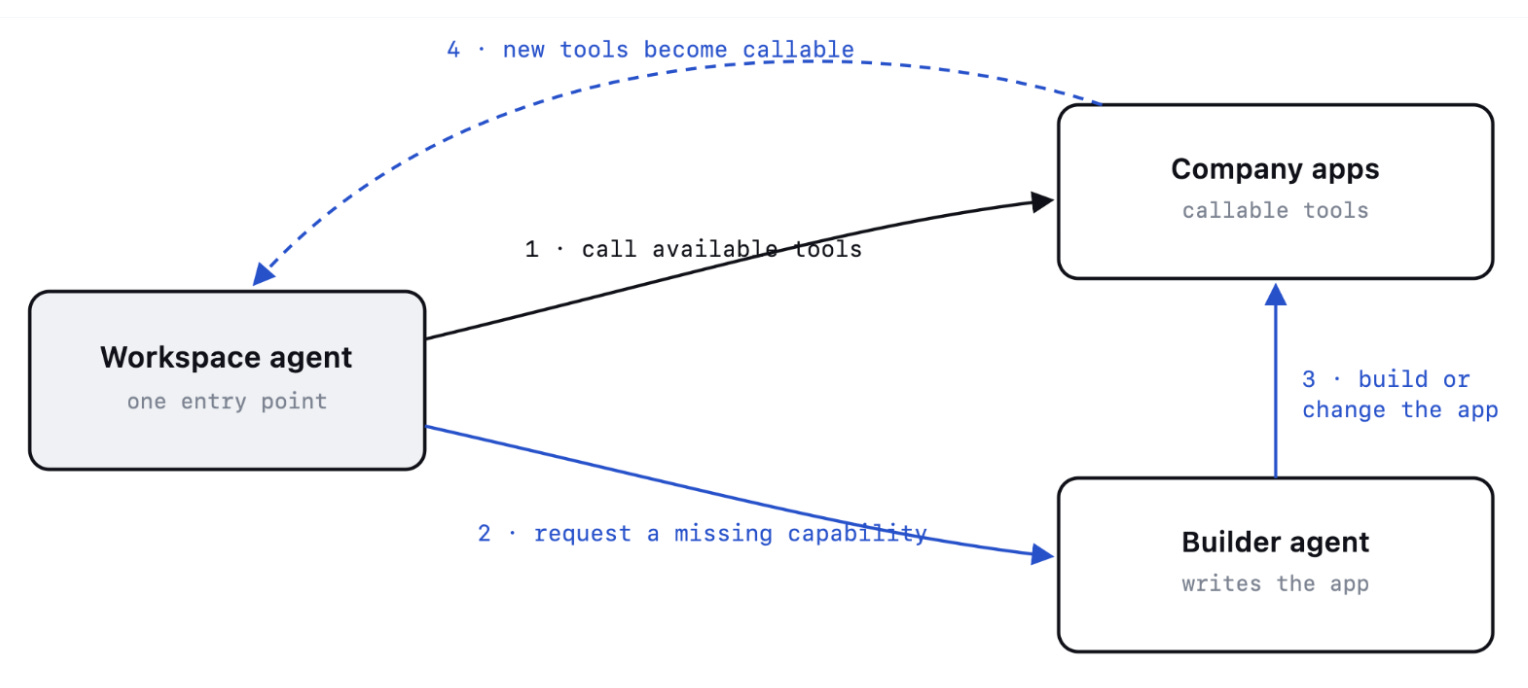
Lovable 提供的示意图
从这个意义上说,应用正在成为能力的集合;用户将越来越多地通过组织 Agent 访问这些能力,而不是仅仅访问实际的应用,或是在访问应用之外额外通过 Agent 使用它们。
Hedin 表示:「我们作为平台的职责,是确保所有这些彼此独立的能力通过一个 Agent 连接起来——而不是让你不得不为每一项任务构建一个不同的 Agent。」
作为例子,Hedin 提到了他们在 Lovable 内部使用的一款应用。
「我们构建了这个内部工具,帮助支持团队向用户发放额度,并以不同方式帮助管理平台。这些能力现在已可通过 Lovable Agent 在内部使用。」
**Lovable 还希望这个公司大脑能够异步工作。**其 Agent 可以安排自己稍后恢复某项任务——例如检查一次部署,或监控一个周期性流程——随后将结果返回到同一段对话中。
Lovable 并不是唯一追求「公司大脑」愿景的公司。Vercel CEO Guillermo Rauch 最近推出了该公司的内部 Agent,名为 @𝚟。Rauch 在推文中写道:「Vercel 的每一项日常工作现在都涉及 @𝚟。」「无论是日常交互还是 Token 使用量,它都在呈指数级增长。」
Hedin 承认,Vercel 及其他 AI 公司正朝着相似的愿景发展,但他认为 Lovable 的「切入点」在于:**「成为构建 Agent 所需能力的最佳场所。」**换句话说,Lovable 的重点是帮助用户构建公司大脑所需要的能力。
Hedin 表示:「编排这些能力是容易的部分。确保它们连接良好、构建正确且可靠,才是困难的部分。」
他还暗示了为何他们使用「大脑」而非仅仅「Agent」这个词来描述这一转变。
「我会谨慎使用『Agent』这个词。它会让人联想到一个执行任务的员工,这是一种很容易理解的思考方式。但在底层,这真正关乎连接正确的上下文和能力。」
或许,Agent 与能力范式面临的最大挑战是安全性。例如,如果某名员工使用 Lovable 创建了一款连接公司 Slack 的应用,你会希望确保该用户不会无意中将其个人消息或其他任何机密信息暴露给公司大脑。
连接器是 Lovable 连接外部工具和服务的方法。Hedin 表示,平台必须考虑一种**「权限图谱」**,以维护安全性和隐私性。
如 Lovable 博客中的一篇技术文章所述,一种被 Lovable 称为「应用用户连接器」(app user connector)的连接器类型,会保留每位用户的身份与源系统权限。**凭证以加密形式存储在服务器端,并由 Lovable 的连接器网关处理,**而不是暴露给生成的应用;应用则呈现一个与相关用户绑定的短期密钥。
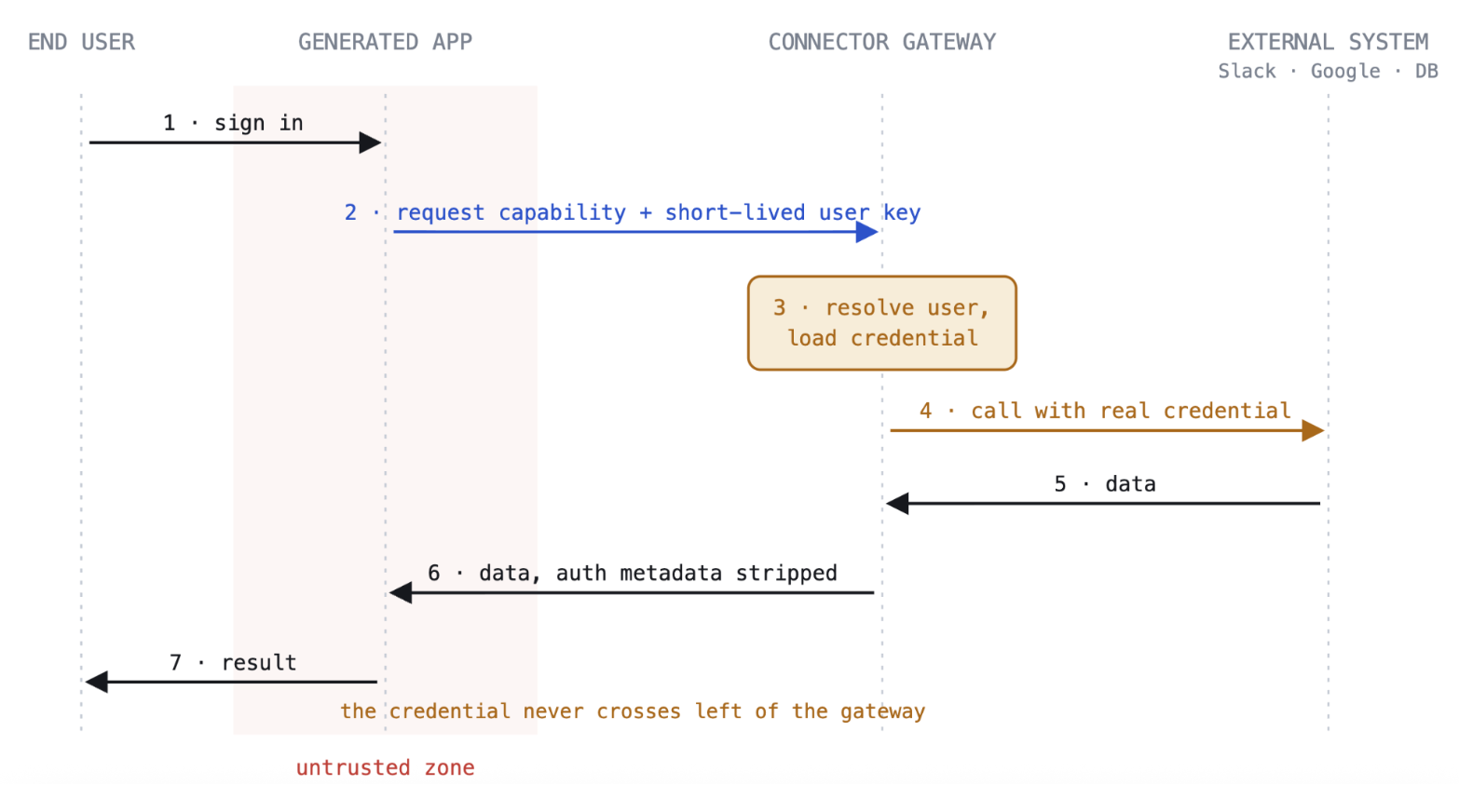
Lovable 提供的示意图
Hedin 如此解释:「我们将与外部系统的连接,与正在编写的应用代码分离。应用与 Lovable 平台交互,但应用本身永远无法获得这些凭证的访问权限。」
因此,Lovable 正迈向这样一个未来:公司大脑使用源自其用户构建应用的能力。这就引出了一个问题:SaaS 应用会发生什么?
Hedin 重申,人们将越来越多地通过 AI 层——即公司大脑的概念——与软件交互。
「人们不会像过去那样,在不同工具中打开那么多标签页。这种体验将被整合,但这些工具提供的垂直能力仍将很有价值。」
他认识到,一些传统 SaaS 产品可能会通过固守传统应用、拒绝适应来「对抗」这一趋势,但他说,Lovable 希望成为一个用于构建能力的平台。
他说:「我们希望构建一个开放平台,任何人都可以连接,任何人都可以使用。」
Hedin 最后向 SaaS 公司提出了一些建议,无论是既有公司,还是可能在 Lovable 平台上出现的应用。
「我认为,SaaS 企业将不得不更加专注于提供让 AI 能够使用其能力的铲子。」
English / 原文
Lovable is well known as an AI-powered platform to build applications. But ironically, it is now moving towards a future where fewer and fewer people will be using conventional apps. That is, of course, because of the growing impact of agents.
In a recent blog post, Lovable outlined a vision for “a digital brain for your team connecting your daily tools.”
Or as Lovable CTO Fabian Hedin put it in an interview with Latent Space, “you can get to a place where you’re using one entry point to all the work that you’re doing.”
Diagram by Latent Space based on an internal diagram shown to us by Lovable.
To be clear, Lovable still wants to be the tool you use to build apps — but increasingly, it will also enable you to build what Hedin calls “capabilities.” Lovable defines a capability as a useful part of an application that an agent can call directly; bypassing the need for a human user to open the app.
Lovable can turn a published application into agent-accessible capabilities by exposing selected functions from the app as tools through a hosted MCP server. The result is essentially one application with two interfaces: a traditional human UI and a new agent interface that can be used from ChatGPT, Claude and other MCP-compatible AI clients.
This shift towards capabilities is the latest evolution from Lovable, in an already fast-moving 3 years in business.
Lovable emerged from GPT Engineer, an open source coding tool that launched in 2023, initially focusing on prototyping. In November 2024, it became a commercial product and the following month, it was rebranded as Lovable.
By that point, they’d begun to notice some of its users building production apps on Lovable — including products that had become real businesses.
“We started seeing people on the platform building not only a prototype, and not only an MVP [Minimum Viable Product], but the actual thing — an actual product that serves real customers,” Hedin said.
Next, Lovable noticed its users creating internal software , in some cases to support a public-facing app and in other cases as an internal app built for an enterprise company.
“People started creating not only software to enable a business, in terms of a customer-facing product, but also the operations behind the company,” Hedin said.
He means tools like a CRM, an admin panel, or a customer-support console.
So in less than three years, Lovable has become an all-round software creation and hosting company, which means it’s swimming in the same waters as the likes of Vercel and Cloudflare. That said, Lovable is more focused on AI-generated software than infrastructure. But we are seeing crossover in these markets — for example, Vercel’s v0 allows you to generate an app from natural language, just like Lovable.
Also just like the black triangle and orange cloud companies, Lovable has expanded into agentic workflows.
Lovable connectors, which let you use external tools.
This rapid product evolution has been accompanied by strong user and revenue growth. According to a tweet from Deedy Das, a partner at lead investor Menlo Ventures, the company has surpassed a $500 million annualized revenue run rate , with more than 60 million projects created and over 900 million monthly visits to Lovable-built apps. Lovable also says employees at nearly two-thirds of the Fortune 500 have used the platform.
Unsurprisingly, Menlo Ventures is doubling down on its investment. It led Lovable’s $400 million Series C this month, alongside the Scaleup Europe Fund managed by EQT, valuing the company at $13.3 billion.
Hedin attributes the pace of change to a combination of Lovable’s innovation and the rapidly improving state of LLMs.
“Every few months, we introduce new capabilities at the application layer, while the large language models also continue improving. Those two things compound.”
The concept of a digital brain for an organization, for Lovable, essentially means a single interface where you can access many different tools and workflows.
“It should have as much context as possible about you, your company and the world around you,” said Hedin. “Then it needs the capabilities to perform both general tasks and actions that are specific to your organization.”
Ultimately, he added, the goal is that “everything that you’re building can be reused in an agentic way.”
In a sense, then, applications are becoming a collection of capabilities that users will increasingly access through an organizational agent — instead of, or in addition to, the actual application.
“Our job as a platform is to ensure that all these separate capabilities are connected through one agent — not that you have to build a different agent for every task,” said Hedin.
As an example, Hedin mentioned an internal application they use at Lovable.
“We built this internal tool to help us grant credits to users [via] our support team, and help manage our platform in different ways. Those capabilities are now available [internally] through the Lovable agent.”
Lovable also wants this company brain to work asynchronously. Its agent can schedule itself to resume a task later — for example to check a deployment or to monitor a recurring process — then return the result to the same conversation.
Lovable isn’t the only company pursuing a “company brain” vision. Vercel CEO Guillermo Rauch recently introduced its internal agent, called @𝚟. “Every day-to-day job at Vercel now involves @𝚟,” Rauch tweeted. “It’s growing exponentially both in daily interactions and token use.”
Hedin acknowledged that Vercel and other AI companies are building towards a similar vision, but he thinks Lovable’s “wedge” is “being the best place to build the capabilities that agents need.” In other words, Lovable’s focus is on helping their users build the capabilities that a company brain will need.
“Orchestrating these capabilities is the easy part,” Hedin said. “Making sure they are well connected, built correctly and reliable is the hard part.”
He also hinted at why they’re using the word ‘brain’ to describe this shift, rather than just ‘agent’.
“I’m careful about using the word ‘agent.’ It suggests something like an employee performing a task, which is an easy way to think about it. But underneath, it is really about connecting the right context and capabilities.”
Perhaps the biggest challenge with the agents and capabilities paradigm is security. For instance, if one of your employees creates an app with Lovable that connects to the company Slack, you want to ensure that user doesn’t inadvertently expose their personal messages, or any other confidential information, to the company brain.
Connectors are Lovable’s method of connecting to external tools and services. Hedin said the platform must account for a**“kind of permissioning graph”** to maintain security and privacy.
As described in a technical article on Lovable’s blog, one connector type, which Lovable calls an “app user connector,” preserves each user’s identity and source-system permissions. Credentials are stored server-side in encrypted form and handled by Lovable’s connector gateway, rather than being exposed to the generated application; the app instead presents a short-lived key bound to the relevant user.
“We separate the connection to external systems from the application code being written,” is how Hedin put it. “The application interfaces with the Lovable platform, but the application itself never gets access to those credentials.”
So Lovable is moving to a future where a company brain uses capabilities derived from the apps its users build. That begs the question: what will happen to SaaS apps?
Hedin reiterated that people will increasingly interact with software through an AI layer — the company brain concept.
“People are not going to have as many tabs open in different tools as they have historically. That experience is going to consolidate, but the vertical capabilities those tools provide will remain valuable.”
He recognizes that some traditional SaaS products may “fight” this trend, by sticking with their traditional apps and not adapting, but he says Lovable wants to become a platform for building capabilities.
“We want to build this open platform that anyone can connect to, anyone can use,” he said.
Hedin ended with some advice for SaaS companies, whether existing ones or apps that might emerge on the Lovable platform.
“I think SaaS businesses are going to have to focus more on providing the shovel for AI to use their capabilities.”