OCP 峰会 2026:以 Scale-Up、Scale-Out 和 Scale-Across 网络开放创新驱动 AI
英文标题:OCP Summit 2026: Powering AI with Open Innovations in Scale-Up, Scale-Out, and Scale-Across Networks
Meta 在 2026 年 OCP 全球峰会上介绍了新一代开放网络基础设施,包括首款液冷网络机架 IcePack、102.4 Tbps 交换机 IceCube,以及开源 AI 传输协议 MetaRoCE。其多平面 Scale-Out 网络 FPF 让每个 GPU 通过八条独立链路连接不同交换机,以降低延迟并提升集群规模和容错能力;BAG 则将跨建筑、园区和区域的网络互联,支持 PB 级聚合容量。Meta 还展示了基于以太网的 Scale-Up 交换机 Tahan,以及每机架连接 72 个加速器的下一代设计。公司与微软、阿里巴巴共同牵头的 OSPA 倡议旨在标准化交换机平台层,为开发者和运营商构建开放、可扩展的 AI 基础设施提供更多选择。
 8.4 KB
 406 B
 1.6 MB
 1.5 MB
 248.2 KB
 108.1 KB
 57.6 KB
 263.3 KB
 294.4 KB
 135.1 KB
 83.4 KB
 186.3 KB
 24.1 KB
中文
- 在 2026 年开放计算项目(OCP)全球峰会上,Meta 分享了下一代开放网络基础设施,包括:
- 我们的首款液冷网络机架 IcePack 和 102.4T 交换机平台 IceCube。
- 扁平化平面网络(Flattened Planar Fabric,FPF):一种多平面后端 Scale-Out 网络,从根本上改变 GPU 连接网络的方式。
- MetaRoCE:我们的开源 AI 传输协议。
- 在 OCP 内发起开放交换机平台架构(Open Switch Platform Architecture,OSPA)倡议。
- 我们邀请工程师、芯片供应商、系统集成商和运营商与我们及 OCP 社区携手,应对构建开放、高效、可持续 AI 基础设施的挑战。
在 Meta,我们相信开放网络对于构建高性能、可扩展和可持续的基础设施至关重要。自 2011 年共同创立开放计算项目(OCP)以来,我们一直以行动践行这一理念。
在持续推进的 AI 变革中,Meta 不断拓展数据中心网络的可能性,并与业界分享我们的进展。在 OCP 2025 上,我们介绍了最新的 AI Scale-Out 网络,并推动成立了面向 Scale-Up 网络的以太网(ESUN)倡议。
在今年的 OCP 2026 上,我们分享了直接支持最新 AI 工作负载的网络创新,包括 Meta 的 Muse Wonder 和 Muse Spark 模型,以及面向所有人打造的个人 AI Agent——Muse。以下是部分新进展:
- 102.4T Scale-Out 交换机:Meta 首款液冷网络机架 IcePack 和 102.4T 交换机刀片 IceCube,旨在支持高功率密度、提升散热效率,并为吉瓦级 AI 集群提供支持。
- Scale-Out 扁平化平面网络(FPF):Meta 的多平面网络,以更低延迟支持规模更大、效率更高的 GPU 集群;相关经验也已与云合作伙伴分享。
- 面向多站点集群的 Scale-Across:介绍 Meta 的 PB 级后端聚合(BAG)超级 Spine 网络,以及大规模训练任务如何应对这一规模下的故障;还概述了我们如何使用 FBOSS 和 SAI 构建 SRv6 区域骨干网,以应对更远距离的互联。
- 面向 Scale-Up 网络的以太网:Meta 的 MTIA 300 系统使用基于以太网的 51.2T Scale-Up 交换机 Tahan,为每个加速器提供 6.4 Tbps 带宽;同时预览基于 102.4T 芯片、每机架配置 72 个加速器的下一代设计,并计划在未来芯片中转向基于 ESUN 的实现。
- 开放交换机平台架构(OSPA):由 Meta、微软和阿里巴巴共同牵头的一项新 OCP 倡议,旨在标准化交换机平台层;1.0 版规范现已提交 OCP。
- MetaRoCE:Meta 面向 AI 网络的 RDMA 传输协议,现已提供开源实现。
102.4T 世代:面向 AI 规模的液冷网络
随着 AI 集群向吉瓦规模发展,网络交换机必须在越来越紧张的功率和散热条件下提供大幅提升的带宽。我们的解决方案是 IcePack 机架,即 Meta 第一代液冷网络机架。
IcePack 基于 OCP 的 ORV3-HPRv1 机架标准。每个机架内安装了 IceCube 交换机刀片:这是一种 102.4 Tbps 网络交换机,可提供 128×800G 的无阻塞交换容量。IceCube 有两个版本,分别基于博通的 Tomahawk6C 交换机 ASIC 和 NVIDIA 的 Spectrum-6 交换机 ASIC。两者均运行 Meta 的开源 FBOSS 网络操作系统,并利用 OCP SAI(交换机抽象接口)。
与我们的 51.2T 平台相比,这一代产品的带宽提高了两倍,同时达到了下一代 AI 数据中心所需的散热密度。
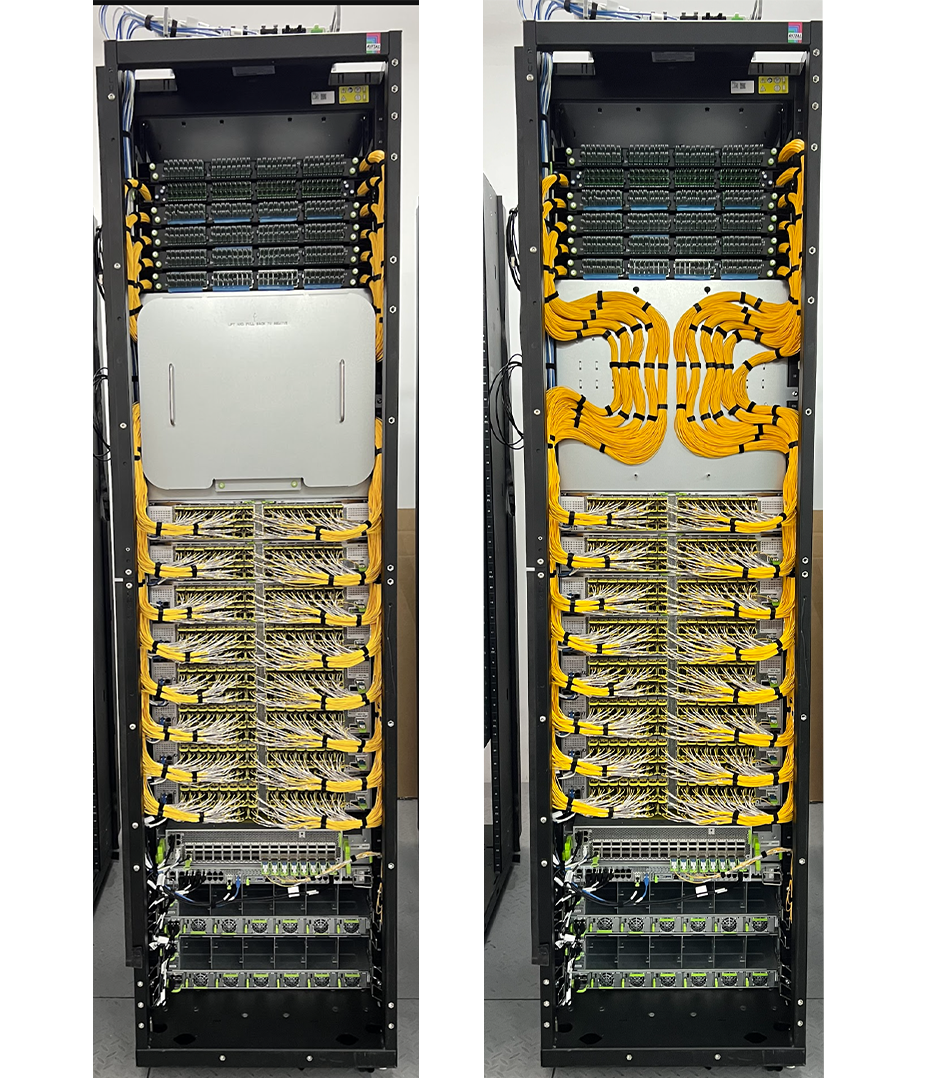 IcePack 机架:Meta 首款液冷网络机架,安装了 IceCube 102T 交换机刀片。
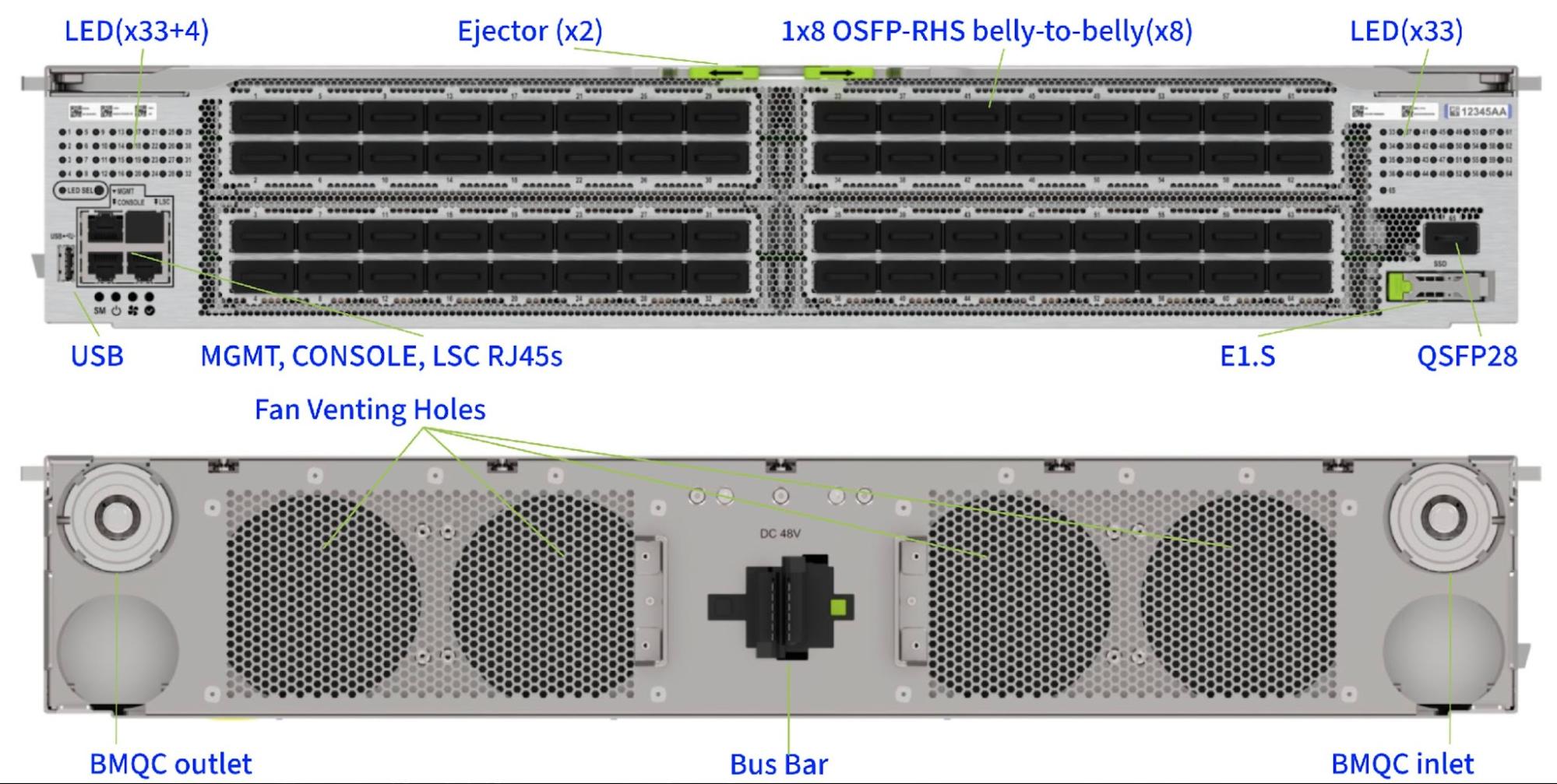 IceCube:Meta 的 102.4 Tbps 液冷交换机刀片,可提供 128×800G 无阻塞交换容量,并运行 FBOSS。
AI 网络从建筑扩展至区域
正如 Meta 和整个行业所见,AI 集群如今已跨越建筑、园区和多个区域。这要求网络架构不仅规模庞大,还要具备韧性和灵活性。
扁平化平面网络(FPF):打造更具韧性、更大规模的集群
我们推出了 扁平化平面网络(FPF)。这是 Meta 的多平面后端 Scale-Out 网络,从根本上改变了 GPU 连接网络的方式以及网络的控制平面。
在 FPF 中,每个 GPU 通过八条独立的 100G 链路连接八台不同的交换机,每个网络平面连接一台。这种多平面方案取代了传统的单平面上行链路架构,带来四项关键优势:
- 更大规模的无阻塞 GPU 集群:与单平面拓扑相比,能够达到我们最大规模 AI 训练工作负载所需的规模。
- 扁平化拓扑:从 NSF 网络的三级 Clos 网络转向两级 Clos 网络。减少一级交换机可降低网络跳数、延迟和基础设施成本。
- NIC 级硬件负载均衡:传统上由网络交换机执行的负载均衡,现在从 NIC 开始,通过硬件将每个数据包分散到全部八个平面。
- 用于容错的联合控制平面:FPF 的控制平面同时涵盖交换机和主机,使主机能够引导流量避开故障平面。
Meta 与 NVIDIA 密切合作,开发了运行在 Meta 基础设施中的 FPF,并利用 NVIDIA Spectrum-X 多平面创新技术,确保 FPF 在各种故障条件和运维生命周期场景下仍能保持高性能。除了应用于自身基础设施,Meta 和 NVIDIA 还与双方共同的云合作伙伴紧密协作,基于 FPF 的经验,帮助合作伙伴实现多平面网络的标准化。
连接自有数据中心与公有云
与云服务商在 FPF 上的合作,只是 Meta 不仅建设自身基础设施、也帮助合作伙伴建设基础设施的一个例子。
我们扩大 AI 算力的目标无法仅靠建设数据中心实现,因为建设周期长达数年,而需求变化以月为单位。因此,除了自有园区,我们还使用租赁设施和公有云资源来弥补差距。但要做到这一点,无论 GPU 位于何处,网络都必须以相同的方式运行。
这确实很困难,因为使用云网络与拥有机架并不相同。不同服务商的网络拓扑各异,并不遵循统一设计。缓冲区通常较浅,从而改变拥塞和丢包行为。RDMA 传输方式因服务商而异,一些云仍使用 InfiniBand,而非以太网和 RoCE。适用于少量云实例的方案,扩展到整个资源集群时也往往会失效。
在 OCP 上,我们分享了如何将这些环境整合到统一的运维模型中。其中包括标准化性能验证框架:云合作伙伴在交付集群之前,运行一套通用的点对点和集合通信基准测试,规模从数十个 GPU 扩展到一千多个 GPU,以实测证明性能,而不是依赖假设。该模型还包括统一异构且通常采用多平面的网络:将各不相同的流量类别方案和拥塞控制参数映射到我们的无损 RDMA 类别,使端到端路径在不同供应商的 NIC 和交换机之间表现可预测。
我们始终遵循的原则是:异构性可以管理,但只有标准化才能让管理成本可承受。不同服务商在测试与认证、RDMA 传输与拥塞行为以及遥测方面仍存在差异,而每一处差异都会带来额外的工程工作。
BAG:Scale-Across 聚合
Meta 承诺在本十年建设的 AI 算力规模——Prometheus 在 2026 年约为 1 吉瓦,Hyperion 则向 5 吉瓦扩展——意味着单个集群如今已超出单一区域的范围。我们的后端聚合(BAG)层是一个集中式、基于以太网的超级 Spine 网络,将多个 Spine 层网络互联为横跨建筑、园区和区域的超大集群。它以 Pb 级规模运行:一对区域之间的 BAG 互联容量可达每秒数十 Pb。尽管 Prometheus 的算力分布在传统数据中心建筑、防风雨户外设施和相邻的托管空间中,BAG 仍使其能够作为单一集群运行。
在这样的覆盖范围下,距离本身成为设计约束。无损以太网需要与线缆长度成比例的缓冲余量,因此,当链路延伸至数十公里时,缓冲区管理就从调优细节变成了首要问题。如果处理不当,拥塞可能蔓延至引发问题的链路之外。FBOSS 现在不再按最坏情况下的距离为每条链路预留资源,而是现场测量实际线缆长度:通过计算探测流量在无拥塞队列中的往返时间推导距离,再根据测量结果分配缓冲余量。
负载均衡还必须考虑性能下降而非完全中断的路径。BAG 使用 eBGP 链路带宽信令,使流量按每条路径实际可用的容量比例分配,并有意设置抑制机制,避免单条链路故障在整个网络域内引发路由震荡。此外,由于网络之间的延迟是网络内部延迟的数倍,而集合通信库通常在不了解网络距离的情况下选择算法,因此性能可能出现断崖式下降。
我们从两个方向解决这一问题:改进自适应路由以降低延迟带来的影响,并通过调度尽量减少需要跨越 BAG 层的集合通信流量。训练过程始终保持韧性:当某个副本发生故障时,系统会自动将其排除,其余副本继续通过 BAG 同步。
未来的发展方向是覆盖更远距离——训练任务将跨越相距数十、数百乃至数千公里的区域——以及构建混合不同代际和供应商硬件的、日益异构的集群。
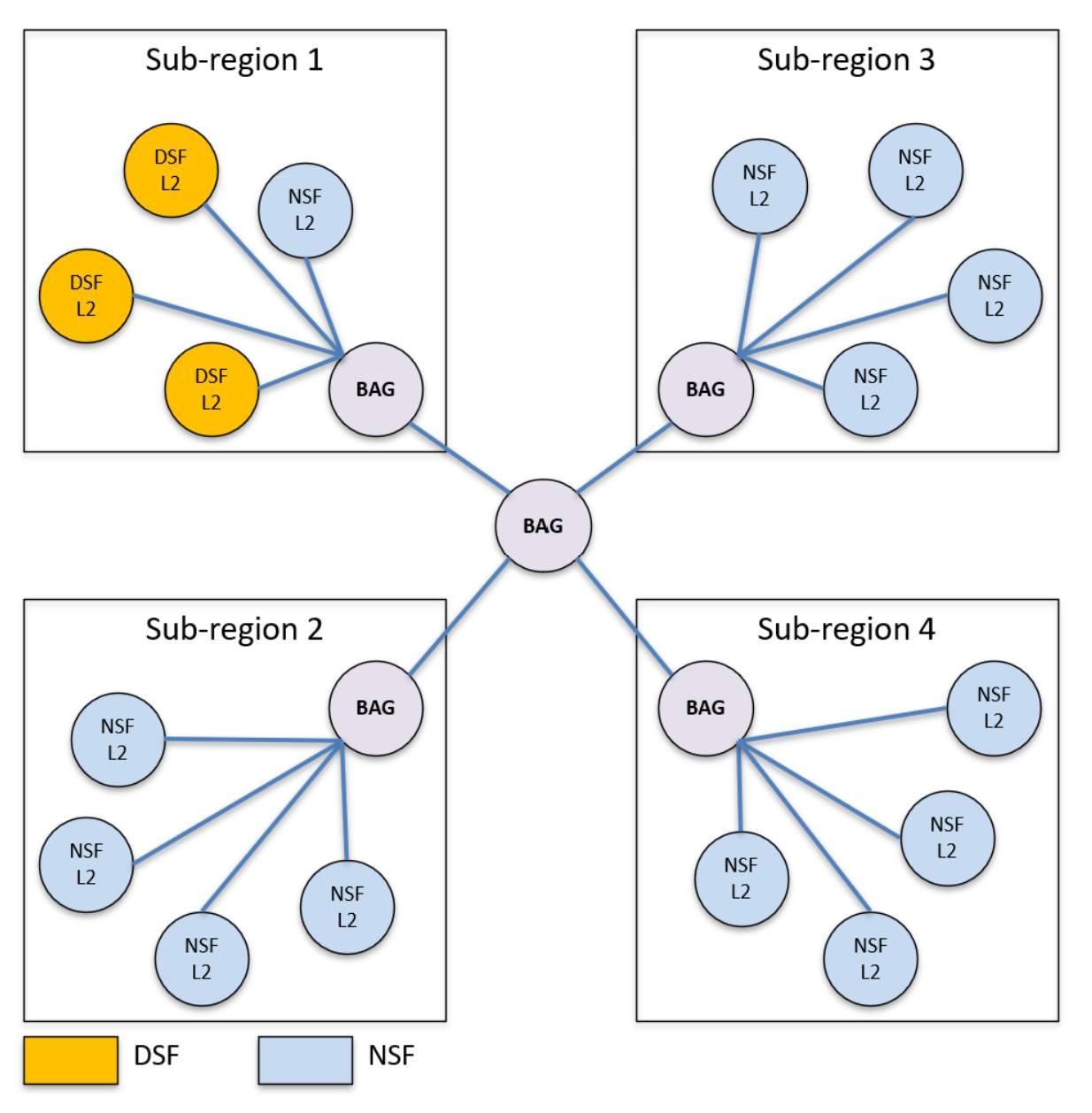 后端聚合(BAG)跨子区域连接建筑级 AI 网络,包括 DSF 和 NSF,将其整合为统一的训练网络。
使用 FBOSS 构建由 SRv6 驱动的区域骨干网
我们在区域骨干网中使用 FBOSS 部署了基于 IPv6 的段路由(SRv6)。在跨地域互联 AI 集群时,这使流量工程更加灵活,运维也更加简化。该方案运行在采用 Cisco SiliconOne 的开放式浅缓冲交换机平台上,我们正在持续接入更多芯片系列;所有平台均通过 OCP SAI 在 FBOSS 下统一管理。
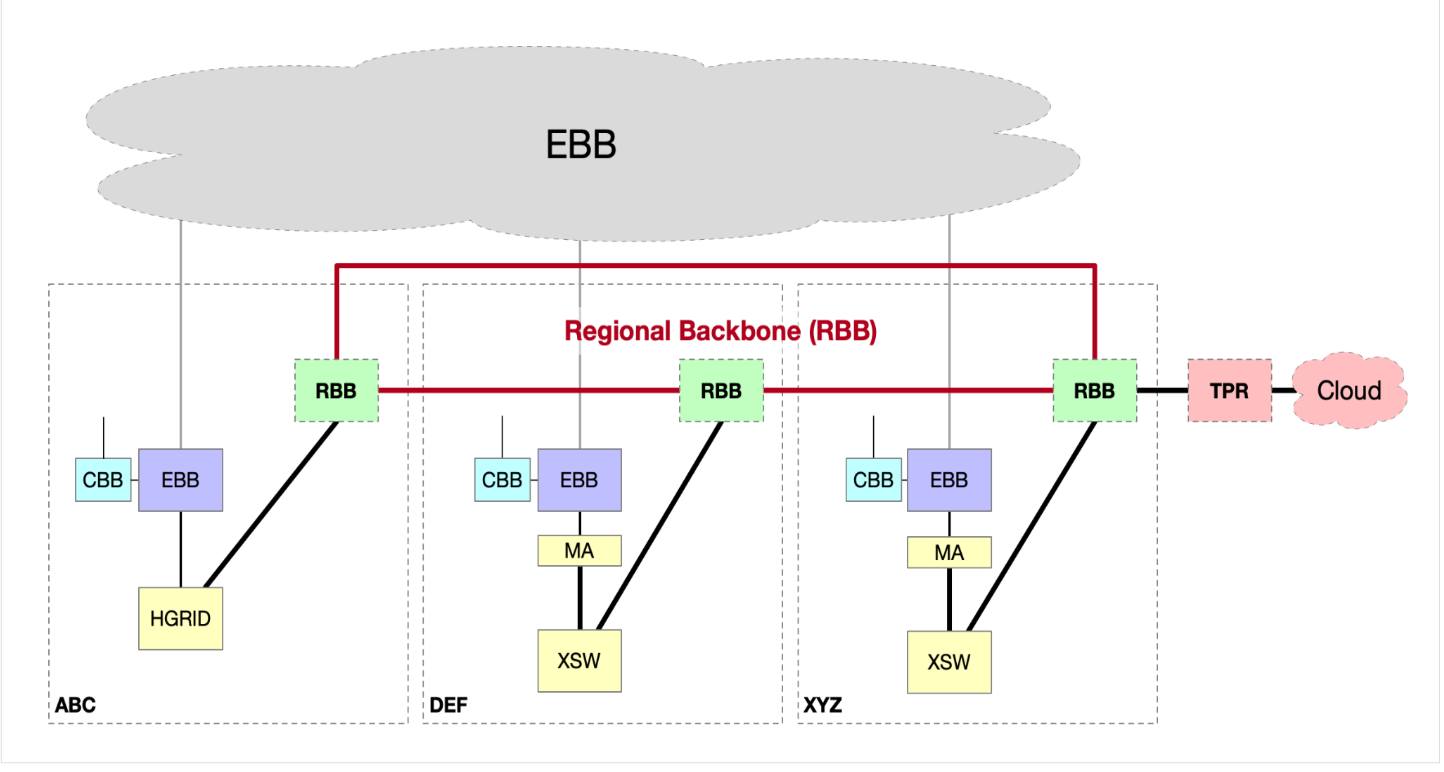 Meta 的区域骨干网(RBB)互联数据中心园区,并连接公有云资源。
面向 Scale-Up 的以太网:我们对以太网的承诺
OCP 2026 的一个标志性里程碑,是证明以太网能够服务于 Scale-Up 领域——即机架或 Pod 内加速器之间的高带宽、超低延迟互联。这一领域传统上依赖专有技术。
Tahan:基于以太网的 Scale-Up 交换机
我们推出了 Tahan:Meta 基于以太网的 Scale-Up 交换机,专为我们的 MTIA 300 训练加速器打造。Tahan 基于博通 51.2 Tbps Tomahawk 5 ASIC,提供总计 64×800G 的容量,其中一半通过背板为加速器提供 Scale-Up 连接。四台 Tahan 交换机以无阻塞拓扑互联 16 个加速器。
重要的是,Tahan 复用了与 Scale-Out 网络相同的无损 RoCE 传输机制(路由 IPv6、PFC、针对 AI 调优的 QoS),通过 FBOSS 统一管理 Scale-Up 和 Scale-Out 网络。
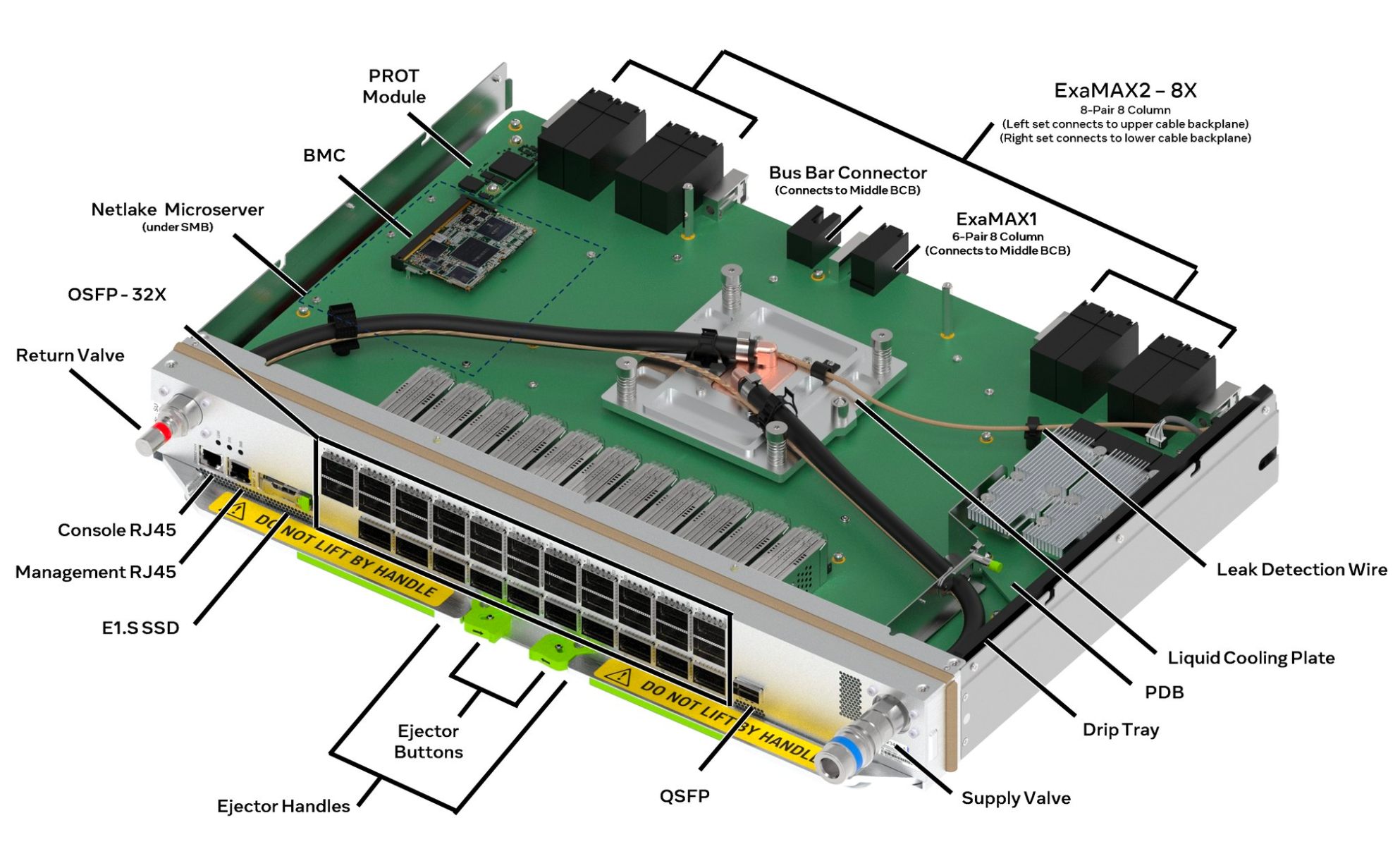 Tahan:Meta 首款开放式、基于以太网的 Scale-Up 交换机(32×800G),采用液冷并运行 FBOSS。
下一代 Scale-Up:基于 102.4T 芯片实现每机架 72 个加速器
我们还预览了下一代 Scale-Up 刀片:这是一台基于 102.4 Tbps 博通 Tomahawk6C 芯片的 216×400G 交换机。八台这样的交换机可互联每机架 72 个加速器,实现大幅提升……
English / 原文
- At the 2026 Open Compute Project Global Summit, Meta is sharing the next generation of open networking infrastructure, including:
- Our first liquid-cooled network rack (IcePack), and 102.4T switch platform (IceCube).
- Flattened Planar Fabric (FPF), a multiplane backend scale-out fabric that fundamentally changes how GPUs connect to the network
- MetaRoCE, our open-source AI transport protocol.
- Launching the Open Switch Platform Architecture (OSPA) initiative within OCP.
- We’re inviting engineers, silicon vendors, system integrators, and operators to join us and the OCP community in meeting the challenges of building open, efficient, and sustainable AI infrastructure.
At Meta, we believe that open networking is critical for building high-performance, scalable, and sustainable infrastructure, and we’ve acted on that conviction since co-founding the Open Compute Project (OCP) in 2011.
Throughout the ongoing AI revolution, Meta has pushed the boundaries of what’s possible in data center networking and shared our advances with the industry. At OCP 2025, we introduced our latest AI scale-out fabrics and drove the creation of the Ethernet for Scale-Up Networking (ESUN) initiative.
This year at OCP 2026, we’re sharing the networking innovations that directly support our latest AI workloads such as Meta’s Muse Wonder and Muse Spark models, and Muse, our personal AI agent built for everyone. Here’s some of what’s new:
- The 102.4T scale-out switch : Meta’s first liquid-cooled network rack (IcePack) and 102.4T switch blades (IceCube), designed to support high power density, deliver higher thermal efficiency, and enable gigawatt-scale AI clusters.
- The scale-out Flattened Planar Fabric (FPF) : Meta’s multiplane fabric, enabling larger, highly efficient GPU clusters with lower latency — with learnings shared with our cloud partners.
- Scale-across for multi-site clusters : Meta’s petabit-scale backend aggregation (BAG) super-spine and how large-scale training jobs deal with failures at this scale — with an overview of how we’ve built SRv6 regional backbones using FBOSS and SAI to handle even longer distances
- Ethernet for Scale-Up Networking: Meta’s MTIA 300 system uses Tahan, an Ethernet-based 51.2T scale-up switch, delivering 6.4 Tbps per accelerator — with a preview of next-gen 72-accelerator-per-rack design on 102.4T silicon and moving toward an ESUN-based implementation with future chips.
- Open Switch Platform Architecture (OSPA) : a new OCP initiative, co-led by Meta, Microsoft, and Alibaba, that standardizes the switch platform layer — with specification v1.0 now submitted to OCP.
- MetaRoCE : Meta’s RDMA transport protocol for AI networks — now with open-source implementations.
The 102.4T Generation: Liquid-Cooled Networking at AI Scale
As AI clusters grow to gigawatt scale, network switches must deliver dramatically more bandwidth while fitting within increasingly dense power and cooling envelopes. Our answer is the IcePack rack, Meta’s first-generation liquid-cooled network rack.
IcePack is based on OCP’s ORV3-HPRv1 rack standard. IceCube switch blades — 102.4-Tbps fabric switches that deliver 128×800G non-blocking switching capacity — sit inside each rack. IceCube comes in two variants , one built on Broadcom’s Tomahawk6C switch ASIC and one on NVIDIA Spectrum-6 Switch ASIC. Both run Meta’s open-source FBOSS network operating system that leverages OCP SAI (Switch Abstraction Interface).
This new generation represents a 2x bandwidth increase over our 51.2T platforms while achieving the thermal density required for next-generation AI data centers.
The IcePack rack — Meta’s first liquid-cooled network rack, populated with IceCube 102T switch blades. IceCube — Meta’s 102.4 Tbps liquid-cooled switch blade, delivering 128×800G non-blocking capacity and running FBOSS.
Scaling AI Fabrics From Building to Region
As seen at Meta and across the industry, AI clusters now span buildings, campuses, and multiple regions. This demands fabric architectures that are not only massive in scale but also resilient and flexible.
Flattened Planar Fabric (FPF): More Resilient, Larger Clusters
We’re introducing Flattened Planar Fabric (FPF) , Meta’s multiplane backend scale-out fabric that fundamentally changes how GPUs connect to the network and the network control plane of the fabric.
With FPF, each GPU connects via eight independent 100G links to eight different switches (one per network plane). This multiplane approach replaces the traditional single-plane uplink architecture and delivers four key advantages:
- Larger non-blocking GPU clusters compared to single-plane topologies, which enables the scale required for our largest AI training workloads
- A flattened topology , moving from the 3-tier Clos fabric of our NSF fabric to a 2-tier Clos fabric. Removing this tier of switches reduces network hops, latency, and infrastructure cost.
- NIC-level hardware load balancing: Load balancing, traditionally done by network switches, now starts at the NIC, which sprays every packet across all eight planes in hardware.
- A combined control plane for fault tolerance: The control plane of FPF includes both the switches and the hosts, allowing the host to steer traffic away from downed planes.
Meta collaborated closely with NVIDIA on developing FPF running inside Meta’s infrastructure, leveraging NVIDIA Spectrum-X Multiplane innovations to ensure FPF has high performance even under assorted failure conditions and operational lifecycle scenarios. Going beyond our own infrastructure, Meta and NVIDIA have been working closely with our joint cloud partners to help standardize multiplane fabrics implementations within those partners based on our FPF learnings.
Bridging On-Prem Data Centers and Public Cloud
This work with cloud providers on FPF is just one example of how we at Meta are not just building our own infrastructure, but are helping our partners’ infrastructure.
Our ambitions for scaling our AI capacity cannot be met by building data centers alone, because construction runs on multi-year lead times while demand moves in months. So we use leased facilities and public cloud capacity , alongside our own campuses, to close the gap. But it only works if the network behaves the same way no matter where the GPUs sit.
That is genuinely difficult, because cloud networking is not the same as owning the rack. Fabric topologies differ from provider to provider rather than following one uniform design. Buffering is often shallower, which changes congestion and loss behavior. RDMA transports are provider-specific, and some clouds still run InfiniBand rather than Ethernet and RoCE. What works for a handful of cloud instances also tends to break at fleet scale.
At OCP we’re sharing how we’re converging these environments into a single operational model. That includes a standardized performance validation framework — cloud partners run a common suite of point-to-point and collective benchmarks, scaling from tens to over a thousand GPUs, before a cluster is ever handed over, so performance is proven rather than assumed. It includes normalizing heterogeneous, often multiplane fabrics, mapping divergent traffic-class schemes and congestion-control parameters onto our lossless RDMA classes so end-to-end paths behave predictably across different vendors’ NICs and switches.
The principle we keep applying is that heterogeneity is manageable but standardization is what makes it affordable. Testing and qualification, RDMA transport and congestion behavior, and telemetry all still diverge across providers, and every divergence becomes engineering work.
BAG: Scale-Across Aggregation
The scale of AI capacity Meta has committed to this decade — Prometheus at roughly 1 gigawatt in 2026, and Hyperion scaling toward 5 gigawatts — means a single cluster now outgrows any single region. Our backend aggregation (BAG) layer is a centralized, Ethernet-based super-spine that interconnects many spine-layer fabrics into one mega cluster spanning buildings, campuses, and regions. It operates at petabit scale — inter-BAG capacity between a pair of regions reaches tens of petabits per second. BAG is what allows Prometheus to function as a single cluster even though its capacity is spread across conventional data center buildings, weatherproof outdoor structures, and adjacent colocation space.
At this reach, distance itself becomes a design constraint. Lossless Ethernet requires buffer headroom proportional to cable length, so once links stretch tens of kilometers, buffer management turns into a first-order problem rather than a tuning detail. And getting it wrong risks congestion spreading well beyond the link that caused it. Instead of provisioning every link for a worst-case distance, FBOSS now measures actual cable length in place , timing probe traffic on an uncongested queue to derive round-trip distance, and allocates headroom against the measurement.
Load balancing also has to reason about paths that are degraded rather than simply down. BAG uses eBGP link-bandwidth signaling so traffic is distributed in proportion to the capacity actually available on each path, with deliberate damping so that a single link failure does not ripple routing churn across the domain. And because inter-fabric latency is several times intra-fabric latency, collective communication libraries — which generally choose algorithms without any awareness of network distance — can fall off a performance cliff.
We’ve been addressing that from both directions, with adaptive routing improvements to reduce the latency penalty and scheduling that minimizes how much collective traffic needs to cross the BAG layer at all. Training remains resilient throughout. When a replica fails, it is automatically excluded and the surviving replicas continue synchronizing across BAG.
The direction of travel is longer distances still — training jobs spanning regions tens, hundreds, or thousands of kilometers apart — and increasingly heterogeneous clusters that mix hardware generations and vendors.
Backend aggregation (BAG) connects building-scale AI fabrics — both DSF and NSF — across sub-regions into a unified training network.
SRv6-Powered Regional Backbone Using FBOSS
We’ve deployed Segment Routing over IPv6 (SRv6) using FBOSS for our regional backbone networks. This enables more flexible traffic engineering and simplified operations as we interconnect AI clusters across geographies — running on open shallow-buffer switch platforms powered by Cisco SiliconOne, with ongoing work to onboard additional silicon families, all managed under FBOSS using OCP SAI.
Meta’s Regional Backbone (RBB) interconnects data center campuses and bridges to public cloud capacity.
Ethernet for Scale-Up: Our Commitment to Ethernet
A defining milestone of OCP 2026 is proving that Ethernet can serve the scale-up domain — the high-bandwidth, ultra-low-latency interconnects between accelerators within a rack or pod that have traditionally required proprietary technologies.
Tahan: Ethernet-Based Scale-Up Switch
We’re introducing Tahan , Meta’s Ethernet-based scale-up switch — purpose-built for our MTIA 300 training accelerators. Tahan is built on the 51.2 Tbps Tomahawk 5 ASIC from Broadcom, offering total capacity of 64x800G, half of which is used to provide scale-up connectivity to the accelerators via the backplane. Four Tahan switches interconnect 16 accelerators in a non-blocking topology.
Importantly, Tahan reuses the same lossless RoCE transport (routed IPv6, PFC, AI-tuned QoS) as our scale-out network, unifying both scale-up and scale-out fabrics under FBOSS.
Tahan, Meta’s first open, Ethernet-based scale-up switch (32×800G), liquid-cooled and running FBOSS.
Next-Generation Scale-Up: 72 Accelerators per Rack on 102.4T Silicon
We’re also previewing the next-generation scale-up blade , a 216×400G switch built on 102.4 Tbps Broadcom Tomahawk6C silicon. Eight of these switches interconnect 72 accelerators per rack , a dramatic increase in density enabled by the bandwidth of the 102.4T generation. A future generation of this scale-up blade is planned to adopt OCP Ethernet for Scale-Up Networking(ESUN) as the scale-up data plane , cementing our commitment to open standards for the entire scale-up stack.
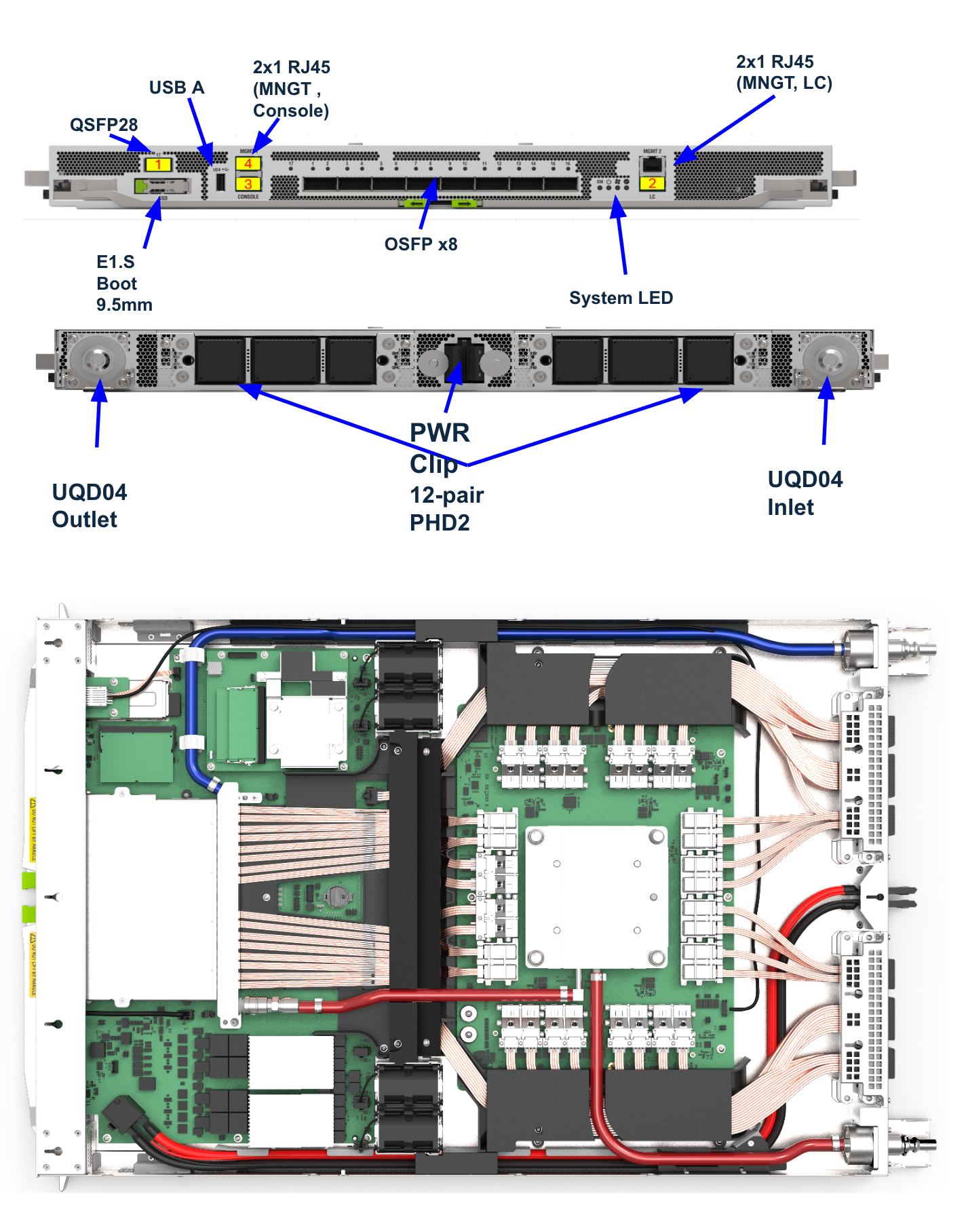 The next-generation MTIA scale-up blade: 216×400G on 102.4 Tbps silicon, adopting OCP ESUN as the scale-up data plane.
ESUN Evolving
The ESUN initiative we founded within OCP last year has made significant progress. Working alongside AMD, Arista, ARM, Broadcom, Cisco, HPE, Marvell, Microsoft, and NVIDIA, ESUN is advancing open specifications for:
- Protocol headers and framing optimized for scale-up topologies.
- Error handling mechanisms for lossless multi-hop fabrics.
- Alignment with UEC and IEEE standards.
This work has already produced a concrete result with the ESUN 1.0 Network Operator Requirements Base Specification released earlier this year. ESUN 1.0 deliberately focuses on the fabric , defining what the network must deliver while leaving implementation flexibility to GPU and accelerator vendors, which broadens adoption. It also coordinates with existing standards bodies , leveraging work underway in IEEE and the Ultra Ethernet Consortium (UEC) rather than duplicating it.
Since publishing ESUN 1.0, the group is now close to the next version, ESUN 1.1, tackling new features such as switch profiles and inter-packet gap reduction that further optimize Ethernet for low-latency, scale-up use cases.
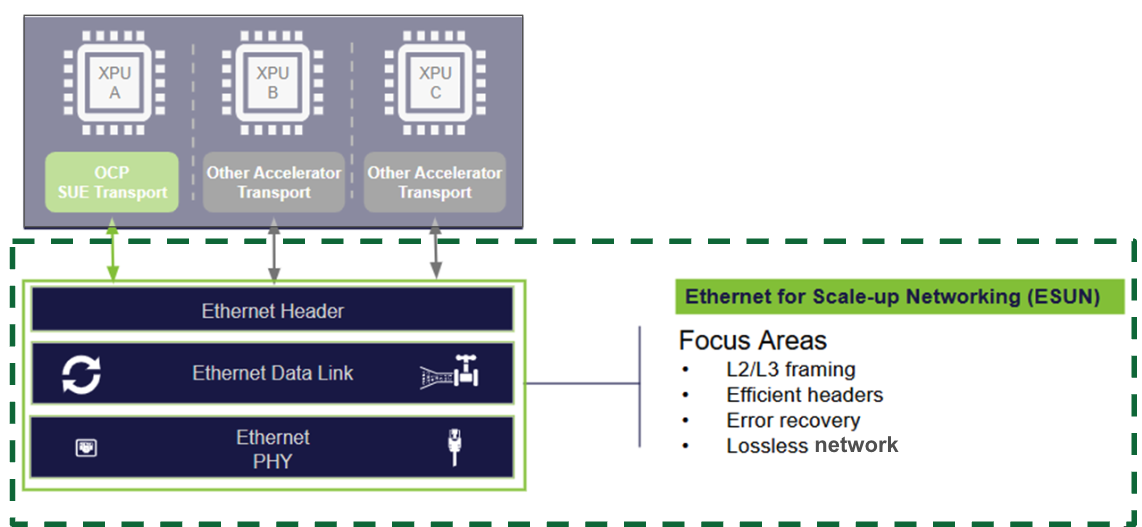 ESUN’s technical focus: a fabric-centric scope that preserves GPU implementation flexibility, coordinated with IEEE and UEC standards work with the ESUN 1.0 specification already released.
With Tahan shipping today, a 72-accelerator-per-rack design on the horizon adopting ESUN as its data plane, and ESUN continuing to evolve its open specifications, we’re helping build a complete open platform for the scale-up future.
Ecosystem Enablement and Open Transport
Our commitment to openness extends across the full networking stack — from switch platform hardware to transport protocols.
OSPA: Open Switch Platform Architecture
 SAI made switch data plane software portable across silicon. But the layer beneath it, the switch platform layer , has remained proprietary and fragmented. Every new hardware platform requires months of duplicated, custom engineering to bring up, and a lack of standard platform design multiplies long-term maintenance and troubleshooting cost. In an era of compressed AI hardware cycles, that onboarding tax has become untenable.
To fix this, we’re co-leading a new OCP initiative with Microsoft and Alibaba , the Open Switch Platform Architecture (OSPA) — a unified reference design for the switch platform layer.
OSPA standardizes the hardware and software interfaces for:
- Power management and power sequencing.
- Sensor and environment control, including thermal and fan management.
- Hardware inventory management and device enumeration.
- Out-of-band hardware interfaces (management Ethernet, serial console, USB, LED indicators).
- Firmware maintenance and updates.
- Platform troubleshooting and diagnostics.
FBOSS Ecosystem Enablement
Over the past year we made a major push to extend open-source FBOSS so that switch vendors can self-onboard their own platforms without Meta engineers in the loop for the port. The goal is a self-service model in which multiple new switch platforms can be developed concurrently, giving vendors access to a hyperscale-proven NOS as they build FBOSS-compatible hardware.
Vendors and developers can get started at the FBOSS documentation site and the FBOSS GitHub repository.
MetaRoCE: Open-Source Transport for AI Clusters
As we recently announced, MetaRoCE is our open-source RDMA transport protocol optimized for AI cluster networks over Ethernet. MetaRoCE provides the congestion control and reliability semantics that distributed AI training workloads demand. It’s purpose-built for the unique traffic patterns of collective communication across large-scale Ethernet fabrics.
At OCP, we are announcing our open-source MetaRoCE implementations, enabling the broader AI infrastructure community to adopt and build upon a production-proven transport stack.
Join Us in Building the Open Future of AI Networking
The pace of AI infrastructure evolution continues to accelerate. The challenges of building open, efficient, and sustainable AI networking are too large for any single company to solve alone.
We invite engineers, silicon vendors, system integrators, and operators to join us and the OCP community in defining what comes next. Visit our presentations at OCP 2026, explore our open-source contributions including FBOSS and MetaRoCE, and collaborate with us on building the networking infrastructure the AI era demands.
The authors are members of the Network Infrastructure team at Meta.