Anthropic 动态工作流如何协调 Claude Agents
英文标题:How Anthropic’s Dynamic Workflows Coordinate Claude Agents
Anthropic 在 AI Engineer New York 2026 上介绍了 Claude Managed Agents 的新功能“动态工作流”(flows),让 Claude 自行规划多 Agent 拓扑、启动子 Agent、汇总结果并管理信息流。该机制旨在将复杂任务拆分为可验证的工作单元,减少开发者手动配置协调器和子 Agent 名单的负担。Anthropic 表示,开发者仍可预先注入专业子 Agent,并通过 Claude Console 的图谱功能查看 Agent 间的上下文传递。动态工作流的成本高于单 Agent 方案,但在覆盖细节方面更有效;开发者可通过预算上限、评估(evals)、dreaming 和记忆优化等方式控制成本与提升长期效率。
 1.5 KB
 13.3 KB
 1.3 KB
 162.1 KB
 190.1 KB
 92.9 KB
 93.6 KB
 348.8 KB
 139.7 KB
 126.6 KB
中文
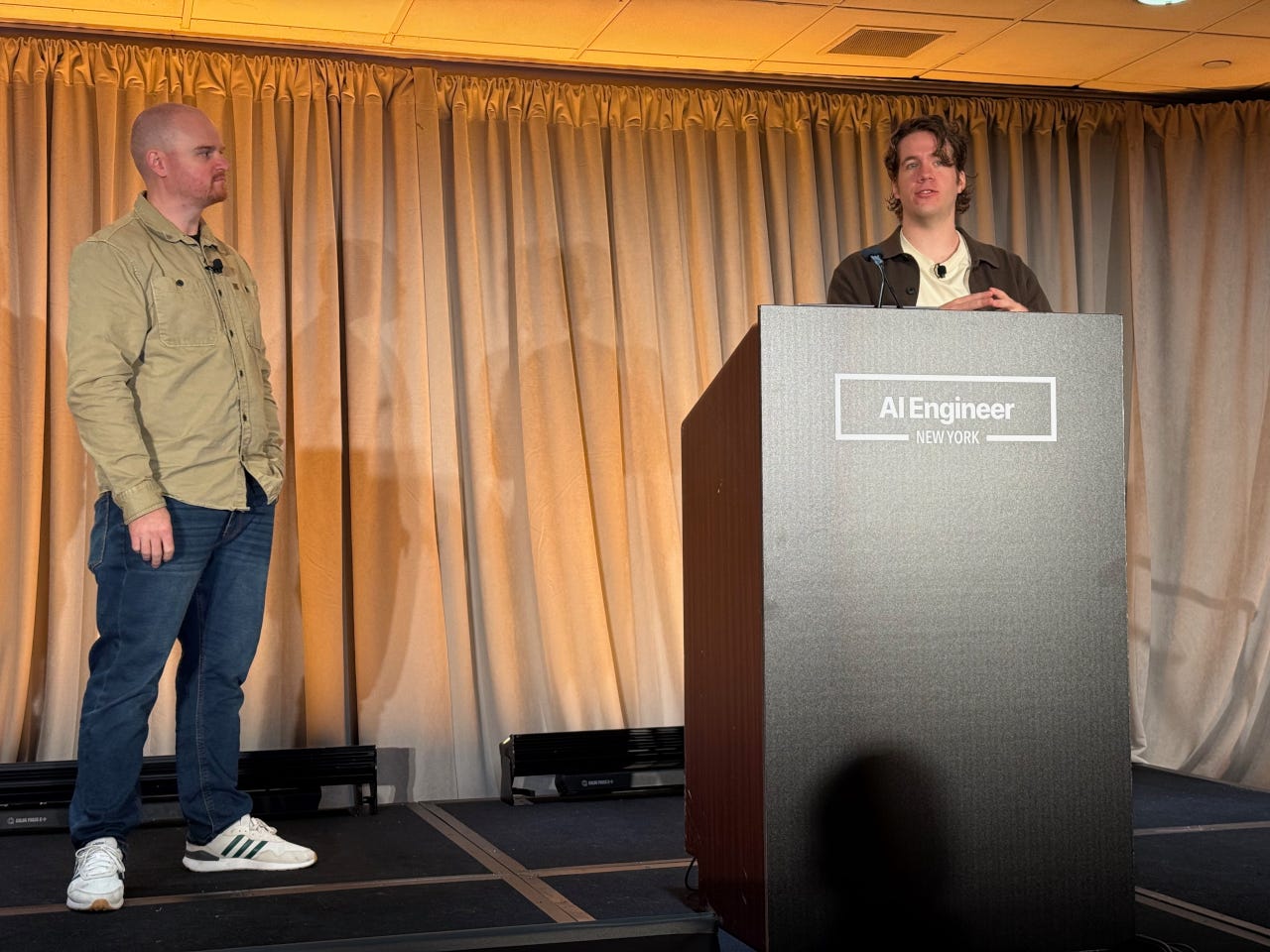
Anthropic 技术人员 CJ Avilla 和 Harrison Stall 在今日的 AI Engineer NYC 活动现场。
AI Engineer New York 2026 大会于今晨开幕,活动包含一系列工作坊,其中 Anthropic 介绍了如何编排其 Claude Managed Agents。尤其引人关注的是一项于周五宣布的全新功能:动态工作流(dynamic workflows)——正如演讲者反复称呼的那样,也可简称为“flows”。
Flows 的定义是:“一种新型多 Agent 编排方式,专为最具雄心的工作负载打造。”
Anthropic 两位技术人员 CJ Avilla 和 Harrison Stall 开场时回顾了过去的一些操作系统项目——从 Ken Thompson 构建最初的 Unix 操作系统,到 Linux 从一个人(Linus Torvalds)发展为由多层受信任维护者共同维护。其启示是:为了完成 Anthropic 为动态工作流设想的大型、雄心勃勃的项目,Agent 同样需要同等程度的组织能力。
“我认为,现在很多正在编排和管理大量 Agent 的人,可能会开始感到,随着许多 Agent 提交海量 PR,自己成了瓶颈和系统断裂点,”Avilla 说。“我们坐在 GitHub 里审批 PR,并确保所有内容都能按预期工作。”
两人指出,动态工作流最初源自 Claude Code 中“为每项任务配备一个 harness”的概念。但**flows 的运行时长可以超过单个 Agent 或一组 Agent。**其基本理念是,由 Claude 决定 Agent 的组织方式。
Stall 表示:“Flows 本质上是多 Agent 编排的下一代版本,你可以让 Claude 全面编排其自身整个多 Agent 拓扑。”
其工作方式是:主 Agent 制定完成任务的计划,随后 Claude 编写一个编排程序,启动 Agent、收集结果并管理信息流。
此前,Claude Managed Agents 要求开发者配置一个协调器和一组子 Agent。借助动态工作流,Claude 自身决定如何拆分和编排工作。
Stall 表示:“在多 Agent 编排的不同阶段中,它能够完成离散、可验证的工作单元,而你无需管理这些事项之间的任何连接关系。”
不过,Avilla 指出,如果用户愿意,仍可引入专业子 Agent。
“也可以在 Agent 配置中传入预先配置好的子 Agent,”他说。
这些功能都可在 Claude Console 中使用。Claude Console 是开发者通过 API 使用 Claude 的界面,这也是 Claude Managed Agents 的核心目的。
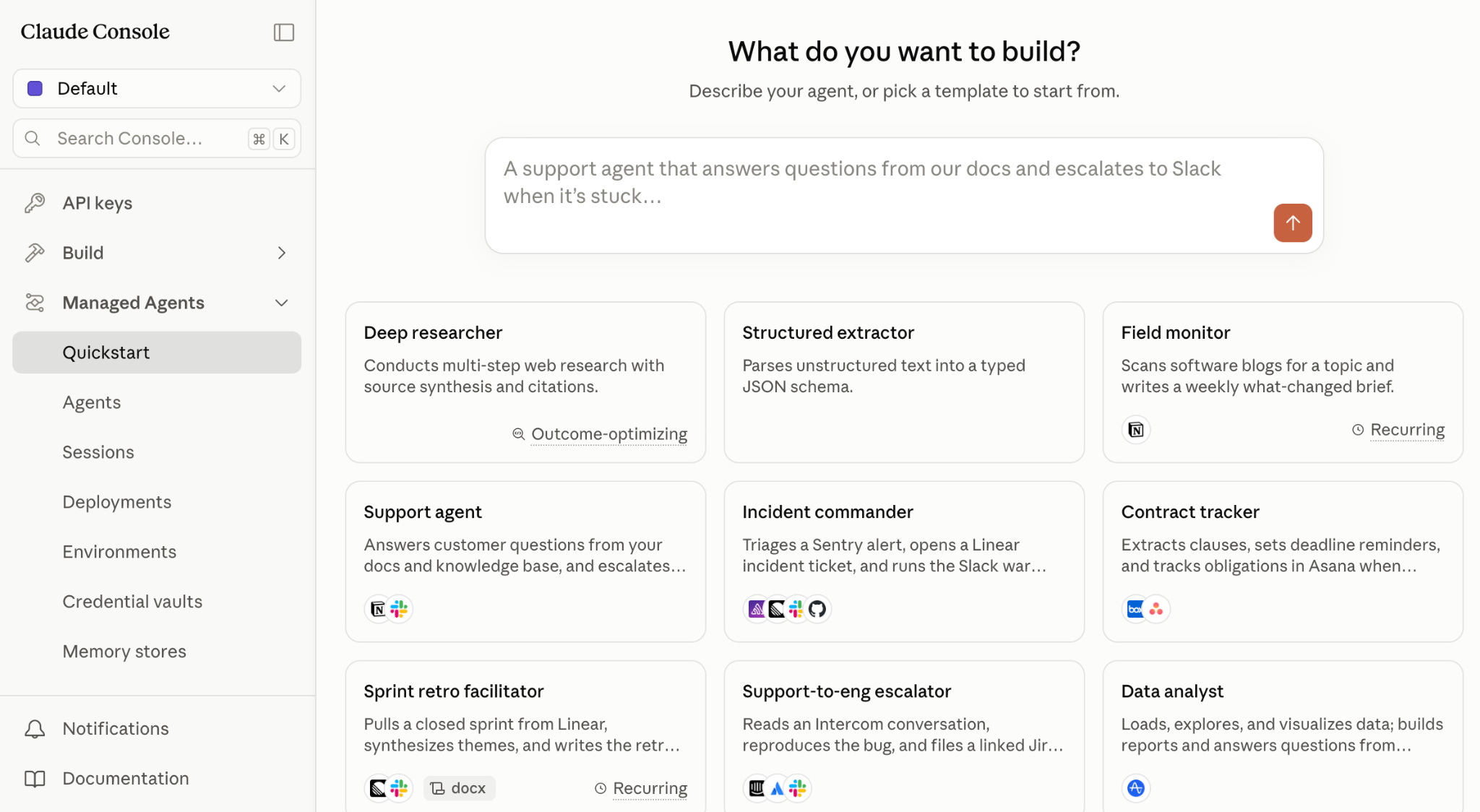
Claude Console,其中包含 Managed Agents 功能。
随后,演讲者展示了一个相对简单的股票观察列表扫描器工作流。尽管这与 Anthropic 正在鼓励的大型、雄心勃勃项目相去甚远,但它说明了基本模式:扫描阶段将单个股票代码分发给拥有隔离上下文的 Agent,之后的审查阶段则检查这些发现,并生成报告。
观众问答环节提出了若干潜在问题。一位观众询问,Claude 如何决定一项任务需要多少个 Agent,以及一个简单的股票代码扫描是否可能触发数百个子 Agent。
Stall 回答:“答案其实是评估(evals)和更低的默认值。”他指出,雄心勃勃的任务通常需要明确鼓励更高程度的并行化。
Agent 编排中一个长期存在的担忧是,如何保持对 token 预算的控制。有人问,主 Agent 是否知道自己有多少可用资金?
Stall 回答,模型在运行时并不知道自己的预算,但开发者可以设置会话预算。他补充称,告知模型其预算可能会让 Agent“有点焦虑”,引起现场观众一阵笑声。
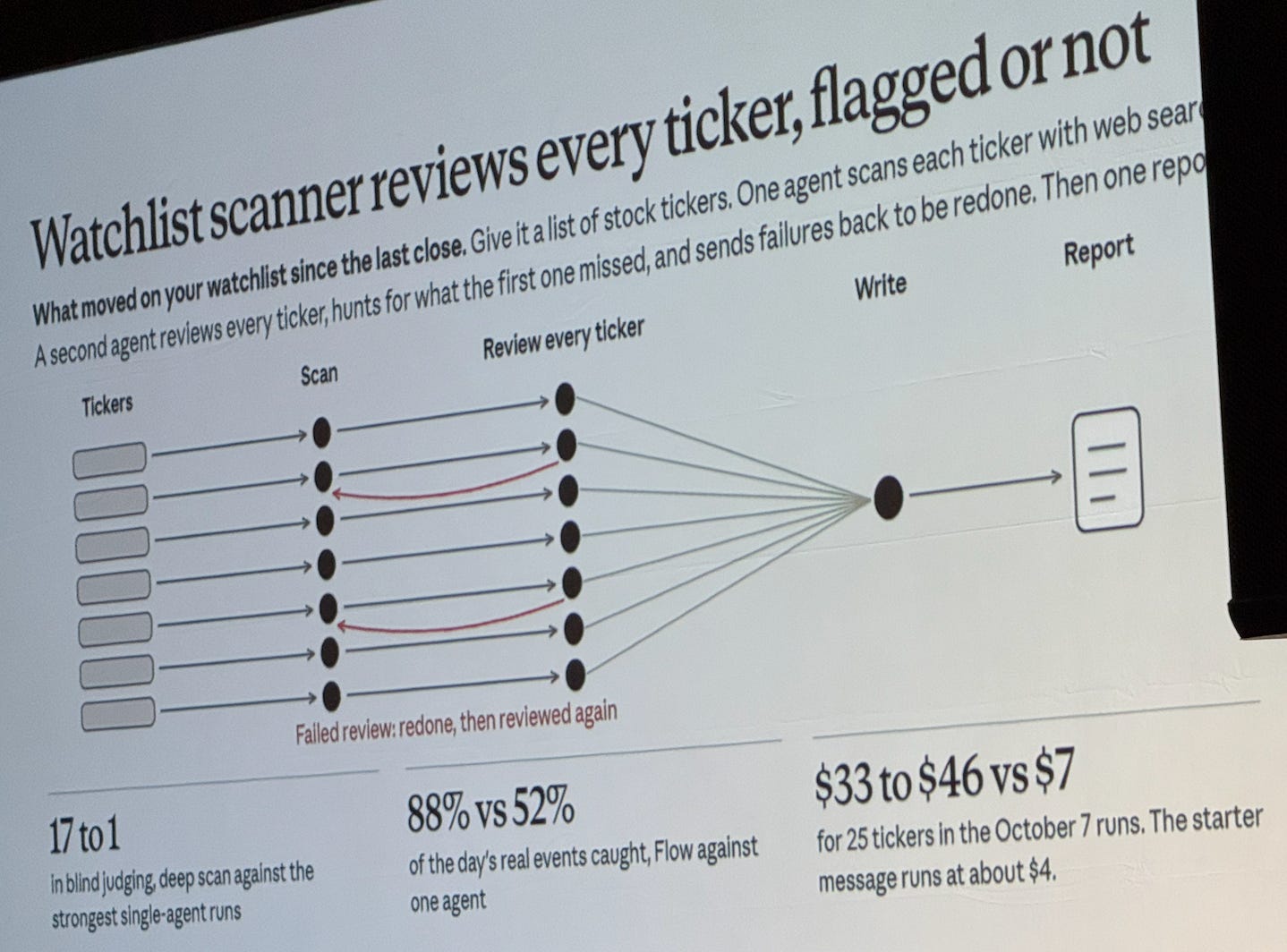
股票观察列表示例中的扫描器。
另一个相关问题是,开发者如何让重复运行的 flows 随时间推移变得更便宜、更高效?
除了让 Claude 检查已产生的成本外,Avilla 建议使用另一项相对较新的功能:dreaming。根据文档,dreaming 被定义为一项研究预览功能。一个 dream 会“读取现有记忆存储及过去的会话记录,然后生成一个新的、重新组织的记忆存储”:合并重复内容,替换“过时或相互矛盾的条目”,并“发现新的洞见”。
Avilla 将 flow 场景中的 dreaming 描述为,能够**“结晶化,并从根本上改进与这些会话相关的记忆存储。”**
针对股票观察列表示例,有人问,**观察列表 flow 能否自我改进?**例如,它能否识别出自己的扫描模型不足,并调整下一次计划运行?
Stall 表示,这一能力尚未内置,但他和 Avilla 建议可以使用爬山优化(hill-climbing)和 dreaming来改进这一循环。
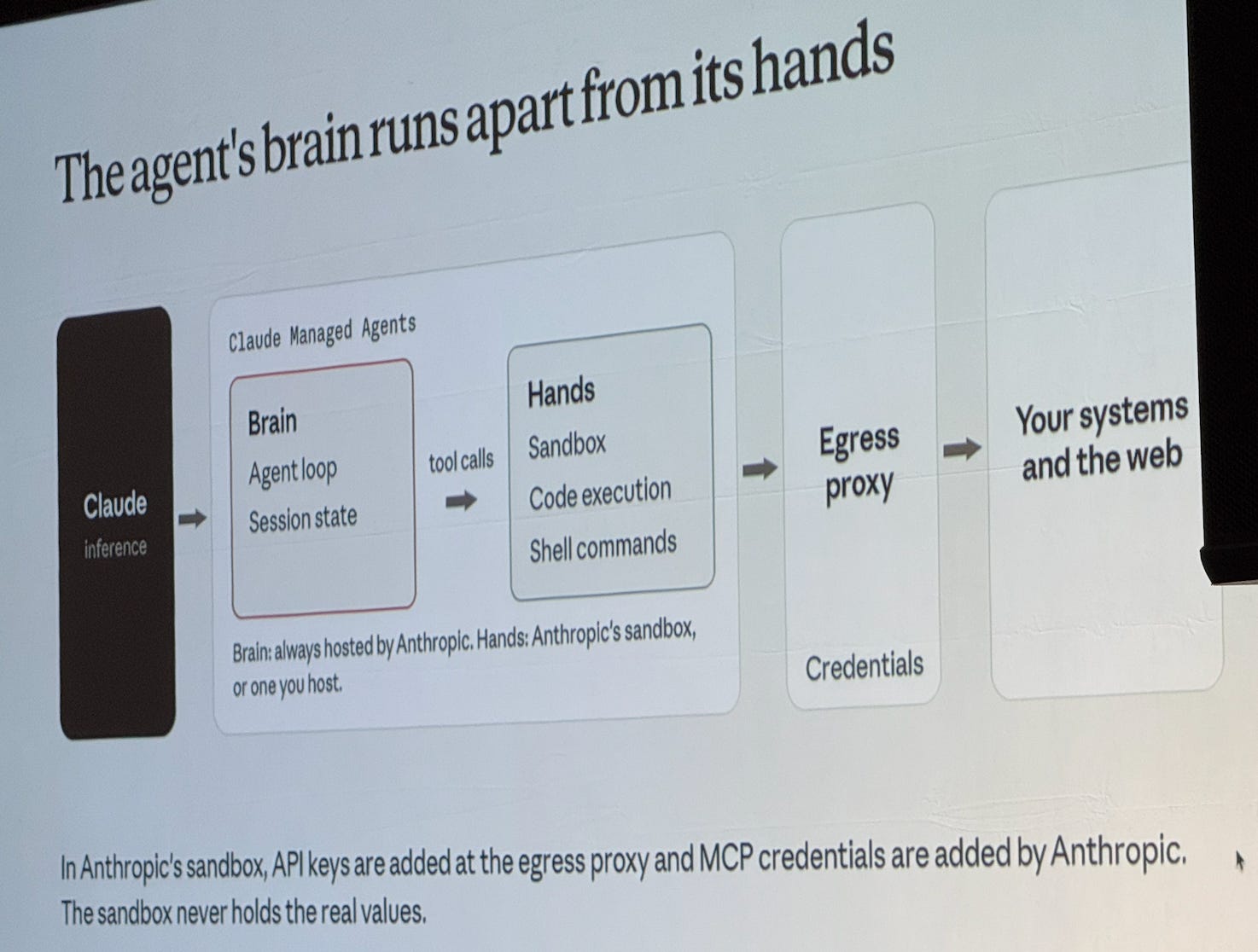
Managed Agents 的“大脑/双手”概念概览。
另一位观众问,开发者能否查看子 Agent 的行动过程。
Avilla 回答,可以,开发者始终可以通过 Claude Console 内的图谱功能进行检查。
**“你可以看到,主 Agent 实际传递给子 Agent 的是什么?**你可以在这里查看该载荷,从而深入理解整个图中的每一次转换实际上发生了什么。”
另一个有趣的问题是,子 Agent 能否相互通信?
Stall 表示,这些 Agent 共享一个文件系统,可以利用它交换信息;但开发者无法通过 API 直接指示一个工作流子 Agent 向另一个子 Agent 发送消息。
在股票观察列表扫描器的对比中,Avilla 表示,flows 的成本比单 Agent 方法“高得多”,但在发现全部细节方面也**“有效得多”。**
更大的问题是,**flows 究竟能有多大的雄心?**一位观众提问,动态工作流是否能够支持大型科学研究项目,并援引 OpenAI 最近宣布的、关于 Navier–Stokes 千禧年大奖难题的证明。
Stall 没有透露 Anthropic 如何计算大型科学问题的具体细节,但他说,他们的目标是让普通用户也能解决这类问题。
他说:“Flows 基本上是一种将测试时计算(test-time compute)投入困难问题,并从模型中更快获得更强能力的方法。我们认为,尤其作为一项 API 服务,释放这种能力是我们让这些类型的发现或科学进步能够被广大公众普遍实现的第一步。”
English / 原文
CJ Avilla and Harrison Stall, Members of Technical Staff at Anthropic, at AI Engineer NYC today.
The AI Engineer New York 2026 conference kicked off this morning with a series of workshops, including Anthropic discussing how to orchestrate its Claude Managed Agents. Of particular interest was a brand new feature, announced on Friday, called dynamic workflows — or simply “flows,” as the presenters repeatedly called it.
Flows are defined as “a new type of multiagent orchestration, built for your most ambitious workloads.”
CJ Avilla and Harrison Stall , both Members of Technical Staff at Anthropic , began by invoking some operating system projects of the past — from Ken Thompson building the original Unix operating system, through to Linux evolving from one person (Linus Torvalds) to layers of trusted maintainers. The lesson: agents need the same level of organization in order to do the types of big, ambitious projects Anthropic envisions for dynamic workflows.
Sponsored by Union.ai
Build a sovereign AI factory
The best engineering teams are building AI factories where they own and control not only their data, compute, and infrastructure, but also a durable runtime on their cloud.
Union.ai gives your workflows the durability to adapt and right-size infra resources and recover from failures without re-running completed work.
Get started directly through AWS Marketplace and try Union.ai free for 30 days.
To learn more, visit us at AI Engineer New York booth #48.
“I think a lot of us who are orchestrating and managing lots of agents now might start to feel this feeling of being the bottleneck and being the breaking point as we have lots of agents contributing tons and tons of PRs,” Avilla said. “And we’re sitting there in our GitHub trying to approve PRs and make sure that everything works as expected.”
The pair noted that dynamic workflows began in Claude Code as the “a harness for every task” concept. But flows can run longer than a single agent or a roster. The basic idea is that Claude chooses the organization of agents.
“Flows are essentially the next version of multi-agent orchestration,” said Stall, “where you can let Claude fully orchestrate the entirety of its own multi-agent topology.”
The way this works is that the lead agent creates a plan for how it wants to accomplish tasks. Claude then writes an orchestration program, which launches agents, collects results, and manages information flow.
Previously, Claude Managed Agents required developers to configure a coordinator and a roster of subagents. With dynamic workflows, Claude itself determines how to divide and orchestrate the work.
“Across multiple different phases of the multi-agent orchestration, it’s able to accomplish discrete, verifiable units of work without you having to manage any of the interconnections between these things,” Stall said.
That said, Avilla noted that the user can introduce specialist sub-agents if they wish.
“It’s also possible in the agent config to pass in pre-configured sub-agents,” he said.
All of this is available in Claude Console , the interface used by developers accessing Claude through API — the whole point of Claude Managed Agents.
Claude Console, where Managed Agents is located.
The presenters then showed a relatively simple workflow of a stock watchlist scanner. Although this was far removed from the big, ambitious projects Anthropic is encouraging, it did illustrate the basic pattern : a scan phase distributed individual tickers to agents with isolated contexts , and a later review phase examined the findings before producing a report.
The audience Q&A surfaced a number of potential problems. One audience member asked how Claude decides how many agents a task needs , and could a simple ticker scan trigger hundreds of sub-agents?
“The answer really is evals and lower defaults ,” Stall replied, noting that ambitious tasks generally require explicitly encouraging greater parallelization.
One enduring concern with agent orchestration is maintaining control over your token budget. Someone asked whether the lead agent knows how much money it has available?
Stall replied that the model does not know its budget while running, but that developers can set a session budget. He added that informing models of their budgets could make the agents “a little bit anxious,” which elicited chuckles from the audience.
Scanner in the stock watchlist example.
A related question was how can developers make repeated flows cheaper and more efficient over time?
Outside of asking Claude to examine the costs incurred, Avilla suggested another relatively new feature be used: dreaming. In the documentation, “dreaming” is defined as a research preview feature. A dream “reads an existing memory store alongside past session transcripts, then produces a new, reorganized memory store, ” with duplicates merged, “stale or contradicted entries” replaced, and “new insights surfaced.”
Avilla described dreaming in the flow context as being able to “crystallize and basically improve the memory store that is related to those sessions.”
For the stock watchlist example, someone asked whether the watchlist flow can improve itself? For example, recognize that its scanning model is inadequate and change the next scheduled run?
Stall said this wasn’t built in, but he and Avilla suggested hill-climbing and dreaming could be used to improve the loop.
The brain/hands conceptual overview of Managed Agents.
What about visibility into the actions of the sub-agents , another audience member asked.
Avilla replied that yes, developers can always inspect that through graphing functionality inside Claude Console.
“You can tell, what did the lead agent actually pass to the sub-agent? You can look at that payload here to deeply understand what is actually happening for every transition in this entire graph.”
Another interesting question was whether the subagents can communicate with each other?
Stall said the agents share a filesystem and can use it to exchange information, but developers cannot directly instruct one workflow subagent to message another through the API.
In the watchlist-scanner comparison, Avilla said flows cost “much more” than a single-agent approach, but were also “much more effective at finding all of the details.”
The bigger question is how ambitious can flows be, really? One audience member asked whether dynamic workflows can power large scientific research projects, referencing OpenAI’s recently announced proof concerning the Navier–Stokes Millennium Prize problem.
While Stall wouldn’t be drawn on specifics about how Anthropic computes large scientific problems, he said it is their goal to enable general users to tackle those problems too.
“Flows are basically a way to throw test-time compute at hard problems and get more capability faster out of the models,” he said. “We think, especially as an API service, that unlocking the power of this is the first step for us making these types of discoveries, or scientific progress, broadly doable by the general public. ”