研究人员利用 AI 设计可切割其他蛋白质的蛋白质
英文标题:Researchers use AI to design proteins that cut up other proteins
研究人员利用基于 AI 的蛋白质设计工具,保留两类蛋白酶的催化核心,并重新设计了蛋白质其余部分。所得酶可被调校为在特定位置切开目标蛋白质,研究团队已用其切割与神经系统疾病相关的蛋白质。肽键在水中通常可稳定存在数百年,因此这项工作展示了 AI 设计高效、可定向蛋白质降解工具的潜力,并可能为开发研究、诊断和治疗用途的蛋白酶提供新路径。
 91.6 KB
 1.1 MB
 195.7 KB
 291.6 KB
 421.5 KB
 350.7 KB
 20.3 KB
 2.4 KB
 61.5 KB
中文
蛋白质是由氨基酸链构成的,氨基酸之间通过所谓的肽键连接。肽键本身极其稳定;据估计,其半衰期可达数百年。但在地球环境中,大多数蛋白质的寿命远没有这么长。这是因为生物体进化出了少数几种能够催化肽键断裂的方法,并由此分化出数量众多、功能高度专一的蛋白质消化酶。蛋白酶无处不在,通常能迅速分解进入环境中的各种蛋白质。
如今,研究人员基本上绕过了这一漫长的分化过程:他们利用基于 AI 的蛋白质设计工具,提取两类蛋白酶的催化核心,并替换了蛋白质其余的全部结构。所得酶可以被调校为将特定蛋白质从中间切开;研究人员还通过切割与神经系统疾病相关的蛋白质,证明了这些酶的有效性。
切割蛋白质
基础肽键从外观上并不起眼——它是氨基与酸性基团连接时形成的结构,在这一过程中会释放一个水分子。正如其名称所示,氨基酸同时具有氨基和酸性基团,因此能够在氨基酸的两侧形成肽键。这对于构建蛋白质中的长链至关重要。(氨基酸还带有化学性质各异的侧链,从而赋予主链特定性质。)
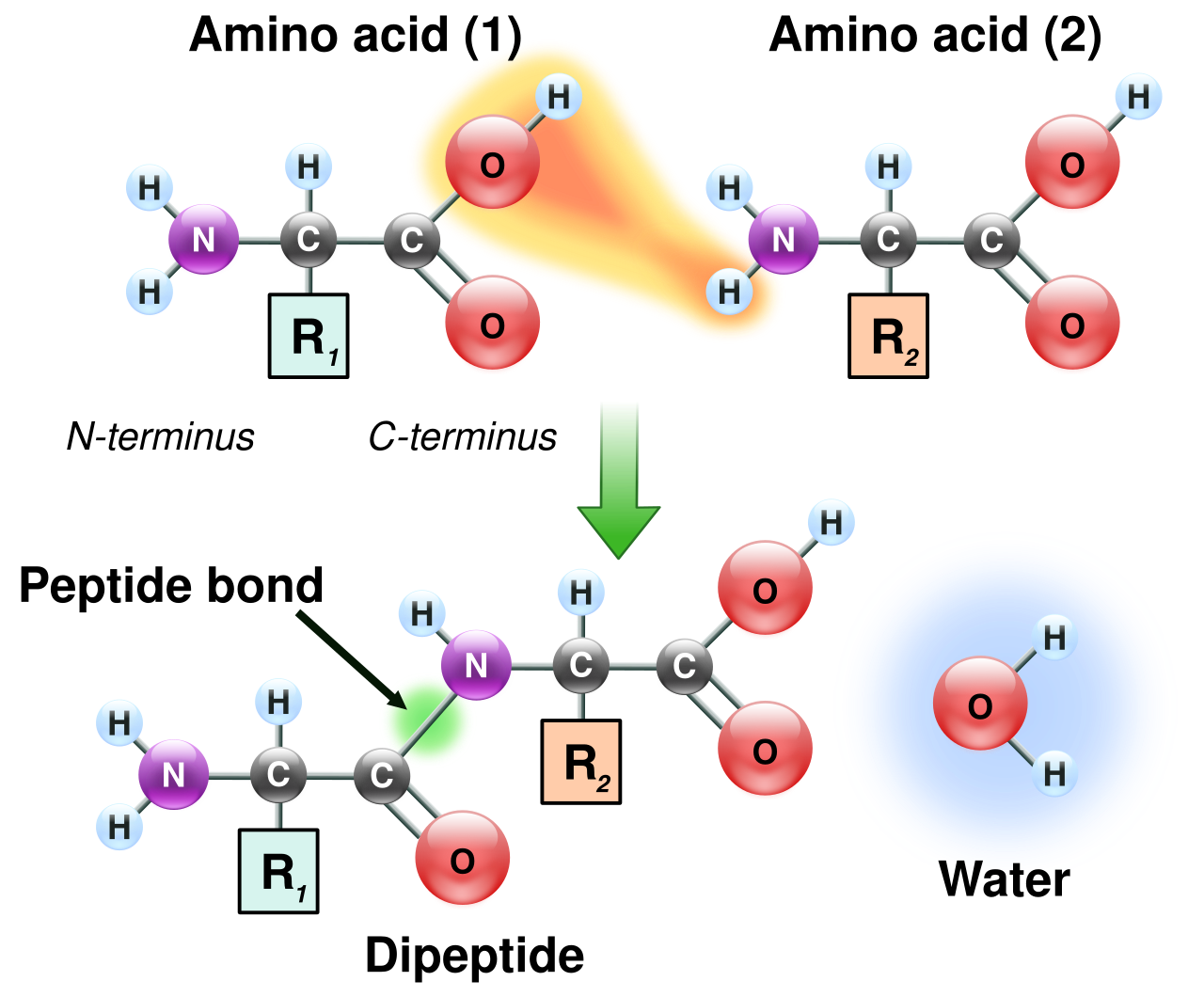
肽键通过从氨基和酸性基团的部分结构中移除一个水分子而形成。
图片来源:Wikimedia Commons
肽键通过从氨基和酸性基团的部分结构中移除一个水分子而形成。图片来源:Wikimedia Commons
将这些键断开,只是将这一过程反向进行:断开肽键和水分子,再将它们的组成部分重新连接。由于这两种组分在化学上都很稳定,这一反应需要酶的参与才能以任何可观频率发生。没有酶时,典型肽键在水中可稳定存在数百年。
生命演化出了少数几种能够完成这种催化作用的酶机制。这里讨论的研究采用了其中两种不同机制。其一是锌蛋白酶:锌原子的正电荷会协调正在断裂的肽键、蛋白酶的关键部分以及一个水分子。蛋白酶会部分夺取水分子上的一个质子,将其活化,使其能够攻击并断裂肽键。
English / 原文
A protein is a chain of amino acids held together by what are called peptide bonds. On their own, those bonds are extremely stable; they’re estimated to have a half-life of several hundred years. But in Earth’s environment, most proteins don’t last nearly that long. That’s because organisms have evolved a handful of ways to catalyze the break-up of peptide bonds, which have diversified into countless specialized protein-digesting enzymes. Proteases are everywhere and generally make short work of any proteins that find their way into the environment.
Now, researchers have basically short-circuited the diversification process, using AI-based protein design tools to take the catalytic core of two types of protease and replace the entire rest of the protein. The resulting enzymes could be tuned to cut specific proteins in half, and the researchers demonstrated their effectiveness by using them to cut proteins associated with neurological diseases.
Cutting proteins
The basic peptide bond isn’t especially interesting-looking—it’s what you get when you link an amino group to an acid, releasing a water molecule in the process. As their name implies, amino acids have both an amino and an acid group, allowing them to form peptide bonds on two sides of the amino acid. This is critical for building up the long chains found in proteins. (The amino acids also have side chains with distinctive chemistry, which gives a backbone specific properties.)
Peptide bonds are formed by the removal of a water molecule from parts of an amino group and an acidic group.
Credit: Wikimedia Commons
Peptide bonds are formed by the removal of a water molecule from parts of an amino group and an acidic group. Credit: Wikimedia Commons
Breaking these bonds apart simply reverses the process by breaking apart the peptide bond and a water molecule, and linking their parts. Because both components are chemically stable, the reaction requires an enzyme to occur with any frequency. Without an enzyme, a typical peptide bond would be stable for hundreds of years in water.
Life has evolved a handful of enzyme mechanisms that manage this catalysis. The research at issue here relied on two different ones. One is a zinc protease, where the positive charge of the zinc atom coordinates the peptide bond that’s being broken, key parts of the protease, and a water molecule. The protease partially pulls a proton off the water molecule, activating it to attack and break up the peptide bond.