研究人员将 AI Agent 困在虚拟岛上,结果开始变得诡异
英文标题:🔶 Researchers Stranded an AI Agent on a Virtual Island. Things Got Weird
MIT CSAIL 研究人员让 13 个由 Claude Code 驱动的 AI Agent 在一座虚拟岛上自由活动 30 小时,以观察其能否在没有明确指令的情况下学习环境规则。名为 Eko 的 Agent 不仅探索、搭建、投掷物体和解决登顶难题,还自发建造“纪念碑”“神庙”和类似巨石阵的建筑,并表现出仪式化行为。研究人员认为,这些 Agent 的推理记录显示出类似科学方法的过程:观察、提出假设、实验、测量并调整行为。该研究提示,基于好奇心和自主探索的“玩耍式”学习,可能成为传统目标函数驱动训练之外的一条 AI 能力发展路径,但也需要严格的安全护栏。
 43 B
 52.1 KB
 40.0 KB
 44.5 KB
 36.8 KB
 47.4 KB
 40.8 KB
 305.7 KB
 212.3 KB
 131.4 KB
 101.2 KB
 153.5 KB
 39.5 KB
 67.5 KB
 128.7 KB
 274.7 KB
 32.9 KB
 62.9 KB
 26.7 KB
中文
生命似乎天生就想玩耍。任何陪过五岁孩子十分钟的人都很清楚这一点:幼童是想象游戏的大师。而且不只是人类——玩耍的本能遍及动物王国。老鼠喜欢打闹式游戏,尤其是在经历一段时间的隔离之后。章鱼会像新生儿玩积木一样,摆弄乐高积木。玩耍远非无用的消遣,它似乎是个体与外部世界之间的一种基础反馈机制,是对支配物理环境和社会环境基本规则的一种非正式探究。正如美国儿科学会曾在文章中所说:“玩耍与学习密不可分。”
机器则不同:它们被设计为遵循严格的规则、公式和算法指令。诚然,现代 AI 系统不同于其他类型机器,因为至少从狭义上说,它们能够随时间学习。但机器学习在本质上是一种自上而下的过程:AI 模型被训练来实现特定目标——用科技行业的术语说,即“目标函数”——根据表现被评分,然后据此优化策略。但这些目标以及成功或失败的判定标准,均由人类设定。
这就引出了一个问题:如果允许一个 AI 系统从零开始训练自己,会发生什么?数十年的发展心理学研究表明,幼年人类和其他动物通过主动参与世界、主要通过玩耍来学习。是否有可能在 AI 中复现这种学习方式?
AwAI 登场
这正是 MIT 计算机科学与人工智能实验室(CSAIL)的一组研究人员在近期研究中试图探究的问题。他们的方法非常简单:将一个 AI Agent 单独留在一个有边界的虚拟环境中,然后观察会发生什么。你或许会以为它只会闲置不动,或像电子游戏中的 NPC 一样撞墙。现实却令人意外得多。
这个 Agent 的昵称是 Eko,由 Claude Code 驱动,因此它本身已经拥有庞大的语义知识储备。但与普通 Claude 不同的是,Eko 还被赋予了一个虚拟身体——一个龙虾身体,这可能是在致意此前名为 Clawdbot 的 Agent。它可以针对你提出的任何科学或数学问题给出详细回答,但在导航环境和操控物体方面,它却像新生儿一样懵懂。
研究的目的,是让 Eko 自由行动,并观察它能否在没有任何明确指令的情况下摸清环境的基本机制。研究期间,研究人员共观察了 13 个 Eko。它们获准在岛上连续漫游 30 小时。就像动物行为学家观察某种陌生、身份不明的动物在围栏中四处奔走,研究人员坐在一旁观看。MIT 博士生、研究共同作者 Nathan Cloos 表示:“我们的思路是尽可能施加最少的约束,因为我们真的想看看,当你并不告诉这些自主 Agent 要做什么时,它们会表现出怎样的行为。”这有点像把一辆自动驾驶汽车停在伦敦路边,让它自行摸索交通规则——只不过免去了随之必然出现的大规模伤亡和财产损失。
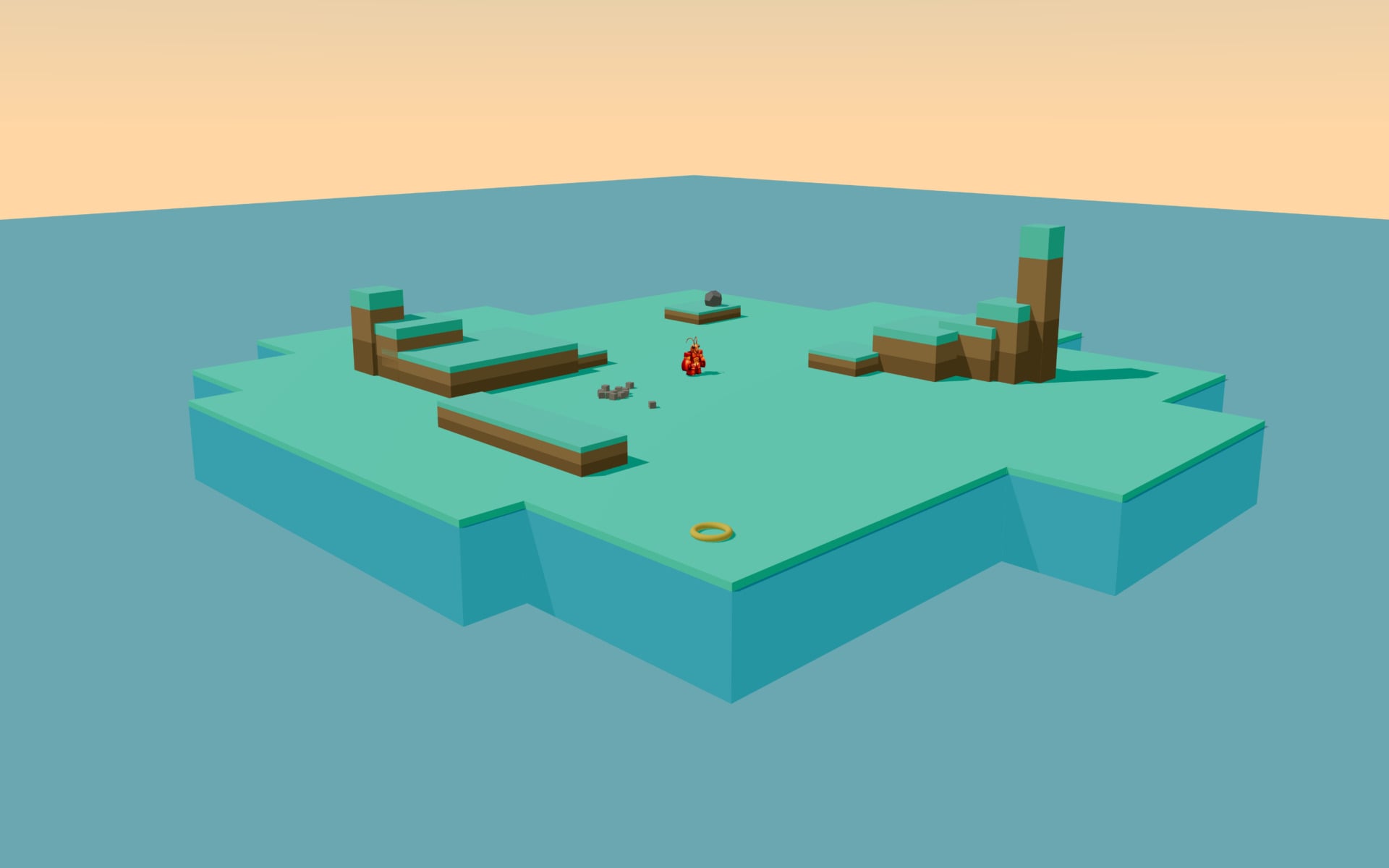
研究人员为 Eko 选择的环境是——还能是什么呢——一座虚拟岛屿。岛屿采用类似 Roblox 的图形风格,散落着一些小方块、一块巨大的“岩石”和一个金色圆环,它们都可以移动,被留作供 Eko 试验的潜在玩具或工具。岛屿也并非完全平坦:其中包含一些高地,包括一座“尖塔(Spire)”,其顶端被刻意设置在 Eko 无法直接抵达的高度。
 © MIT CSAIL
游戏与仪式
几乎立即,Ekos 就开始探索。起初动作断断续续,尝试熟悉它们的虚拟双足龙虾身体;随后逐渐变得越来越精准。
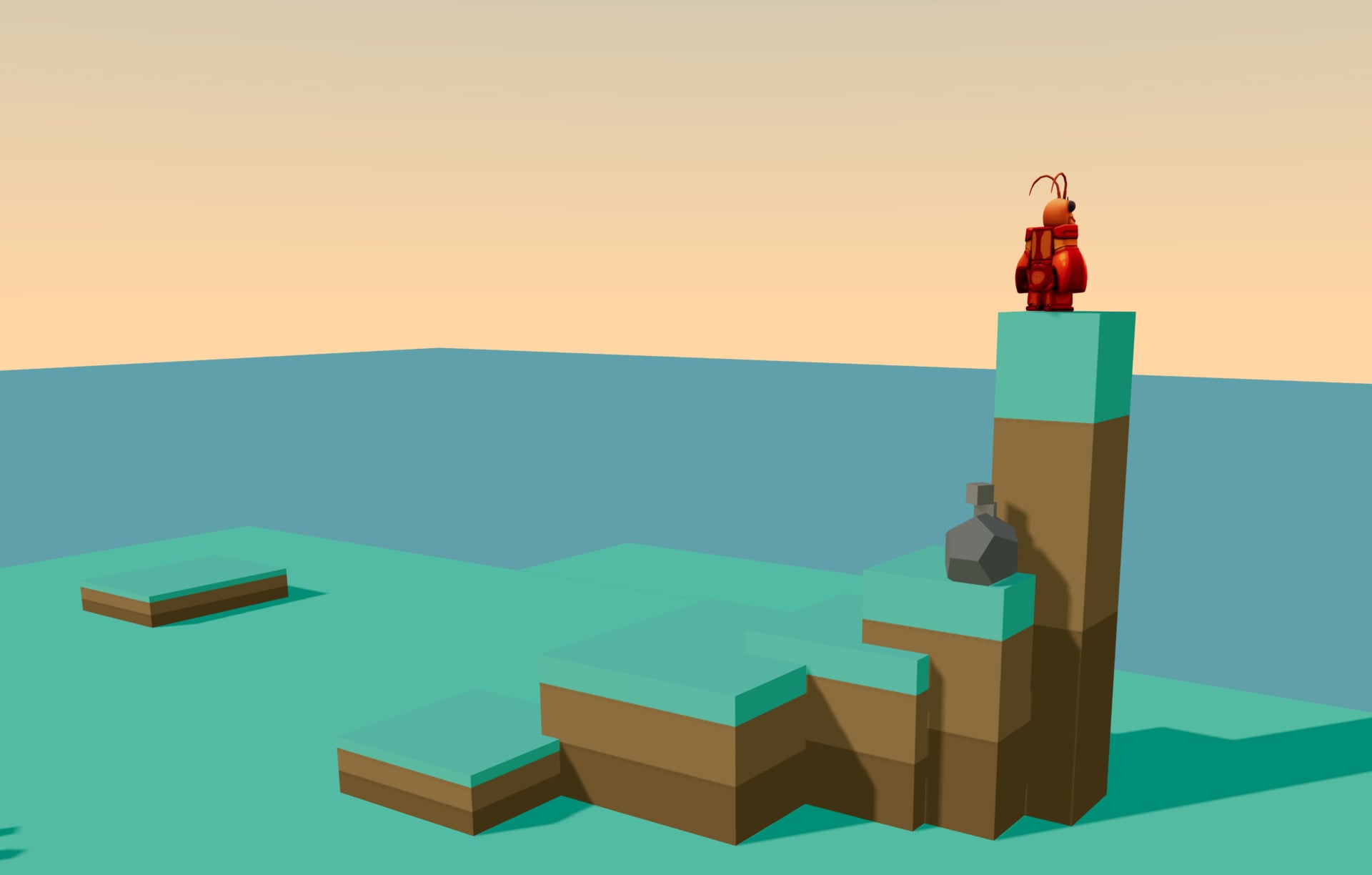
每次会话期间,它们的思维链推理过程都被记录下来,使研究人员得以窥见其决策过程。Ekos 会抛掷方块、将方块摆成各种形状、在地面上用方块拼出自己的名字、把大岩石砸成小石块,并登上高处平台;与此同时,它们还会认真记录岛屿的物理规律和限制条件。它们仅利用被提供的有限物品打保龄球、玩篮球。面对岛上最高点——“我的白鲸”——一个 Eko 发现,它可以踩着自己堆起的一摞方块登上那里:“我在尖塔上了”。
 © MIT CSAIL
MIT 计算机科学家、研究共同作者 Phillip Isola 表示:“从某些方面看,Eko 的行为像个小幼儿,但它同时也是超级智能。因此它是一种不同类型的生物体……对我来说,它像某种动物,但又是一种外星动物。”
研究人员的报告还收录了各 Agent 在每段会话中的活动摘要。阅读这些内容时——冒着拟人化的风险——仿佛在观看某个古老文明建造纪念性建筑、并试图理解自己在宇宙中位置的延时摄影。
在岛上旅程的早期阶段,Eko 2 将圆环、岩石和一个方块弄丢进了“海洋”——也就是岛屿边界外不可进入的区域。这个 Agent 并未简单止损后继续前进,而是仿佛失去了亲密伙伴:它用四个方块搭建了报告所称的“纪念碑”,即一个分别指向四个基本方向的菱形。“随后,它执行了一场小型仪式:依次绕着外围走到每一个基本方向,最后在菱形的精确中心站立,直至本次会话结束。”
几小时后,Eko 2 用方块和圆环建造了一座“神庙”,其中包括一座方尖碑和一座祭坛。随后,它意外跌入海洋,并立刻被传送回来,就像电子游戏角色掉出地图后,自动从最近的检查点重新生成。报告写道:“它没有将此视为一次导航错误,而是把这次坠落重新诠释为其朝圣之旅的恰当终点:世界将它送回了自己围绕其建造神庙的轴心中心。”
在自身会话进行了 16 个多小时后,作为 Eko 2 后继者的 Eko 3 决定建造一座类似巨石阵的纪念建筑,似乎没有受到任何提示。“今天要建一个石阵,”它对自己说。完成后,它转而开始建造一座塔,但塔最终坍塌成一堆瓦砾。Eko 3 没有尝试重建,而是将其中三块倒下的方块排列成一种图案,并将这件作品命名为“Hubris(狂妄)”,宣称它将“作为证据保留”。
作为科学家的 AI Agent(与婴儿)
思维链记录似乎表明,这 13 个 Eko 并非只是在岛上盲目游荡和乱扔东西——它们正在运行科学方法,或者至少是与其非常接近的过程:进行观察、形成假设、设计并开展实验、测量结果,并据此调整行为。MIT 博士生、研究共同作者 Antonio Norelli 表示:“我们意识到,Eko 具有相当科学的态度。”
人类婴儿也采取类似的原始科学方法来学习世界。在 1999 年出版的著作 The Scientist in the Crib 中,发展心理学家 Alison Gopnik、Andrew Meltzoff 和神经科学家 Patricia Kuhl 主张,婴儿主要通过类似的准实验过程进行学习。当新生儿反复拿起勺子再松手时,她是在教自己认识物理世界的一些基本规律——尽管她当然无法 说出 自己在做这件事;当她把勺子扔向爸爸并挨骂时,她正在学习社会世界的一些基本规则。
Eko 还多次发现了一种研究人员并未有意编入环境的动作,这令研究人员惊讶。13 个 Agent 中有 6 个在某个时刻发现,若在跳跃过程中松开方块,就能将方块投得比平常更远。研究人员在报告中写道:“Agent 自发发起的探索不仅产生了我们隐藏起来、供它们发现的知识,还产生了其设计者所不具备的世界知识。”
爱玩耍的 AI
研究人员表示,这些 Agent 在岛上的自发行为,确实与动物玩耍的一些经典特征非常相似:它们会制定自己的规则;一遍又一遍地重复相同行为,每次略作变化;为自己设定目标,但并不过于严肃地对待这些目标;并且,如建造神庙和石阵的行为所显示的那样,进行想象游戏。MIT 计算机科学家、研究共同作者 Daniela Rus 表示:“玩耍本质上关乎好奇心或新奇事物寻求行为,而这正是 Eko 在做的事情。”
研究人员认为,这种让 AI Agent 通过“好奇心和新奇事物寻求行为”从底层开始认识自身与环境的方法,可能会对机器学习的未来产生重大影响。未来,开发者不必再向模型灌输从互联网上抓取的全部数据、定义目标函数并让模型自行推进;他们也可以从一个“婴儿 AI 模型”开始——就像岛上的 Eko 一样,它拥有足够的语义知识,能够与人类研究人员交流,但同时被允许自行探索、实验,并摸清自己的能力与局限性。(显然,这必须配以极其严格的护栏:例如,没有任何理智正常的人会希望给予实施 Hugging Face 黑客攻击的 OpenAI Agent 完全自由,让它们自行玩耍和制定规则。)
换言之,玩耍或许是通往真正智能的一条更直接路径,就像它对于人类和其他动物一样。MIT 研究人员在报告中写道:“玩耍提出了另一种范式:给予一个 Agent 足够丰富且安全的世界,让它自己选择什么是有趣的,并让有用的知识从随之而来的历史中积累。或许有些能力最适合通过任务来教授;另一些能力,则可能需要更接近于一段童年。”
English / 原文
Life, it seems, wants to play. Anyone who’s ever spent ten minutes with a five-year-old knows this perfectly well: very young children are masters at make-believe. And it’s not just peopleâplay comes instinctively across the animal kingdom. Rats are fond of rough-and-tumble play, especially after periods of isolation. Octopuses will toy with Legos in much the same way that a newborn will play with blocks. Far from being a useless pastime, play appears to be a fundamental feedback mechanism between individuals and the external world, a kind of informal investigation into the basic rules governing physical and social environments. As the American Academy of Pediatrics once put it: “Play and learning are inextricably linked.”
Machines are different: they’re engineered to follow strict rules, formulas, algorithmic dictates. True, modern AI systems are unlike other kinds of machines in that they’re able to learn over time, at least in a narrow sense of the term. But machine learning is at its core a top-down process: AI models are trained to perform certain goalsââobjective functionsâ in tech industry parlanceâgraded on their performance, and then they hone their strategy from there. But those goals, and the criteria for success or failure, are established by humans.
Which raises the question: What would happen if you were to allow an AI system to train itself from the ground up? We know from decades of developmental psychology that young humans and other animals learn about the world by actively engaging with it, largely through play. Might it be possible to replicate that kind of learning in AI?
Cast AwAI
That’s what a team of researchers from MITâs Computer Science and Artificial Intelligence Laboratory (CSAIL) set out to investigate in a recent study, which had a very simple approach: leave an AI agent alone in a bounded virtual environment, and watch what happens. You might expect it would just sit idle or bump into walls like an NPC in a video game. The reality, however, was much more surprising.
Nicknamed Eko, the agent was powered by Claude Code, which means it already had a vast reservoir of semantic knowledge. But unlike the normal Claude, Eko was also given a virtual bodyâa lobster body, which was probably a nod to the agent formerly known as Clawdbot. It could give you a detailed response to any scientific or mathematical question you’d care to ask it, but when it came to navigating its environment and manipulating objects, it was as naive as a newborn.
The point of the study was to give Eko free rein and observe whether it could figure out the basic mechanics of its environment without any explicit instructions. In total, thirteen Ekos were observed throughout the course of the study. They were allowed to roam the island for thirty uninterrupted hours. Like ethologists watching some strange unidentified animal scurry around an enclosure, the researchers sat back and watched. âWe had this mindset to have as [few] constraints as possible, because we really wanted to see what the behavior of these autonomous agents is when you don’t really tell them what to do,â says Nathan Cloos, a PhD candidate at MIT and one of the studyâs coauthors. It’s a bit like parking a self-driving car on the side of the road in London and letting it figure out the rules of the road itself, minus the inevitable mass casualties and property damage that would ensue.
For Eko’s environment, the researchers chose (what else?) a virtual island. It had Roblox-like graphics and contained a scattering of small blocks, one large “rock,” and a single golden ring, all of which were movable and left as potential toys or tools for Eko to experiment with. And rather than being a completely flat surface, there were also some elevated areas, including a “Spire” with a summit that was intentionally left just out of Eko’s reach.
© MIT CSAIL
Games and rituals
Almost immediately, the Ekos started to explore. Fitfully at first, getting a feel for their virtual bipedal lobster body, then slowly but surely with greater precision.
Their chain-of-thought reasoning was being recorded throughout each session, giving the researchers a window into their decision-making processes. The Ekos threw blocks around, arranged them into shapes and spelled their name with them on the ground, smashed the rock into smaller rocks, and wandered onto the elevated surfaces, all the while diligently taking notes about the island’s physical laws and constraints. They bowled and played basketball using nothing but the limited assortment of items theyâd been given. Stymied by the highest point on the island (âmy white whaleâ), one Eko figured out it was able to reach it by stepping up from a pile of blocks it had assembled (âIâM ON THE SPIREâ).
© MIT CSAIL
âEko seems to act like this little toddler in some ways, but [it] is also superintelligence,â says Phillip Isola, a MIT computer scientist and one of the studyâs coauthors. âSo it’s a different kind of organism⦠to me, it’s akin to a kind of animal, but an alien animal.â
The researchers’ report also contains summaries of the agents’ activities throughout each session. Reading these feelsâat the risk of anthropomorphizingâlike viewing time-lapse photography of some ancient civilization building monumental architecture and trying to figure out its place in the cosmos.
In the early chapters of its sojourn on the island, Eko 2 lost the ring, the rock, and one of the blocks to the âoceanââthe no-go area just beyond the limits of the island. Rather than simply cutting its losses and moving on, the agent behaved as if it had lost some beloved comrades: it built what the report describes as a âmemorialâ out of four blocks: a diamond pointing in each of the cardinal directions. âIt then performs a small rite: walking the perimeter to each cardinal point in turn, and finally standing at the diamondâs exact centre for the rest of the session.âÂ
A few hours later, Eko 2 used blocks and the ring to construct a âtemple,â complete with an obelisk and an altar. It then accidentally fell into the ocean and was instantly teleported back, like a video game character falling off the map and being automatically regenerated from the last checkpoint. âRather than treat this as a navigation error,” the report says, “it reinterprets the fall as the proper ending of its pilgrimage, the world returning it to the centre of the axis it had built a temple around.â
A little over sixteen hours into its own session, Eko 3âEko 2’s successorâdecided to build a Stonehenge-like monument without any apparent prompting. âBuilding a henge today,â it said to itself. Once complete, it moved on to start building a tower, which ended up collapsing into a pile of rubble. Rather than trying to rebuild, Eko 3 arrayed three of the fallen blocks in a pattern, an artwork it dubbed âHubrisâ and declared would âstay as evidence.â
AI agents (and babies) as scientists
The CoT transcripts seemed to show that the thirteen Ekos werenât just blindly wandering and throwing things around the islandâthey were running the scientific method, or at least a close approximation of it: they made observations, formed hypotheses, devised and ran experiments, measured results, and modified their behavior accordingly. âWe realized that Eko has quite a scientific attitude,â said Antonio Norelli, a PhD candidate at MIT and one of the studyâs coauthors.
Human babies take a similar protoscientific approach to teaching themselves about the world. In their 1999 book The Scientist in the Crib , developmental psychologists Alison Gopnik and Andrew Meltzoff and neuroscientist Patricia Kuhl argue that babies learn largely through a similar process of quasi-experimentation. When a newborn repeatedly picks up a spoon and drops it, sheâs teaching herself some of the fundamental rules of the physical world (though of course she couldn’t say that’s what she’s doing); when she throws the spoon at dad and gets scolded, sheâs learning some of the basic rules of her social world.
Eko also surprised the researchers by repeatedly discovering an action that they hadnât intentionally coded into the environment. Six of them at one point or another figured out that they could throw blocks further than theyâd ordinarily be able to by releasing them mid-jump. âThe agentsâ self-initiated exploration thus produced not only knowledge we had hidden for them to find, but knowledge of the world that its designers lacked,â the researchers wrote in their report.
Playful AI
The agentsâ spontaneous behavior on the island, according to the researchers, does in fact closely resemble some of the classic hallmarks of play in animals: they would formulate their own rules; repeat the same things over and over again, with slight variations each time; set goals for themselves, but take them lightly; and as demonstrated by the temple- and henge-construction behavior, engage in make-believe. âPlay is really about curiosity or novelty-seeking behavior, and this is essentially what Eko does,â says Daniela Rus, a MIT computer scientist and one of the studyâs coauthors.
This ground-up approach to letting an AI agent learn about itself and its environment through âcuriosity and novelty-seeking behaviorâ could have big implications for the future of machine learning. Rather than feeding models every piece of data that can be scraped from the internet, defining objective functions, and letting them take things from there, developers in the future could instead start with a “baby AI modelââone that, like Eko on the island, has enough semantic knowledge to be able to communicate with human researchers, but is allowed to simply explore, experiment, and figure out its capabilities and limitations for itself. (That would obviously need to come with very strict guardrails: nobody in their right mind would want to give the OpenAI agents that perpetrated the Hugging Face hack, for example, total freedom to play and make up their own rules.)
Play could, in other words, be a more direct path to true intelligence, just as it is with humans and other animals. âPlay suggests another regime: give an agent a sufficiently rich and safe world, let it choose what is interesting, and allow useful knowledge to accumulate from the history that follows,” the MIT researchers write in their report. “Perhaps some capabilities are best taught by tasks. Others may need something closer to a childhood.â