GitHub 发布 2026 年度 Octoverse 报告:Agent 驱动研发爆发,单月 Commit 突破 73 亿
英文标题:GitHub Octoverse 2026
GitHub 在其 Universe 年度大会上公布了 2026 年 Octoverse 报告,直观展现了智能体工程化(Agentic Engineering)对软件开发范式带来的颠覆性冲击。数据显示,2026 年 GitHub 每月合并 PR 数量在不到一年内增长两倍达 2.2 亿,每月 Commit 数量翻倍增长至 73.8 亿次(主要增幅集中在下半年),每月新建仓库亦翻倍至 3030 万个。报告还利用微调大语言模型与多语言嵌入技术校正地域偏差并进行行业分类,表明由 AI Agent 深度参与的代码生产与协议复现正重塑全球开发者的协作生态。
 221.5 KB
中文
2026 年 10 月 28 日 - Link Blog
GitHub Octoverse 2026。我今天参加了 GitHub Universe 大会(GitHub 通过其“GitHub Stars”项目为我提供了免费门票)。执行副总裁(EVP)Jay Parikh 刚刚宣布了今年的 Octoverse 报告,并特别强调了以下这组数据:
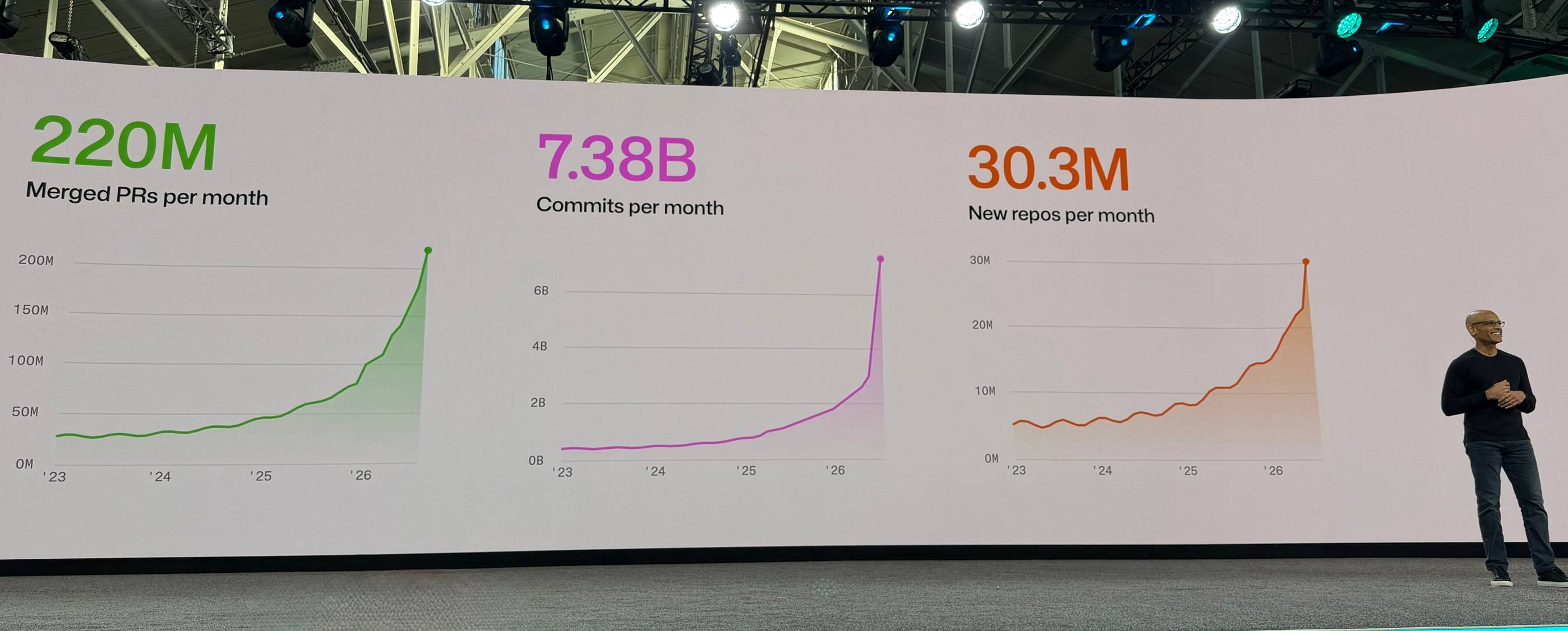
这是 Agent 工程化(Agentic Engineering)对 GitHub 产生深远影响的一个极为直观的体现。在 2026 年,不到一年的时间内,每月合并的 Pull Request(PR)数量增长了两倍(达到原先的三倍),攀升至每月 2.2 亿。每月 Commit 提交量更是暴增超过三倍,达到每月 73.8 亿次,且其中大部分增长都发生在今年下半年。新建仓库的速率今年也翻了一番,达到每月 3030 万个。
该报告还包含了按行业划分的最新数据,并单独统计了涉及“互操作性或逆向工程(interoperability or reverse engineering)”的仓库。方法论部分记录了具体的统计方式说明:
按个人资料所在地区校正后的公开仓库推送量最高国家。统计了整个 Octoverse 年度内来自各国的代码推送总量。为了消除使用 VPN 所造成的偏差,分析采用了 LLM 分类技术,从在此期间贡献推送的 GitHub 用户个人资料中提取 ISO 3166-1 alpha-2 国家/地区代码 [...]。
行业。针对 2022 年至 2026 年创建的公开仓库,使用经过微调的多语言嵌入模型(Multilingual Embedding Model),根据每年随机抽样样本中的仓库名称、描述、主题标签(Topics)和 README,将它们归类到北美行业分类系统(NAICS)中。[...]
互操作性。统计了每年创建的公开仓库中,其名称、描述、主题标签或 README 中提及互操作性、逆向工程或相关术语(例如净室实现 clean room implementation、无缝替代 drop-in replacement 或协议重新实现 protocol re-implementation)的仓库数量。
English / 原文
28th October 2026 - Link Blog
GitHub Octoverse 2026. I'm at GitHub Universe today (GitHub gave me a free ticket through their "GitHub Stars" program). EVP Jay Parikh just announced this year's Octoverse report, and highlighted these numbers in particular:
This is a pretty stark representation of the impact of agentic engineering on GitHub. In 2026, merged pull requests tripled in less than a year to 220 million per month. Commits more than tripled to 7.38 billion per month, with most of that increase in the second half of this year. New repository rate doubled this year, to 30.3 million per month.
The report includes new numbers by industry, and breaks out numbers for repositories that involve "interoperability or reverse engineering". The methodology section includes notes about how they did this:
Top countries by pushes to public repositories, adjusted by profile location. Pushes from each country were summed across the Octoverse year. To adjust for biases caused by VPN usage, LLM classification was used to extract the ISO 3166-1 alpha-2 code from the profiles of GitHub users who contributed pushes during this period [...]
Industry. Public repositories created 2022 to 2026 were sorted into NAICS sectors by a fine-tuned multilingual embedding model using name, description, topics, and README, from random samples per year. [...]
Interoperability. Counts public repositories created each year whose name, description, topics, or README mention interoperability or reverse engineering, or related terms, such as clean room implementation, drop-in replacement, or protocol re-implementation.