Vibe 游戏开发的 10 月拐点:大模型不仅能写代码,更学会了创造“好玩”
英文标题:The October inflection point for vibe game development
作者 Simon Willison 指出,继 2025 年 11 月编程 Agent 迈过实用门槛之后,2026 年 10 月迎来了“Vibe 编程开发游戏”的全新拐点,其中 Claude Opus 5.5 展现出真正理解并设计“趣味玩法(fun)”的惊人跃升。作者展示了无需手动编写或查看一行代码(纯 Vibe Coding)打造的四款高可玩性浏览器 3D 游戏,涵盖程序化找茬、全剧情 3D 角色扮演乃至支持多 Agent 实时对战的即时战略游戏。这一突破标志着 AI 游戏开发从单纯的“外观模仿”跨入“机制与体验设计”阶段,大幅重塑了独立游戏开发的原型设计与创意实现门槛。
 316.9 KB
 96.3 KB
 112.3 KB
 192.9 KB
 183.4 KB
 199.5 KB
中文
Vibe 游戏开发的 10 月拐点
2026 年 10 月 28 日
我之前曾撰文谈到 2025 年 11 月是编程 Agent 的拐点——在那一节点,Opus 4.5 和 GPT-5.1 跨越了一个临界点,意味着它们各自驱动的编程 Agent 成为了软件工程师日常不可或缺的可靠主力。我认为我们在 2026 年 10 月迎来了又一个全新的拐点,而这一次是针对 Vibe 编程制作电脑游戏(vibe coding computer games)。
尤其是 Claude Opus 5.5,在构建引人入胜的游戏所需的多个关键领域都展现出了意义重大的提升:
最后这一点尤为重要。正如在我之前的实验中所见,模型已经有相当长一段时间能够制作出“表面上看起来像游戏”的东西。真正的挑战一直在于如何制作出一款“真正好玩(fun to play)”的游戏。
游戏设计是一门高深的专业领域。我不会假装自己精通此道——我所掌握的认知足以让我对这门手艺抱有敬畏之心。创造一个新颖、引人入胜的游戏核心循环(gameplay loop),在适度的挑战水平上考验玩家,并提供令人满意的学习曲线,这是一门精致的艺术。我原本不认为模型能做到这一点。
后来,我尝试告诉 Claude Opus 5.5 “把它做得好玩得多(Make it a LOT more fun)”……它真的做到了。
在过去的几周里,我通过 Vibe 编程(遵循该词的经典定义——全程完全不看一行代码)制作了四款我自己真正乐在其中的游戏。
上周末我参加了在伯克利举办的 Foo Camp,遇到了好几位有着类似体验的朋友。如今制作游玩体验良好的游戏,其简单程度令人震惊。新的挑战变成了:如何构思出新颖、令人愉悦且若没有 AI 辅助便不可能诞生的游戏创意。
我尚未做过详尽的研究,但目前的直观感受是 GPT-6 Astra 还“差了一点火候”。它完全具备构建游戏的能力,但对趣味性(fun)的理解力还比不上 Opus 5.5。我预计 OpenAI 会在年底前赶上来。
以下四个游戏项目让我确信:模型现在已经有能力在极少人类引导下产出有趣好玩的游戏。这四款游戏均使用 HTML 与 JavaScript 构建,且完全在浏览器中运行。
Tree Appreciator
让我感到真正愉悦的最小体量游戏是 Tree Appreciator。我直接使用了 Claude 的常规聊天界面来制作它——甚至都不需要用到 Claude Code。
这是我沿着 Skyline Boulevard 驱车看树时突发奇想制作的。我的提示词是:
Build a three js game called "Tree appreciator" - it shows you two algorithmically generated trees and the game mechanics is about appreciating the differences between them. Think hard about how to make sure it is both fun and beautiful.
我发现让模型使用 three.js 效果出奇得好。Claude 本身虽然没有内置图像生成模型,但它有能力构建外观和质感都极其出色的全彩 3D 模型。
这款游戏完全不需要任何迭代或后续追问提示——单次生成(single shot)即告完成。它交付给我一个迷人且适配移动端的小巧“找茬”游戏。你可以在这里试玩。这是构建该游戏的完整对话记录。
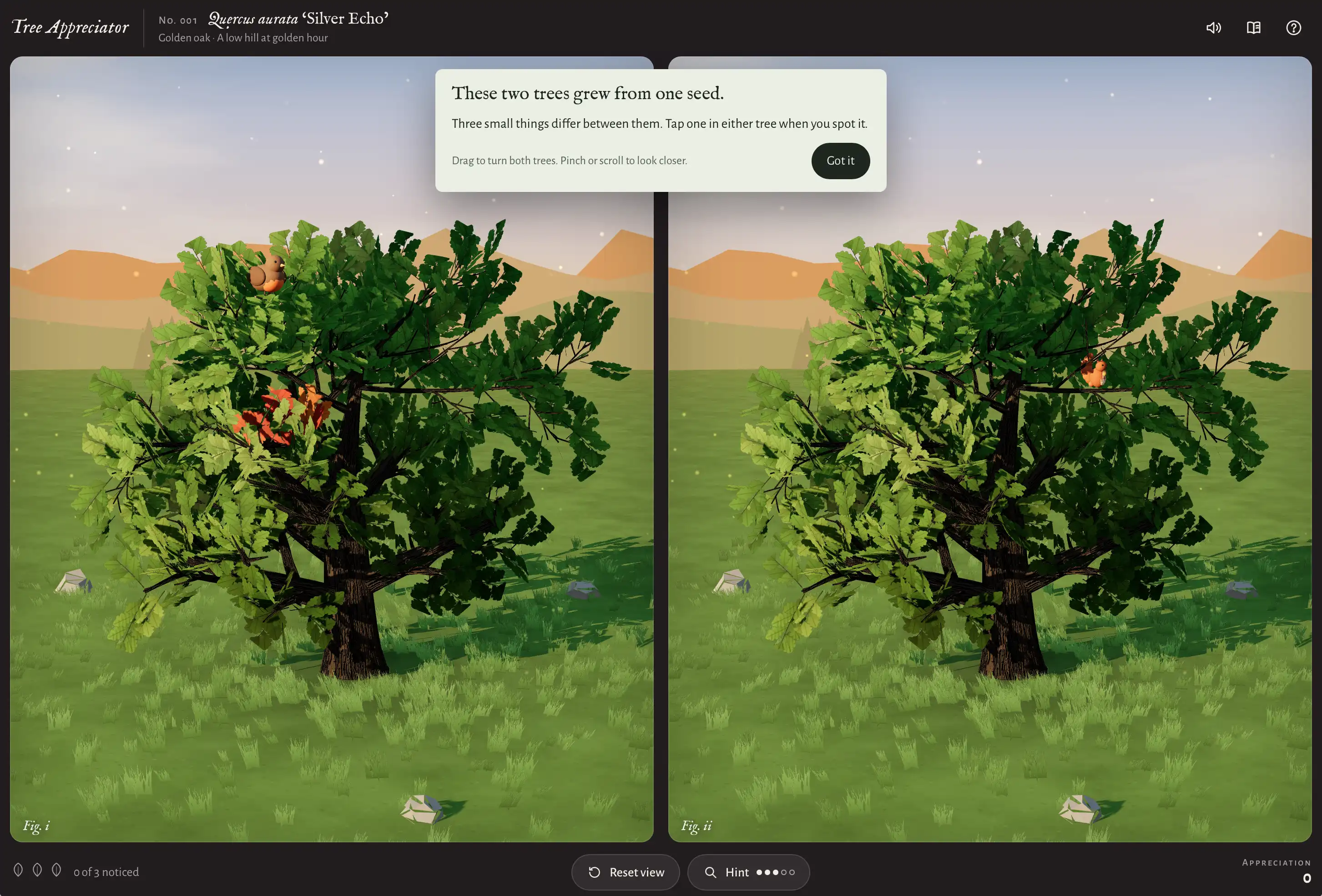
游戏让人身心愉悦、倍感放松。画面充满趣味,而且可以在“植物标本馆(herbarium)”中收集你已通关的树木,带来一种惬意的美好成就感。
Emberwick
这是一个更具野心的项目,同样是通过常规的 Claude 聊天界面构建的。我最初只是想为俯视角奇幻 RPG 构建一个实验性的原型引擎:
Build a demo game engine three.js which is a top down (but at an angle) RPG - the player gets to move through the world with one or two companions. Create a fantasy village setting that demonstrates walking around outside and then shows how when the player enters a building the wall between the player and the camera goes transparent so the user can see what is happening
Add some NPCs and plenty of furniture and different types of building some with an upstairs - be creative, make it look great
这是最初的版本。运行表现非常亮眼!
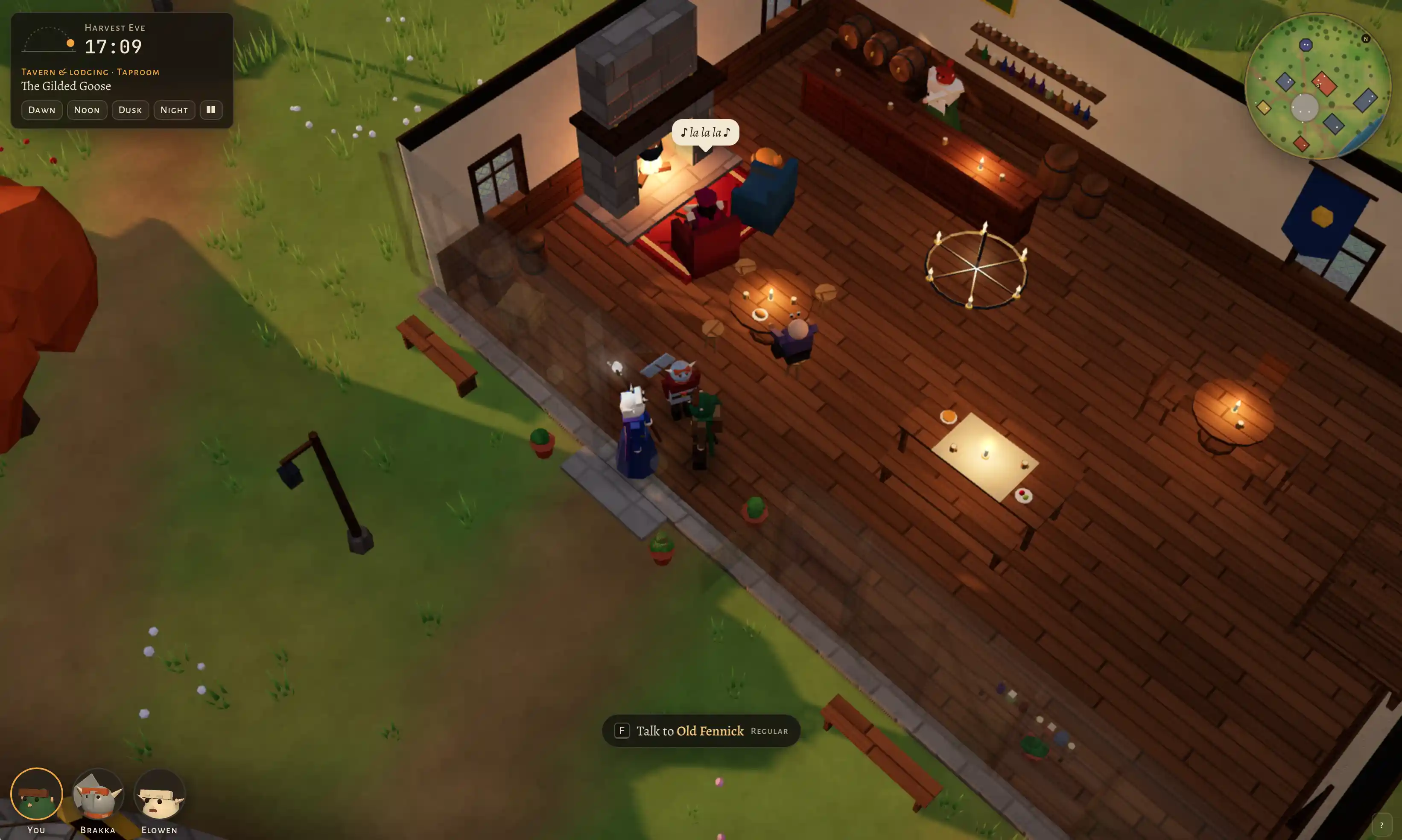
这激发了我进一步提升目标的雄心:
Make it not so flat - the buildings are great but the landscape itself is completely flat at the moment, fix that
Add basements to two of the buildings with a tunnel system joining them below the village
Add the start of a rocky mountain on one side of the village containing a cave with a sleeping troll
这是修改后的版本。
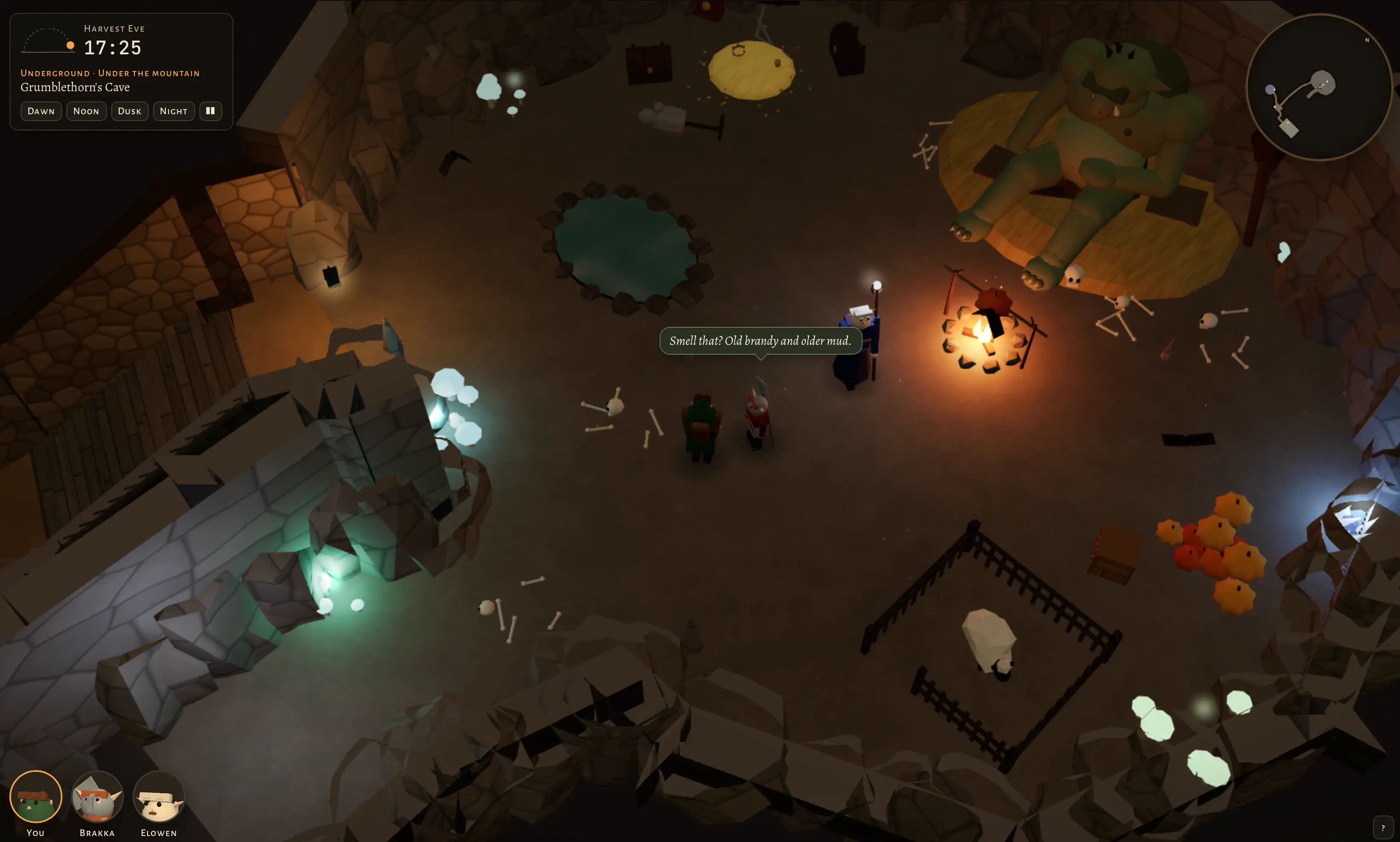
当看到这一步也取得了绝佳效果时,我决定全力推进到底:
Now turn this into an actual game - quadruple the size of the playable area, introduce fun game mechanics, add a plot that isn't too cliche, some twists, a magic system, make it really good
我们又用上了像“让它真正变好(make it really good)”这样的提示词!要求剧情“不要太老套(isn't too cliche)”似乎也奏效了——虽然还是带有一点老派套路,但依然足够新颖,让我饶有兴致地读完了整个故事。
与 Tree Appreciator 不同,这个项目经历了不少试玩和提示词迭代才得出最终成品。这主要是由游玩层面的 Bug 引起的——比如某个角色因为另一条剧情支线的触发而移动到了别处,导致无法出现在正确的位置来完成任务。
这是最终版游戏。它包含一段约 15 分钟即可通关的完整故事。
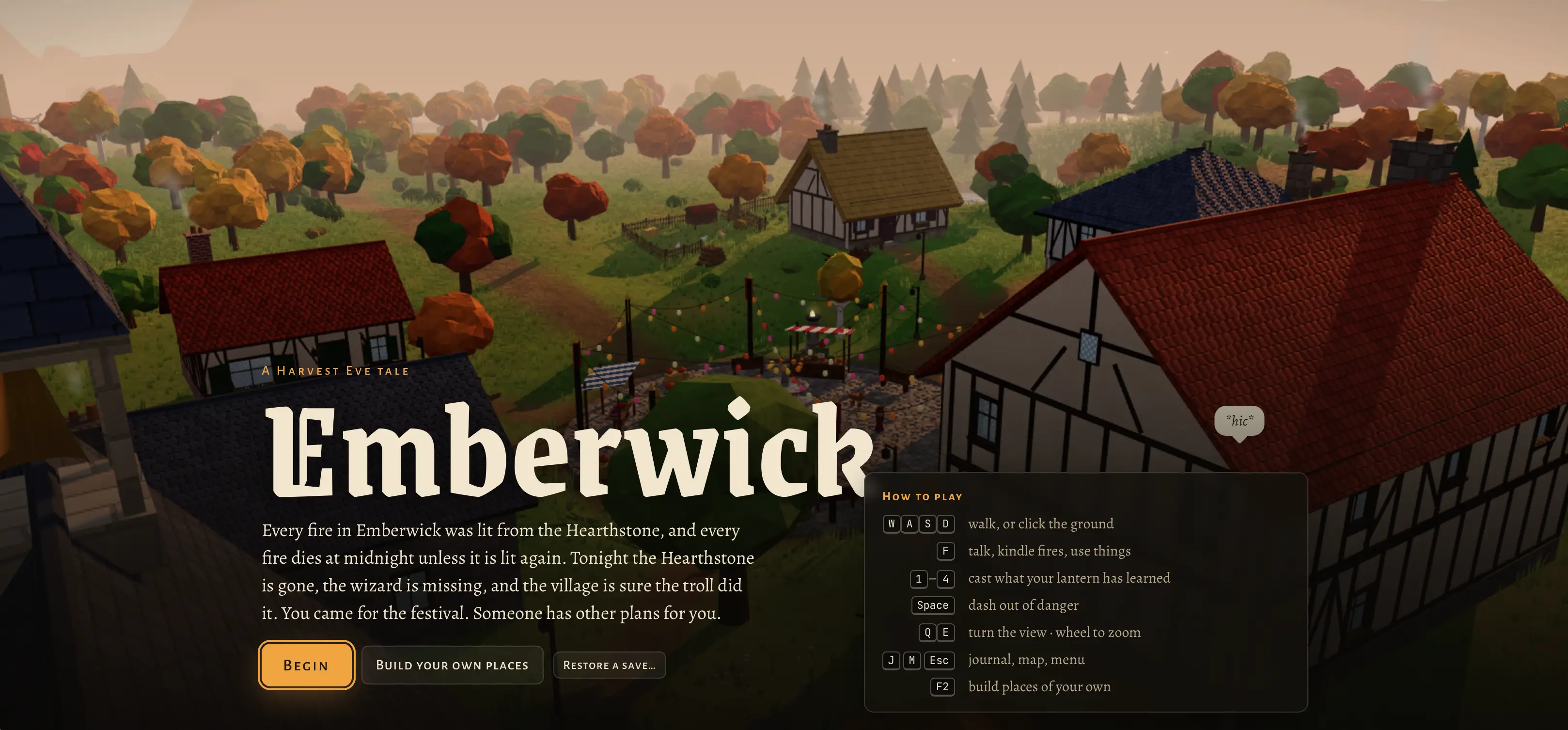
游戏中甚至还包含一个实验性的关卡编辑器,供你自行放置房屋、家具和地形特征。
当一切顺利跑通(并且我通过多轮迭代修复了玩法 Bug)后,我从头到尾完整玩了一遍,发现自己竟然被结局深深打动了!这让我有些不好意思,因为这款游戏里的一切——画面、剧情、角色、音乐、对白——全都是由模型生成的。我的全部创意投入基本仅仅是“这是一个奇幻村庄,山洞里睡着一只巨魔”。
这里是我构建该游戏的完整 Claude 共享对话。
我也把最初的那组提示词丢给了 ChatGPT GPT-6 Pro。作为对比,这里是对话记录以及生成的成品游戏。它看起来很棒,但我认为它的可玩性远不及前者。
Battle Drones
这是我迄今为止最成功的项目,我曾在上周撰文介绍过它。这是一款《命令与征服》(Command & Conquer)风格的即时战略游戏,两支机器人军队(自上周六起已扩充至四支)开采废料、建造单位并在地图上争夺领地。
正是这个项目让我彻底相信 Opus 5.5 懂得何为“好玩”。
最初版本是在今年 7 月使用 Claude Fable 5 制作的。它帮我实现了一个可运行的 2D 版《命令与征服》风格游戏,但玩起来并不出色。
我随后提示 Opus 5.5 “把它做得好玩得多(Make it a LOT more fun)”,接着又指示它“将这个游戏移植到 three.js”,整个游戏瞬间脱胎换骨。在我的专文总结中完整记录了每一步的演变细节(包含具体提示词)。
现在的 Battle Drones 拥有 2 至 4 人的多人在线对战模式(基于 Vibe 编程写出的 WebSockets 中继服务器运行)、成就勋章系统、对局回放、七张预设地图、一个随机地图生成器,以及一组改变游戏规则的“突变机制(mutators)”。
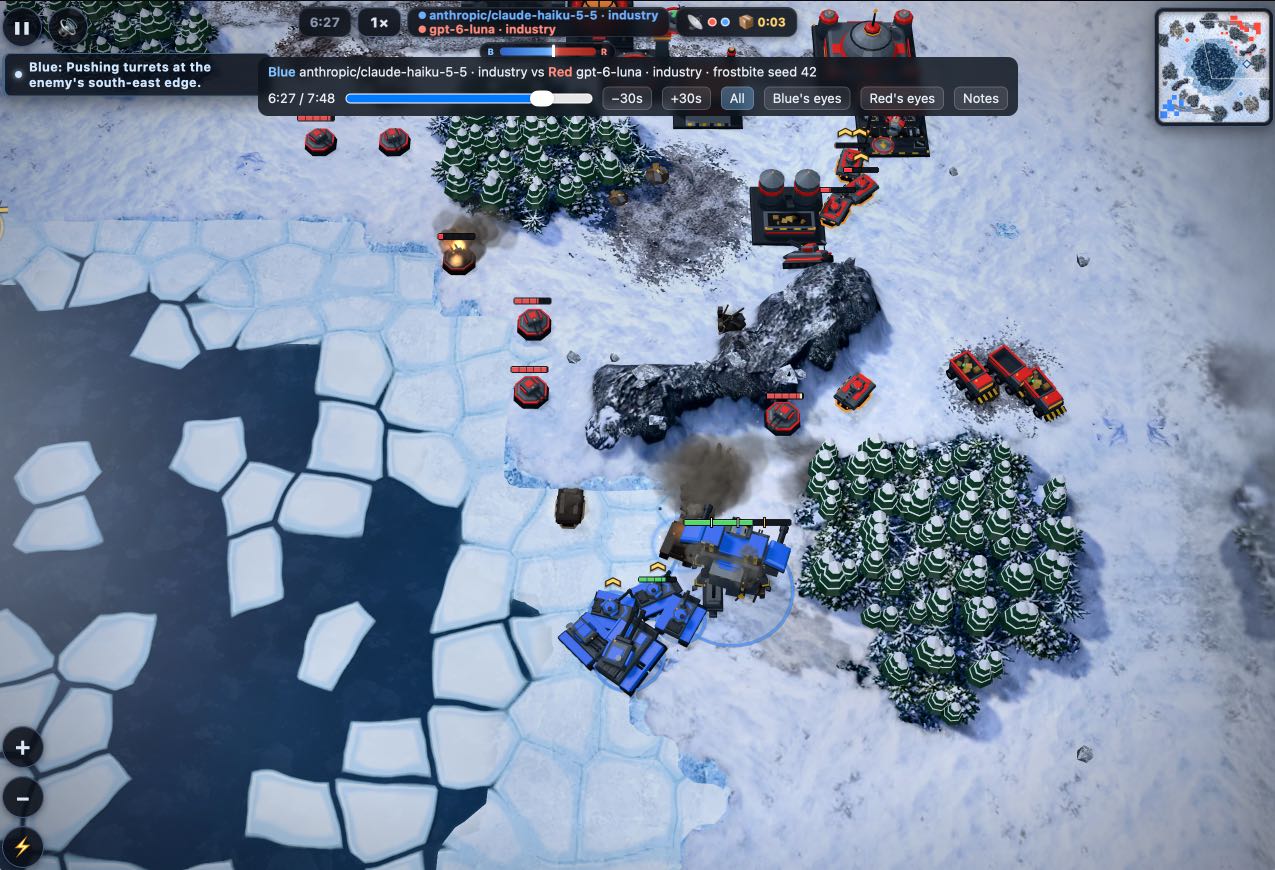
它甚至还支持不同的大语言模型(LLM)互相对战:游戏每推进 5 秒钟就会暂停一次,为不同模型留出解析新战局状态并下发下一轮指令的时间。这里是一场对局回放:Claude Haiku 5.5 对阵 GPT-6 Luna:
Battle Drones 也是展示 Opus 5.5 3D 建模能力的绝佳例证。在这个页面中你可以浏览游戏中所有的 3D 模型。
我于上周二以 Apache 2.0 许可证开源了 Battle Drones。周三,Gabriel Turpin 就发布了名为 Panache 的分支项目(截图点此查看),将这款游戏重新构想为 1900 年代法国美好年代(Belle Époque)的蒸汽朋克风格,配备了全新模型、音乐和动画开场序列。这就是开源的魅力!
Pumpkin Farmer(又名 Quarter Sun Cove)
我住在加利福尼亚州半月湾(Half Moon Bay),这里是一年一度半月湾艺术与南瓜节的举办地,节日中还包含一项巨型南瓜称重锦标赛。
我决定尝试打造一款并非拙劣模仿既有作品的游戏,因此我着手制作一款关于种植南瓜的游戏,
English / 原文
The October inflection point for vibe game development
28th October 2026
I’ve written before about how November 2025 was an inflection point for coding agents—the point where Opus 4.5 and GPT-5.1 crossed a tipping point that meant their respective coding agents became reliable daily drivers for software engineers. I think we’ve reached a new inflection point in October 2026, and this time it’s for vibe coding computer games.
Claude Opus 5.5 in particular exhibits meaningful improvements in several areas needed to build a compelling game:
That last one is particularly important. Models have been able to create something that looks like a game for quite a while now, as seen in my previous experiments. The challenge has been getting to a game that’s actually fun to play.
Game design is a deep subject area. I won’t pretend to be well versed in it—I know enough to have respect for it as a craft. Creating a novel, compelling gameplay loop which challenges players at the right level and provides a satisfying learning curve is a fine art. I didn’t think the models could do it.
Then I tried telling Claude Opus 5.5 to “Make it a LOT more fun”... and it did.
In the past few weeks I’ve vibe coded (in the classic sense of the term—no looking at the code at all) four games that I’ve genuinely enjoyed playing.
I attended Foo Camp in Berkeley over the weekend and met several people who were having similar experiences. Building games that play well is shockingly easy now. The new challenge is coming up with concepts for games that are novel and delightful and that wouldn’t exist without AI assistance.
I haven’t done an exhaustive study, but my current impression is that GPT-6 Astra isn’t quite there yet. It can absolutely build a game, but its sense of fun doesn’t match that of Opus 5.5. I expect OpenAI will get there by the end of the year.
Here are the four game projects that have convinced me that the models are now capable of producing fun games with very little guidance. All four are built in HTML and JavaScript and run entirely in the browser.
Tree Appreciator
The smallest game I found to be genuinely delightful is Tree Appreciator. I used the regular Claude chat interface for this—it didn’t even need Claude Code.
I built this on a whim while we were driving along Skyline Boulevard looking at trees. My prompt was:
Build a three js game called "Tree appreciator" - it shows you two algorithmically generated trees and the game mechanics is about appreciating the differences between them. Think hard about how to make sure it is both fun and beautiful.
I’ve found that telling models to use three.js works really well. Claude doesn’t have its own image generation model but is capable of building full-color 3D models that look and feel excellent.
This game required no iteration or follow-up prompting at all—I got the game in a single shot. It gave me back a charming little mobile-friendly spot-the-difference game. You can play that here. Here’s the chat transcript that built it.
It’s pleasingly relaxing. The graphics are fun, and collecting trees that you have completed in a “herbarium” provides a nice, cosy sense of accomplishment.
Emberwick
This was a more ambitious project that I again built using regular Claude chat. I started out by building an experimental prototype of an engine for a top-down fantasy RPG:
Build a demo game engine three.js which is a top down (but at an angle) RPG - the player gets to move through the world with one or two companions. Create a fantasy village setting that demonstrates walking around outside and then shows how when the player enters a building the wall between the player and the camera goes transparent so the user can see what is happening
Add some NPCs and plenty of furniture and different types of building some with an upstairs - be creative, make it look great
Here’s that first version. It worked really well!
I was inspired to increase my ambitions:
Make it not so flat - the buildings are great but the landscape itself is completely flat at the moment, fix that
Add basements to two of the buildings with a tunnel system joining them below the village
Add the start of a rocky mountain on one side of the village containing a cave with a sleeping troll
Here’s that version.
When that produced a good result, I decided to push it all the way:
Now turn this into an actual game - quadruple the size of the playable area, introduce fun game mechanics, add a plot that isn't too cliche, some twists, a magic system, make it really good
We’re back to prompts like “make it really good” here! Asking for a plot that “isn’t too cliche” seemed to work too—it’s a bit cliché, but still novel enough that I enjoyed following the story.
Unlike Tree Appreciator, this took quite a bit of additional playtesting and prompting to get to a finished version. This was mainly due to gameplay problems—things like a character not being in the right place to complete a quest because a different story element had caused them to move to another location.
Here’s that final game. It has a full story that takes about 15 minutes to play through.
There’s even an experimental level editor if you want to drop in your own houses, furniture, and landscape features.
Once it was all working (and I’d iterated through some gameplay bugs), I played it through from start to finish and found myself emotionally affected by the ending! I’m somewhat embarrassed by this, because everything in this game—the graphics, the plot, the characters, the music, the dialog—came from the model. My creative input was pretty much just “it’s a fantasy village and there’s a troll asleep in a cave”.
Here’s the full shared Claude chat in which I built this game.
I also fed that same initial sequence of prompts through ChatGPT GPT-6 Pro. Here’s the transcript and the finished game for comparison. It looks great, but I don’t think it plays nearly as well.
Battle Drones
This is by far my most successful project, which I wrote about last week. It’s a Command & Conquer-style Real-Time Strategy game where two robot armies (or four as of Saturday) build units, harvest scrap, and battle over territory.
This is also the project that convinced me that Opus 5.5 knows what “fun” is.
The first versions were built back in July using Claude Fable 5. It got me to a workable 2D Command & Conquer-style game, but it wasn’t great to play.
I prompted Opus 5.5 to “Make it a LOT more fun” and then later to “Port this game to three.js” and the game was transformed. There’s a blow-by-blow account (prompts included) in my write-up.
Today, Battle Drones has 2-4 player multiplayer (via a vibe coded WebSockets relay server), medals, replays, seven maps, a random map generator, and a set of “mutators” that add variants of the rules.
It also lets different LLMs play against each other, using a mode where the game advances five seconds and then pauses to give different models time to interpret the new game state and line up their next set of commands. Here’s a replay of Claude Haiku 5.5 vs. GPT-6 Luna:
Battle Drones is a particularly good example of Opus 5.5’s ability to create 3D models. This page lets you browse all of the models in the game.
I released Battle Drones under the Apache 2.0 License last Tuesday. On Wednesday Gabriel Turpin released Panache (screenshots here), a fork of Battle Drones that reimagined the game for steampunk 1900s Belle Époque France, with new models and music and an animated intro sequence. Open source at work!
Pumpkin Farmer, aka Quarter Sun Cove
I live in Half Moon Bay, California, home of the annual Half Moon Bay Art and Pumpkin Festival, which includes a giant pumpkin weigh-off competition.
I decided to try building a game that wasn’t just a cheap imitation of something that already existed, so I set out to create a game about farming pumpkins, growing giant pumpkins, and handling the rush of the October pumpkin season.
I called it “Quarter Sun Cove”.
I’m still iterating on this project, but it’s shaping up quite nicely. It’s a cosy farming simulator where you spend the year tending to your giant pumpkin and planting out regular-sized pumpkins for sale in October, then sell pumpkins during pumpkin season and enter your giant pumpkin in the weigh-off.
Every character in it is a (vegetarian) animal. The mayor of the town is a pelican. You can be a pelican, skunk, raccoon, possum, beaver, coyote, fox, owl, sea otter, or harbor seal. Those species all later show up (accompanied by their children) to buy pumpkins from you.
It’s absurdly cute.
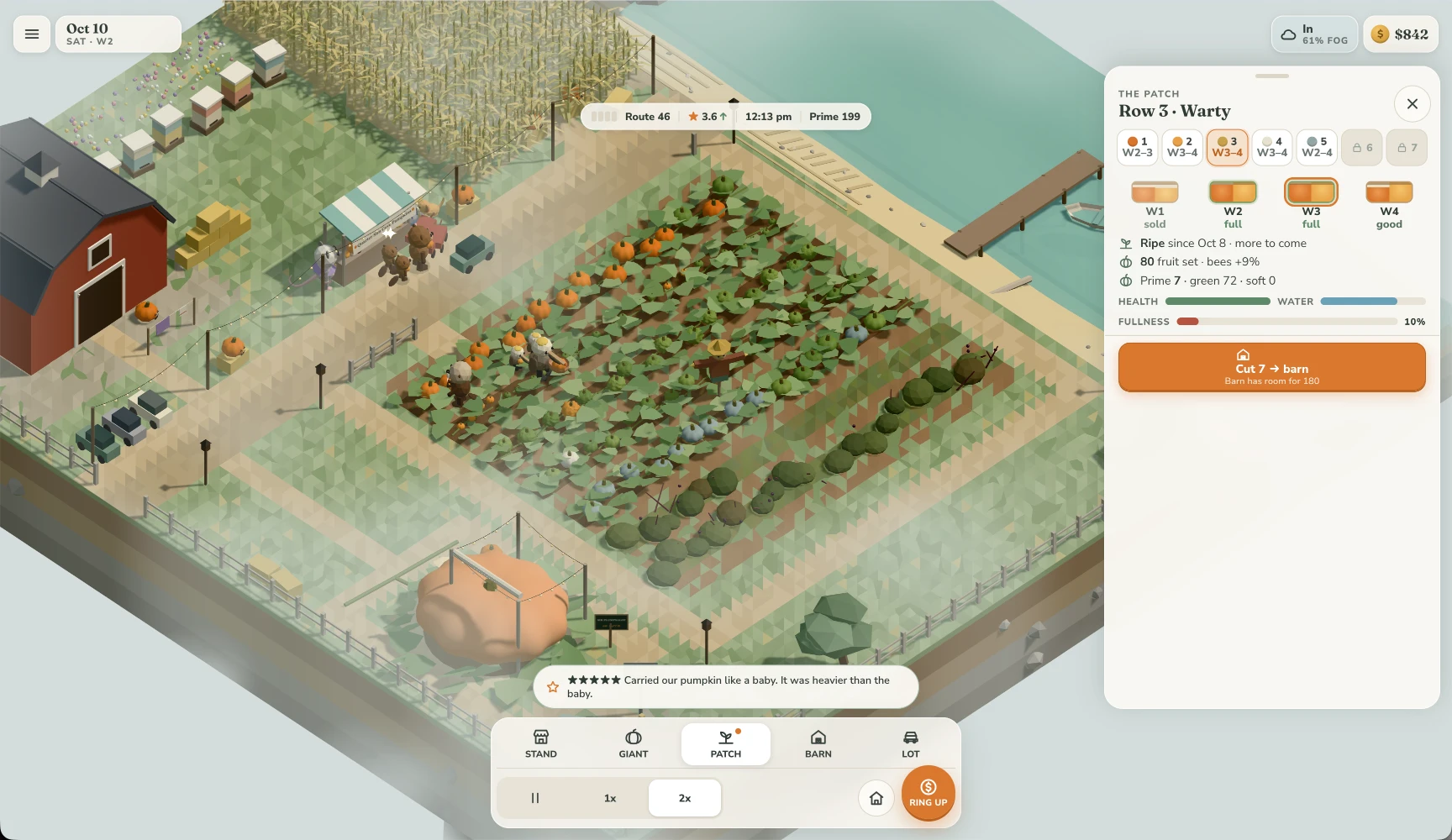
You can play the latest version here. I’m not convinced by the game mechanics yet—it’s actually quite complicated: you have to decide when to plant pumpkins such that they will become ripe at the weekends in October with the most visitors.
Here’s the initial brainstorming session, which resulted in this spec file. Then I had Opus 5.5 Ultracode burn millions of tokens and nearly two days building it.
I told Claude to “surprise and delight the user frequently” and the result is so many little details and easter eggs. There are mischievous raccoons, an elephant seal that runs the weigh-off, harbor seals that roll their pumpkins back into the ocean, a wandering goat, and superstitions about growing giant pumpkins that sometimes come true.
This isn’t my best game yet—it’s not as fun to play as Battle Drones—but it represents the kind of game I want more of: weird, fun, uniquely personal—something that wouldn’t have been built in the before-times.
Four times as insulting
If you are offended by AI-generated art, AI-generated music, AI-generated writing, and AI-generated code, I have bad news for you: vibe coded games combine all of those at once.
I respect those opinions, even though I don’t strongly hold them myself.
The wider games community already has an aversion to AI-generated assets in games. This has been a growing issue over the past few years as tools like Midjourney have enabled developers to generate assets for their projects. This IGN story covering complaints about slop in Valve’s Steam Next Fest is a good recent example.
We now have games where everything —code, assets, dialog, and even the game design itself—can be outsourced to the models. And the results don’t suck!
Building a computer game used to be one of the most challenging projects in all of software development, combining a diverse range of skills and requiring intense focus and effort over many months or even years. And now here I am spitting out a playable multiplayer RTS by prompting on my phone!
I expect that, as we’ve already seen with programming, this will result in a split. Some players will refuse to have anything to do with games that were built in this way. Others may embrace this as opening up game development to a much wider audience. I lean in that direction!
I certainly won’t be entering any of my vibe coded games in traditional game jams or competitions—I don’t feel like I’ve earned that right. We’ll likely see new avenues emerge for vibe game developers to compare their projects.
What happens if someone actually puts the work in?
The thing I find both exciting and shameful about this is that I have got interesting results from so little creative input. The projects I’ve described here are loosely ordered by how much effort I’ve put into them. Not a single project represents more than four hours of my work (plus many more hours of Claude Code churning away by itself).
Now imagine what could be achieved by anyone who takes this seriously, invests significant creative time, applies better taste in game design, and then playtests and iterates on the result until it’s as good as they can make it.
I want to see games that wouldn’t have existed without these new tools.
You should build a game!
Building games in this way is so much fun. It’s the perfect application for vibe coding because it’s so low stakes: how much damage can you cause with a bug in a personal vibe coded game project?
(OK, you can do some damage... my attempt at audio-based multiplayer gave my wife Natalie a nasty headache!)
All of my games so far have been HTML and JavaScript using static hosting (generally GitHub Pages or Cloudflare Pages). Modern browsers—including mobile browsers—are incredibly capable. Frontier models already know libraries like three.js and Phaser. I’m finding these mobile web games to be indistinguishable from the native experience, at least for the kinds of games I’m trying to build.
I suggest starting with a prompt like this:
Build a mobile-friendly three.js game where...
This works on both chatgpt.com and claude.ai—you don’t even need to fire up a full coding agent. As one last example, here’s “Build a mobile-friendly three.js game where a mouse has to hide from a cat” by Claude Opus 5.5 Extra and by GPT-6 Extra High.
Switch to Codex or Claude Code once your project passes the proof-of-concept phase.
And if the game isn’t fun enough, add this:
Make it a LOT more fun