英国 Amazon Quick 用户组如何在 2026 年实现快速发展
英文标题:How the UK Amazon Quick User Group grew in 2026
英国 Amazon Quick 用户组(UK Amazon Quick User Group)发布 2026 年度总结,回顾了自成立以来举办的三场季度线下活动,累计吸引超过 150 名行业从业者参与。来自 Arriva、Carsa 和 Propulse Lab 的客户分享了利用 Agentic AI 与 Amazon Quick 构建统一治理数据层及多 Agent 自动化流水线的实战经验,其中 Propulse Lab 成功将请求处理时长从 7 分钟缩减至 70 秒,并自动化了 80% 的常规客服工作流。活动展示了从传统的单向技术宣讲向深度实操、经验共创与生态互联的转变,为企业利用生成式 AI 加速数据决策与业务增长提供了实用的落地参考。
 1.3 MB
 1.3 MB
 2.4 KB
 345.0 KB
 141.2 KB
 346.5 KB
 456.5 KB
 406.2 KB
 23.0 KB
 23.6 KB
 104.2 KB
中文
Amazon Quick User Group – United Kingdom 是英国本土的 Amazon Quick 用户社区,成员每季度相聚一次,交流专业知识、分享最佳实践、通过上手实操进行学习,并讨论使用该服务的经验心得。这些用户组作为协作平台,让成员能够共同学习、建立连接并携手创新。
无论你是已经在深度使用 Amazon Quick,还是刚刚起步,我们都非常欢迎你加入英国 Amazon Quick 用户组,成为这个不断壮大的社区的一员,共同重塑组织利用数据制定决策的方式。在这篇文章中,我们很高兴与大家分享 2026 年的年度总结,重点回顾该用户组自成立以来举办的三次季度聚会及其所引发的积极反响。这些活动共吸引了 150 多名参会者,在 Agentic AI(智能体 AI)和 Amazon Quick 潜能的推动下,现场充满活力。跨行业的客户正利用 Amazon Quick 将混乱的数据转化为更敏捷的决策、更高的满意度以及可扩展的业务增长。他们的实践涵盖了实时突发事件管理、通过统一治理数据层消除看板泛滥(Dashboard Sprawl),以及利用 AI 自动化大部分技术支持工作流。
为什么 Amazon Quick 用户组至关重要
英国 Amazon Quick 用户组 是一个本地化的 Amazon Quick 用户社区,成员每季度汇聚一堂,分享有关该服务的知识、最佳实践和应用经验。Amazon Quick 用户组作为协作平台,能够让成员实现:
- 学习与分享——就 Amazon Quick 的各项能力交流实战见解,涵盖交互式仪表板、数据叙事、基于 Agentic AI 的自动化以及自定义 Agent 等。成员们在此分享成功的经验、踩坑教训以及行之有效的新方法。
- 拓展人脉——与本地专业人士建立联系,共同探讨如何将 Amazon Quick 应用于企业级 AI 应用、数据分析和办公生产力提升等类似场景。
- 协同解决问题——通过讨论跨行业与不同业务背景下的解决方案和用例,共同攻关技术与业务难题。
- 保持同步更新——直接从同行和专家那里获取有关新功能、版本更新和新兴最佳实践的第一手资讯。
- 构建本地生态——培育一个本地化的支持网络,与更广泛的 Amazon Quick 全球社区互为补充,结识深谙英国市场与业务环境的可靠伙伴。
活动概览
在今年的三次季度聚会中,英国社区真正投入了大量时间在 Amazon Quick 上——并非纸上谈兵看幻灯片,而是实实在在动手构建。参会者在无需编写代码的情况下,为自己的团队创建了 Amazon Quick 自定义聊天 Agent;尝试了在个人笔记本电脑上本地运行 Amazon Quick Desktop,连接本地文件并通过专用连接器访问 Outlook;还利用 Amazon Quick Apps 将一段自然语言描述直接转换为功能完备的 Web 应用程序。在动手工作坊中,参会者借助 Amazon Quick Flows 和 Amazon Quick Automate 实现了业务流程自动化,而 Amazon Quick Research 则展示了如何显著缩短调研和研究所需的时间。贯穿其中的 Amazon Quick 聊天 Agent 则扮演了集大成者的角色——一个能够连接各种工具、数据并代表你执行操作的得力助手。每个季度,活动内容都更加贴近实战,现场参会者提出的问题也愈发深刻锐利。
典型的活动流程
三次活动均在位于伦敦肖迪奇(Shoreditch)的亚马逊英国总部办公室举办。通常到了上午 9:45,现场便已座无虚席、热闹非凡。大家一边享用咖啡,一边重温旧谊、互通上一季度的最新进展,新参会者更是在活动正式开始前就自然地融入到了热烈的交谈之中。
随后,饱满的热情贯穿整个议程:客户登台分享他们使用 Amazon Quick 构建的真实故事,产品负责人详细讲解最新产品升级,专题讨论环节激荡出线上研讨会无法比拟的思想碰撞。长达 75 分钟的动手实操工作坊更是将气氛推向高潮,参会者在预先配置好的沙箱账户中挽起袖子共同探索实验。当最后的反馈环节到来时,现场氛围更像是一个密切配合的工作小组,而非单纯的听众席。
活动形式每个季度都在持续演进。第一季度由于是初次见面,主要偏重于基础介绍与产品演示;到了第二季度,我们加入了破冰测验,并开展了针对 Quick Flows 和自动化的高强度专项工作坊;在第三季度,我们引入了专家专题小组、团队知识竞答,并在尾声专门设置了自由社交环节。增设最后的社交环节是因为我们发现大家在活动结束后依然依依不舍地留下来交谈,因此我们不再像往常一样在他们周围收拾会场,而是索性将其正式列入了日程表中。
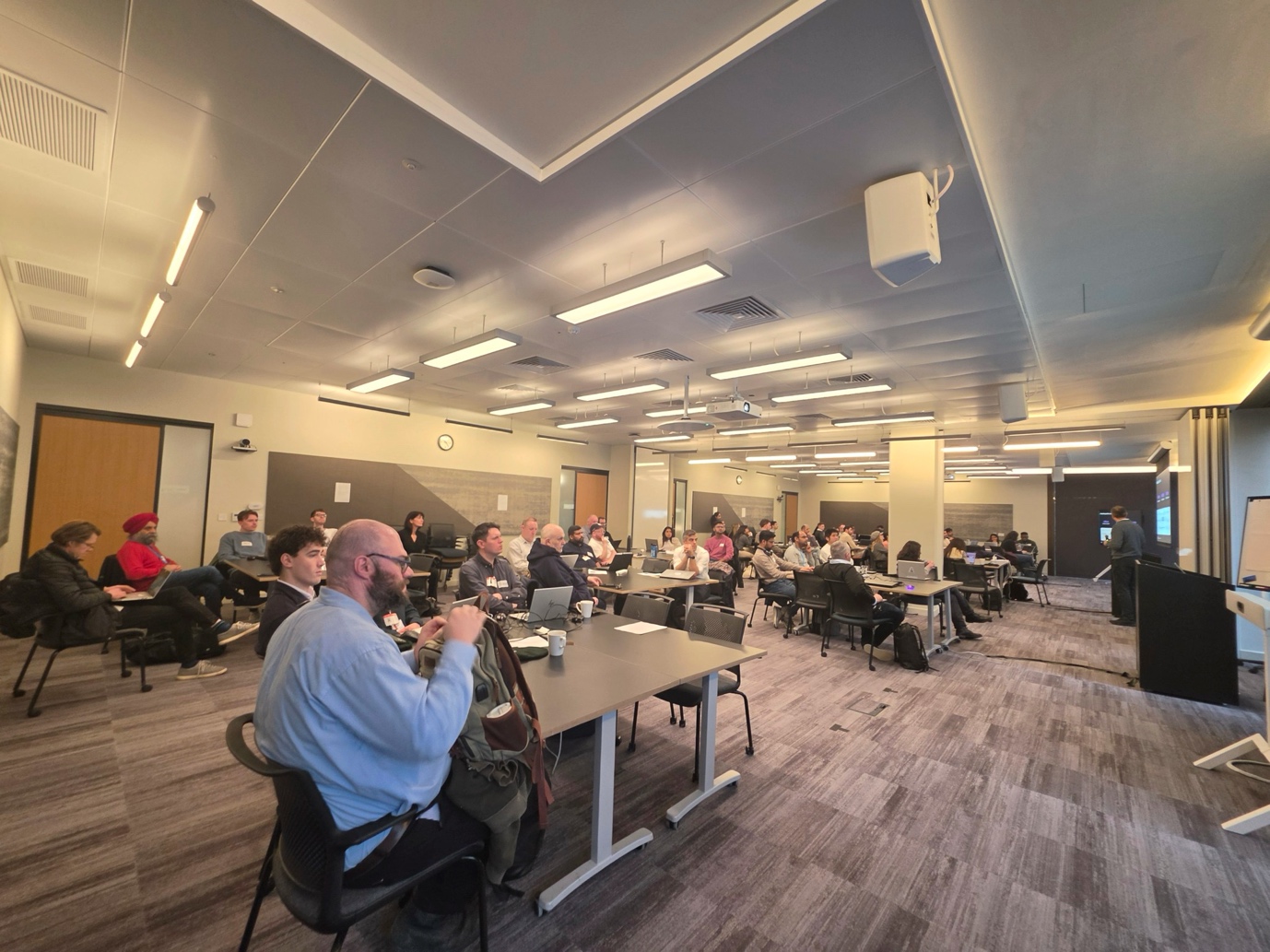
图 1:英国 Amazon Quick 用户组聚会现场参会者
客户实战分享
客户案例分享自始至终都是社区活动的核心部分。每位演讲者都带来了独特的业务挑战,展示了团队在截然不同的环境中如何落地应用 Quick。
在第一场活动中,核心主题是如何将洞察交到最需要它的人手中。在 Arriva UK 铁路公司,关键业务数据过去无法及时送达一线。列车和车站管理人员经常处于流动状态,完全依赖工作手机。Sofia Bourika 的团队构建了支持移动端视图的动态、基于角色的仪表板,并推出了通过定时邮件自动分发的像素级精准报表,使管理人员能够即时掌握突发事件与运营表现。其成效显著:决策更迅速、突发事件管理更敏捷,并在全公司范围内树立了更强大的数据驱动文化。
到了第二季度,讨论转向了一个截然不同的挑战:在引入更多 AI 和自动化之前打好基础底座。在二手车零售商 Carsa,分析部门过去的运作模式类似服务台——提一个问题,做一个看板,但相同的问题往往得到不同的口径与答案。这并非数据质量问题,而是指标定义问题。Tobi Daramola 在 Carsa 的团队通过构建单一的统一治理数据层解决了这一痛点,所有指标定义仅配置一次,即可同时供给 Amazon Quick 和 AI 助手调用。结果令人瞩目:在提供更多数据维度的同时精简了 50% 的冗余看板;客户满意度(CSAT)在 30 天内提升了 10%;投诉当日处理关闭率跃升了 20%;基于该数据层的 AI 助手还将周期性重复任务耗时从 45 分钟直接压缩到 5 分钟。
第三季度将讨论进一步推进到了自动化和 Agentic 工作流深度融合的阶段。Propulse Lab 是一家面向 B2C 订阅制企业的瑞士运营系统服务商,每年处理多达 100 万张支持工单。过去,其团队深陷救火式被动响应中,难以聚焦业务增长。在 Amazon Quick Automate 中部署了基于其历史最优客服交互数据训练的多 Agent AI 流水线后,他们将单次请求处理时间从 7 分钟大幅压缩至 70 秒,同时自动化了 80% 的常规客服工作流。
“曾经的成本中心如今变成了增长引擎——他们的产品经理现在一行代码都不用写就能全权掌管整套系统,而支持团队则能够专注于具有前瞻性、能够驱动收入的深度对话。”
—— Guirec Lecointre,Propulse Lab 增长运营专家
这些用例各不相同,而这正是活动的核心意义所在。实践者们没有空泛地描绘 Amazon Quick 的宏观愿景,而是展示了他们针对真实业务痛点所做出的探索——从治理分析、一线报表,到端到端自动化与 AI 集成。这彻底改变了现场的交流基调:参会者就实施落地、团队采纳阻力以及失败教训展开直接提问;演讲者则倾囊相授成型方案背后的实战经验与教训。大家离开会场时带走的是可以直接应用到自己企业的具体构想,而不仅仅是听了一个客户公关故事。
从被动倾听走向全员参与
三次活动下来,参会者的状态发生了显著变化。从最初的“听讲学习”,逐步转变为第三季度时建立起深厚的行业纽带。起初,大家对组织感到陌生,彼此间也并不熟悉;到第二季度,破冰测验让气氛迅速热络起来;反馈环节也更加具体详实——参会者不再只是评价“活动很棒”,而是主动提出想要探讨的话题,并自荐上台分享。
第三季度更是百尺竿头更进一步。早期便加入领导团队并在首场活动中分享 Arriva 案例的 Sofia Bourika 设计了一个名为“你最自豪的成果是什么?”的破冰环节,邀请参会者分享自己利用 Amazon Quick 构建的得意作品。已经有此前坐在台下的观众自告奋勇登台展示自己的项目。这种从“被动参与者”向“内容贡献者”的转变,虽然经历了三次活动才逐渐成型,但它确实发生了。第三季度还开辟了新版块——Amazon Quick 专家专题研讨。主办方预先收集观众的问题并向特邀专家提问,专家提供了极具深度的见解,并分享了与参会者同类客户合作的第一手经验。这激发了全场崭新的思考维度,观众迅速将专家的洞察与自身日常工作中遇到的痛点联系了起来。
我们的社区全年都保持着紧密互动。在 LinkedIn 群组中每周都有干货分享,邮件通讯也持续激发着大家的参与热情。
携手并进的集体影响力
由衷感谢我们专注的 AWS 合作伙伴 Data Reply,他们持续的贡献与行业前瞻性见解,对每一场英国用户组聚会的成功举办都起到了不可或缺的作用。
我们优秀的英国领导团队带领我们达成了每一个里程碑:
Liam Yusuph,AI 与数据交付负责人,Data Reply
Priyanka Bettaswamygowda,解决方案架构师,AWS
Sahar Shahbaz,数据分析师,Data Reply
Sofia Bourika,首席商业智能开发工程师,Arriva
Tobi Daramola,高级数据与分析负责人,Carsa
Ali Hayat,视听技术支持,Amazon
Lam Phan,商业智能开发工程师,AWS
Rikhi Singh,ADC 工程师,AWS
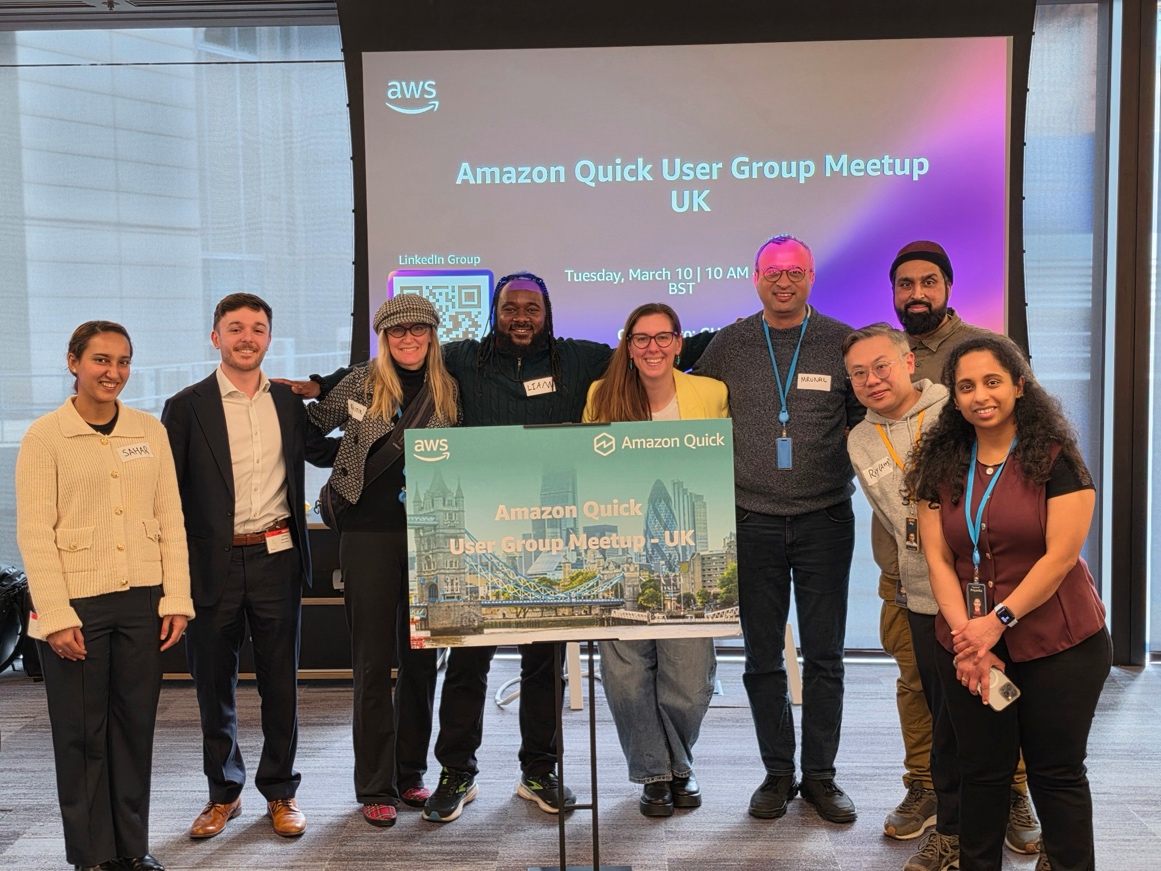
图 2:英国 Amazon Quick 用户组领导团队
Amazon Quick Community 社区官方网站 汇聚了数万名专业成员以及数千条可供检索的技术问答,同时提供超过 600 项学习资源,帮助用户借助 Agentic AI 与 Amazon Quick 全面提升工作效率。
“Quick 社区的核心在于共同学习与建立连接。无论技能水平高低,每位用户都能在这里获得帮助、学习新知并结识同行。我最喜欢 Quick 社区的一点在于大家总是真诚互助。这个平台能为你展现单凭个人探索未曾想到的无限可能性;在这里,你会偶遇正在攻克你甚至从未想过要探讨的项目和用例的同仁,瞬间让你的眼界变得无比宽广。”
—— Kristin Mandia,AWS 高级社区经理
平台提供的学习资源包括每周约两次的免费在线直播课程、每月功能更新深度解析、高级自动化培训以及长达 4 小时的沉浸日(Immersion Day)实操工作坊。AWS 解决方案架构师、产品经理和各领域技术专家长期活跃在平台上,支持一对一直接发信沟通。Kristin 补充道:“大家积极主动地参与进来,协助解决棘手的技术难题,分享巧妙的临时替代方案(workaround),并共同探索使用 Quick 的创新途径。”
核心启示与总结
贯穿三次活动,沉淀出了几个一以贯之的核心启示:
虚心倾听,让活动形式常变常新
英国 Amazon Quick 用户组遵循一套基础流程架构:开场介绍、产品更新、客户案例分享、上手实操工作坊以及意见反馈。但在具体执行中,我们每个季度都在根据反馈微调。初期,我们把“Quick 新特性介绍”环节安排在客户案例分享之后,但这在一定程度上打断了现场节奏——听众正沉浸在真实企业的落地实践中,思维却突然被拉回官方功能发布。随后我们将“新特性介绍”前移,让客户案例分享能够无缝衔接动手工作坊,现场体验提升明显。在第三季度,我们增加了互动竞答,进一步激活了全场互动。参会者对整体活动的形式、节奏以及结识新朋友的机会给予了高度评价。正如一位首次参会者所言:“交流拓展人脉的机会太棒了……这一天过得非常充实!”
把讲台交给客户,而不是我们自己
在每场活动中,都至少有一家客户深度分享他们是如何落地使用 Amazon Quick 的。三次活动中,Carsa、Arriva、Propulse Lab 等多家企业相继登台。在首场活动结束后,最明确的反馈之一就是大家希望看到更多客户登台分享。这坚定了我们的办会方向。这些分享之所以备受好评,是因为听众倾听的是面临类似业务挑战的同行心声,而非销售人员的推销辞令。其影响力不仅停留在活动当天,许多参会者反馈,客户案例不仅启发了他们使用这些工具的新思路,更在企业内部引发了关于投资回报率(ROI)的有益讨论。一位参会者直言,某场客户分享“已经在其公司内部引发了广泛而深入的讨论”。
English / 原文
The Amazon Quick User Group – United Kingdom is a community of Amazon Quick users in the United Kingdom who meet quarterly to exchange knowledge, share best practices, learn through hands-on sessions, and discuss their experiences using the service. These user groups function as collaborative forums where members learn, connect, and innovate together.
Whether you’re already using Amazon Quick or just getting started, we’d love for you to join the UK Amazon Quick User Group and become part of a growing community that’s redefining how organizations make decisions with data. In this post, we’re thrilled to share our 2026 yearly roundup, highlighting all three quarterly meetups that have taken place since the group’s launch and the momentum that has followed. The events drew more than 150 attendees, and the energy in the room, fueled by agentic AI and the potential of Amazon Quick, was clear. Across industries, customers are using Amazon Quick to turn data chaos into faster decisions, higher satisfaction, and scalable growth. Their work spans real-time incident management, eliminating dashboard sprawl with governed data layers, and automating most support workflows with AI.
Why Amazon Quick user groups matter
The UK Amazon Quick User Group is a local community of Amazon Quick users who come together quarterly to share knowledge, best practices, and experiences with the service. Amazon Quick user groups serve as collaborative forums where members can:
- Learn and share – Exchange real-world insights about the capabilities of Amazon Quick, from interactive dashboards and data storytelling to agentic AI-powered automations and custom agents. Members share what works, what doesn’t, and new approaches that drive results.
- Network – Connect with regional professionals who are solving similar use cases with Amazon Quick for enterprise AI applications, data analytics, and workplace productivity.
- Problem-solve – Tackle challenges collaboratively by discussing solutions and use cases across different industries and business contexts.
- Stay updated – Get firsthand knowledge about new features, updates, and emerging best practices directly from peers and experts.
- Build community – Foster a local support network that complements the broader Amazon Quick community, with trusted contacts who understand UK market and business context.
Event overview
Over three quarterly meetups this year, the UK community spent real time with Amazon Quick. Not slide decks about it, actual time building with it. People created Amazon Quick custom chat agents for their teams without writing code. They tried Amazon Quick Desktop running on their own laptops, connected to local files and using a connector to access Outlook. They also used Amazon Quick Apps to turn a plain-language description into a working web application. The workshops had attendees automating processes with Amazon Quick Flows and Amazon Quick Automate, while Amazon Quick Research showed how it significantly cuts down the time spent on research. The Amazon Quick chat agent tied it together, an assistant that connects to tools, data and takes actions on your behalf. Every quarter, the sessions got more practical and the questions from the room got sharper.
What a typical event looks like
All three events were held at the Amazon UK Corporate Office in Shoreditch, London. By 9:45 AM, the room is already buzzing. People reconnect over coffee, swap updates from the last quarter, and newcomers get pulled into conversations before the day even officially begins.
From there, the energy carries through the full agenda: customers share real stories about what they’ve built with Amazon Quick, product leads walk through the latest updates, and panels spark the kind of back-and-forth you don’t get from a webinar. The 75-minute hands-on workshop is where it really comes alive, with attendees rolling up their sleeves in provisioned sandbox accounts and experimenting together. By the time we close with a feedback session, the room feels more like a working group than an audience.
The format has shifted each quarter. Q1 leaned more on introductions and demos because the group was meeting for the first time. By Q2, we added an icebreaker quiz, and ran a focused workshop on Quick Flows and automation. For Q3 we brought in a specialist panel, a group quiz, and a networking slot at the end. That last one came about because people were already staying behind to talk after the close, so we stopped packing up around them and put it in the schedule.
Figure 1: Attendees at a UK Amazon Quick User Group meetup
What customers shared
Customer stories have been part of the community from the start. Each speaker brought a different problem into the room, showing how teams are applying Quick in very different environments.
At the first event, the conversation centered on getting insight into the hands of the people who need it. At Arriva UK Trains, critical data wasn’t reaching the people who needed it most. Train and station managers were constantly on the move, relying solely on their work mobiles. Sofia Bourika’s team built dynamic, role-based dashboards with mobile-friendly views and introduced pixel perfect reports automatically delivered through scheduled email, giving managers immediate visibility of incidents and performance. The result: faster decisions, better incident management, and a stronger data-driven culture across the organization.
By Q2, the discussion had moved toward a different challenge: getting the foundations right before introducing more AI and automation. At Carsa, a used-car retailer, analytics functioned like a service desk. Question in, dashboard out. The same question gave different answers. It wasn’t a data problem. It was a definitions problem. Tobi Daramola’s team at Carsa fixed this by building a single governed data layer, with metrics defined once and consumed by Amazon Quick and AI assistants alike. As a result, they removed 50 percent of dashboards while surfacing more data. Customer satisfaction (CSAT) scores moved 10 percent in 30 days, complaints same-day close rate jumped 20 percent, and AI on the layer cut recurring tasks from 45 minutes to 5.
Q3 brought the conversation further into automation and agentic workflows. Propulse Lab, a Swiss operating system for B2C subscription businesses, was handling 1 million support tickets a year. Their teams were stuck firefighting instead of driving growth. After deploying a multi-agent AI pipeline in Amazon Quick Automate, built from their best past customer service interactions, they cut request handling from 7 minutes to 70 seconds. The pipeline also automated 80 percent of routine workflows.
“What was once a cost centre became a growth engine – their product managers now own the entire system without writing a single line of code, and their support teams focus on proactive, revenue-driving conversations instead.”
— Guirec Lecointre, Growth Operations Specialist, Propulse Lab
The use cases vary widely, and that’s exactly the point. Rather than presenting a single vision for Amazon Quick, practitioners show what they’ve tried against real business problems, from governed analytics and frontline reporting to automation and AI. That shifts the conversation in the room. Attendees ask direct questions about implementation, adoption, and what didn’t work. Speakers share the practical lessons behind the finished solution. People leave with ideas they can apply to their own organizations, not just another customer story.
From presentations to participation
Attendees changed across the three events. A listen-and-learn turned into building meaningful relationships by Q3. People were new to the group and new to each other. By Q2, the icebreaker quiz loosened things up early. The feedback sessions got more specific too: instead of “this was great,” people were requesting topics and offering to contribute.
Q3 pushes this further. Sofia Bourika, who joined the leadership team early on and presented the Arriva customer story at the first event, came up with an icebreaker called “What Are You Proud Of?”, attendees share something they’ve built with Amazon Quick. We’ve already got someone who was previously sitting in the audience volunteering to present their work. That kind of shift, from attending to contributing, took three events to happen, but it happened. Q3 also introduced a new segment, the Amazon Quick specialist panel. Questions were pre-collected from the audience and posed to an invited specialist, who brought real depth to the answers and shared first-hand experience of working with attendees’ customers. It sparked a different kind of thinking in the room, with the audience connecting the dots between the specialist’s insights and their own day-to-day challenges.
Our community stayed connected all year. Our LinkedIn group had weekly contributions and our email lists encouraged involvement.
Collective impact in action
A huge thank you to our dedicated AWS Partner, Data Reply, whose consistent contributions and thought leadership have been instrumental in making every UK user group meetup a success.
Our UK leadership team led us to reach every milestone:
Liam Yusuph , AI and Data Delivery Lead, Data Reply
Priyanka Bettaswamygowda , Solutions Architect, AWS
Sahar Shahbaz, Data Analyst, Data Reply
Sofia Bourika, Lead BI Developer, Arriva
Tobi Daramola, Senior Data and Analytics Lead, Carsa
Ali Hayat , AV Support Associate, Amazon
Lam Phan , BI Developer, AWS
Rikhi Singh , ADC Engineer, AWS
Figure 2: The UK Amazon Quick User Group leadership team
The Amazon Quick Community website has tens of thousands of members and thousands of searchable questions. It also offers over 600 learning resources on accelerating your productivity with agentic AI and Amazon Quick.
“The Quick Community is about learning together and building connections. It’s where users at any skill level can find help, learn something new, and meet others. What I love most about the Quick Community is how genuinely helpful everyone is. It’s a place that reveals possibilities you wouldn’t have thought to explore on your own, where you stumble into people working on projects and use cases, you’d never even think to ask about, and suddenly your world gets a whole lot bigger.”
— Kristin Mandia, Sr. Community Manager, AWS
Learning opportunities include approximately two free live online sessions per week, monthly feature update detailed and advanced automation sessions, and 4-hour Immersion Day workshops. AWS Solutions Architects, Product Managers, and subject matter experts are active on the platform and available for direct messaging. Kristin continues, “People jump in to help solve tricky problems, share their clever workarounds, and experiment with new ways to use Quick together.”
Key takeaways
A few themes came up consistently across the three events.
The format keeps changing because we listen
The Amazon Quick User Group UK runs on a set structure: an introduction, a product update, customer stories, a hands-on workshop, and a feedback session. But we’ve been adjusting it every quarter. Early on, we had the “What’s New with Quick” segment right after customer stories, and it broke the flow. People were engaged with how a real company was using the product, then we’d switch to feature announcements. We moved “What’s New” so the customer stories lead straight into the workshop, and the difference was noticeable. For Q3, we added an interactive quiz to get more back-and-forth going in the room. Attendees also called out the overall format and pacing, and the chance to meet new people. As one first-time attendee put it, “the networking opportunities were excellent… I thoroughly enjoyed the day!”.
Customers present, not us
At least one customer shares how they use Amazon Quick at each event. Across three events, we’ve had Carsa, Arriva, Propulse Lab, and a few other customers on stage. After the very first event, one of the clearest pieces of feedback was that people wanted more customer speakers. That told us we were on the right track. The sessions work because the audience is hearing from peers who face similar problems, not from someone trying to sell them something. The impact goes beyond the event itself. Attendees said the customer stories showed them new ways to use the tools and started useful discussions about return on investment (ROI). One attendee told us a customer session “has already prompted a lot of conversation internally” at their organization.
The workshop is where it clicks
Every event has a hands-on workshop, and people consistently tell us it’s the part they get the most out of. There’s a gap between watching someone demo a product and sitting down with it yourself. That gap is where most attendees say Amazon Quick starts to make sense for what they’re trying to do. We know it lands because the most common question afterwards is whether they can keep access to the workshop environment so they can carry on experimenting on their own.
Conclusion
The success of this year’s meetups is a testament to every single member who showed up, shared their knowledge, and contributed to making this community what it is today. As we look ahead, we’re more energized than ever to keep this momentum going and continue pushing the boundaries of what’s possible with Amazon Quick.
Get involved
To learn more about Amazon Quick and connect with the community:
For questions about the event or the Amazon Quick Community, Kristin Mandia, Sr. Community Manager, Amazon Quick Community and User Group program, at kmandia@amazon.com.