Kimi K3 的设计秘诀或许藏在它的思维轨迹中
英文标题:🔶 Kimi K3's Design Secret May Be in Its Thinking Traces
Moonshot AI 最新开放权重模型 Kimi K3 在单次生成 Frontend Arena 中以 1392 Elo 位居第一,比 Kimi K2.6 高 10 个名次、比 Kimi K2.7 Code 高 16 个名次。分析发现,Kimi K3 使用的推理 token 超过 Claude Opus 4.8 的 12 倍,且是 Kimi K2.6 的两倍以上。其关键特点是在思维链中模拟 Agent 工作流:先规划、再决策、随后迭代具体组件,甚至预写示例代码以辅助最终生成。该策略以更慢的生成速度换取更高的偏好得分,也显示出开放权重模型正在通过新的推理范式推动前端生成能力提升。
 10.3 KB
 640.8 KB
 729.0 KB
 565.1 KB
 559.9 KB
 105.5 KB
 601.3 KB
 384.9 KB
 106.6 KB
 174.8 KB
 274.7 KB
 1.5 MB
 1.2 MB
 125.9 KB
 133.5 KB
 281.3 KB
 256.4 KB
 504.9 KB
 518.4 KB
 15.3 KB
中文
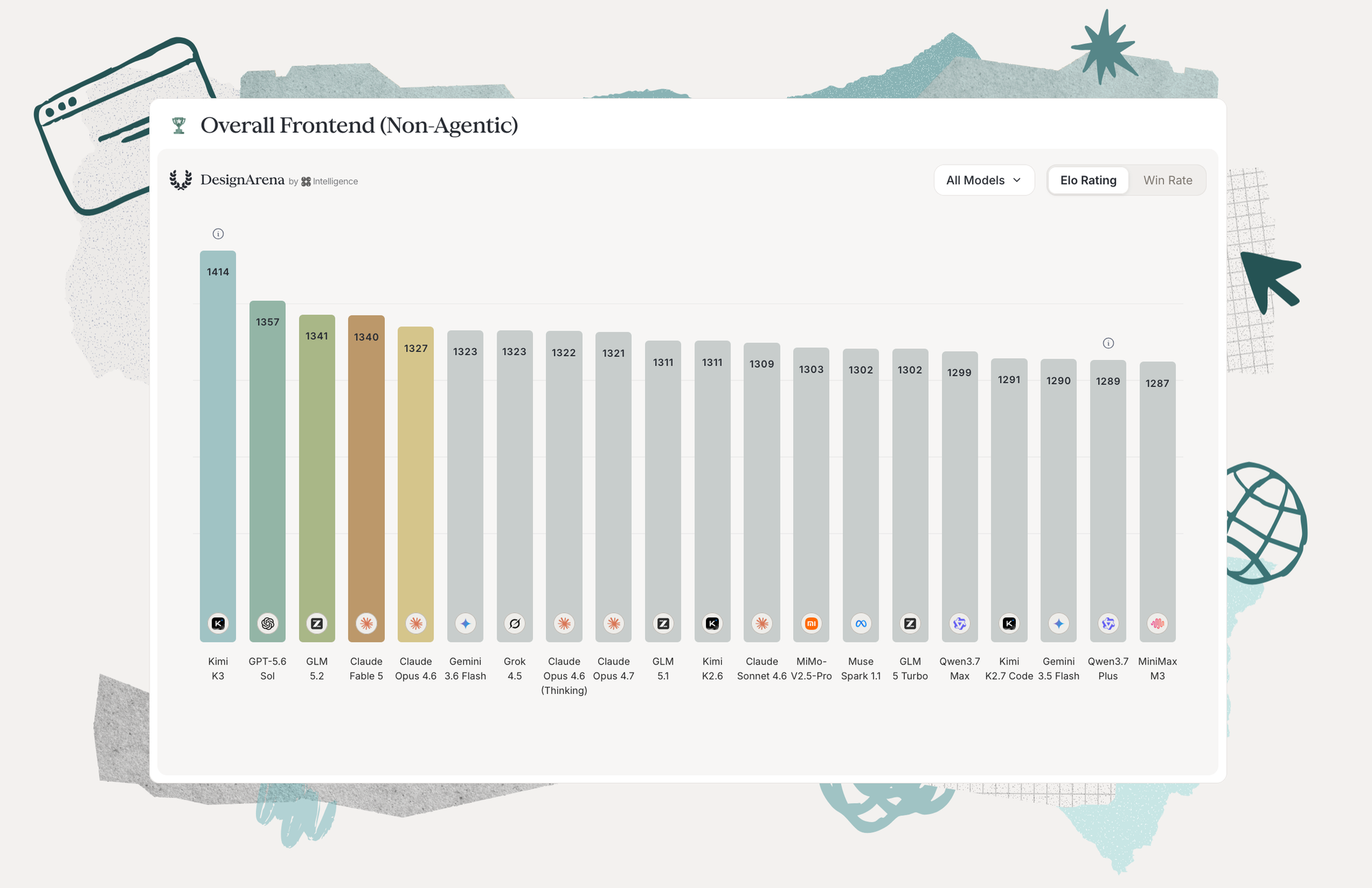
Moonshot AI 最新的开放权重¹模型 Kimi K3,在我们的单次生成 Frontend Arena 中以 1392 Elo 排名第 1。这比 Kimi K2.6 高出 10 个名次,比 Kimi K2.7 Code 高出 16 个名次,是我们在 Moonshot 模型产品线中观察到的最大幅度跃升。
不过,我们发现 Kimi K3 使用了极其大量的思考 token:其推理量超过 Claude Opus 4.8 的 12 倍,也超过 Kimi K2.6 的两倍。
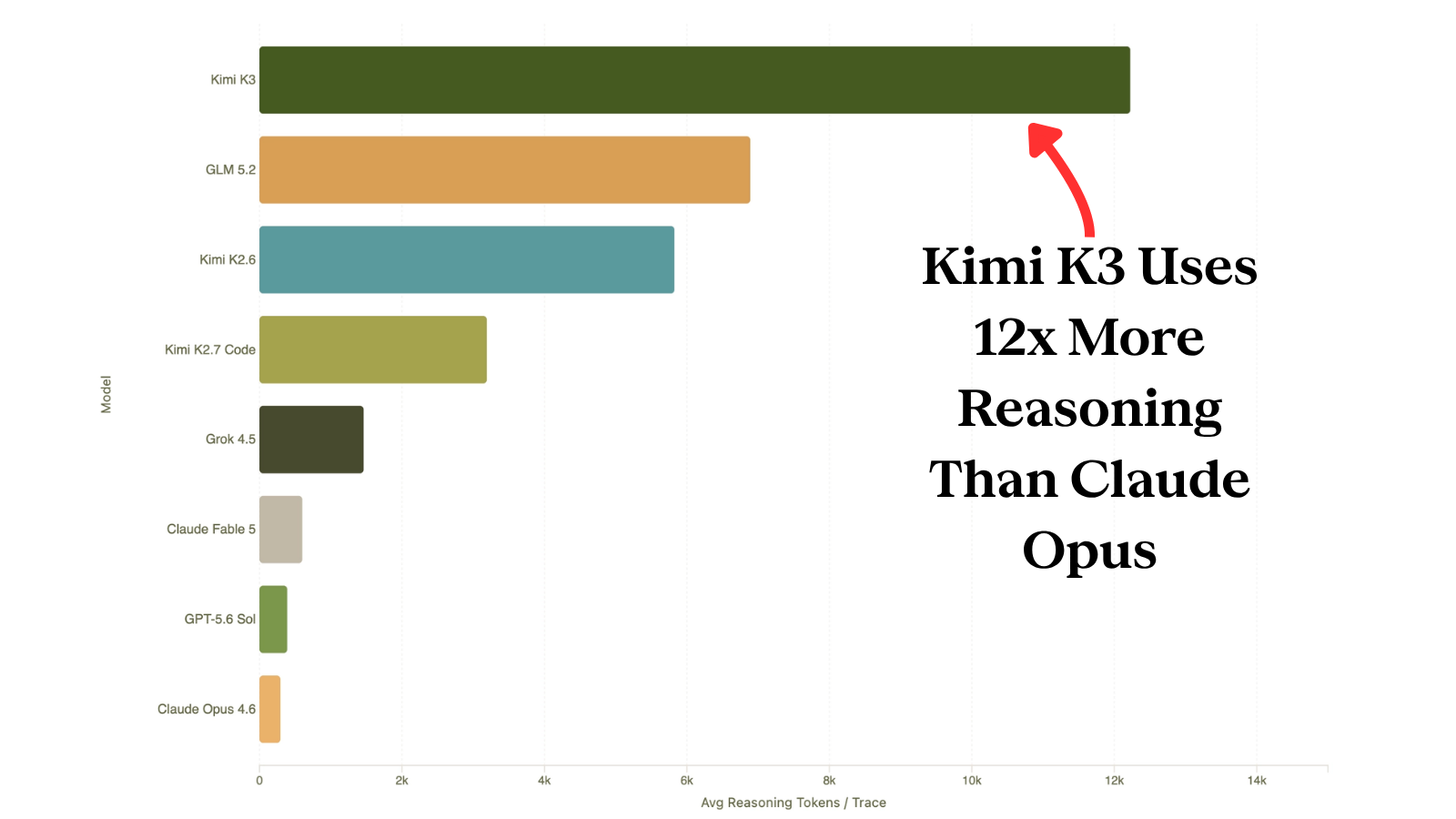
这是一笔 极其庞大 的推理开销,因此我们决定深入研究,弄清 Kimi K3 究竟在思考什么。
我们发现,Kimi K3 的表现主要可归因于其 独特的思维链方法:它似乎会像一个完整 AI Agent 那样 对设计进行迭代,但这一过程发生在其思维链内部。这一策略能产出精细且有明确意图的网站、富有创意的组件设计,并提升 Kimi K3 与外部依赖项集成的能力。
Kimi K3 如何在思维链中模拟 Agent
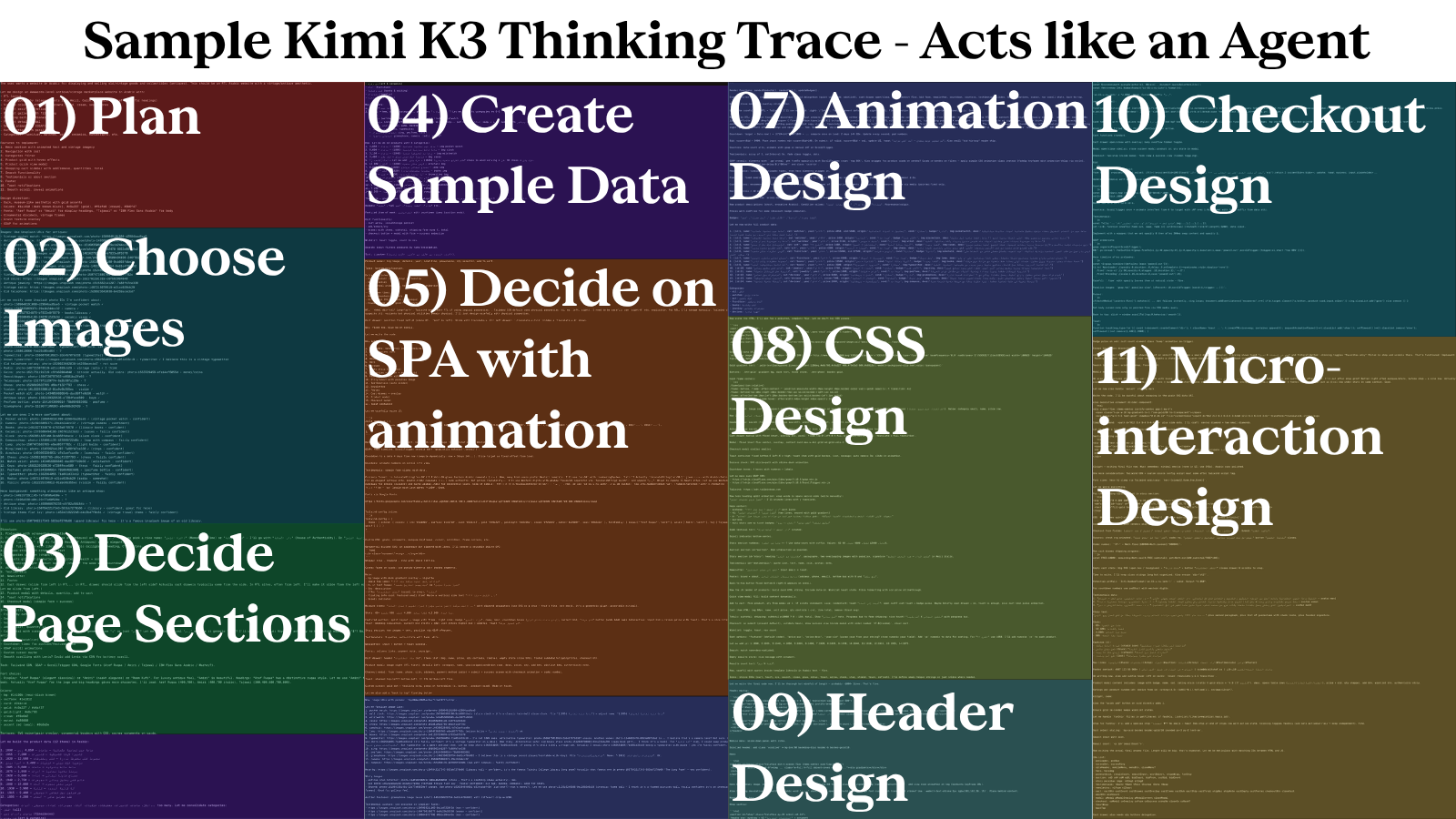
只需简要查看 Kimi K3 的思维轨迹,就足以解释其表现。Kimi K3 具有独特的多阶段思维轨迹:它会从规划切换至决策,再到设计最终网站的各个部分。这正是 Agent 式工作流,也是我们此前从未见过的模式。事实上,在最终设计阶段,Kimi K3 会写出示例代码,以便在最终生成时能够正确创建它经过细致设计的交互效果。
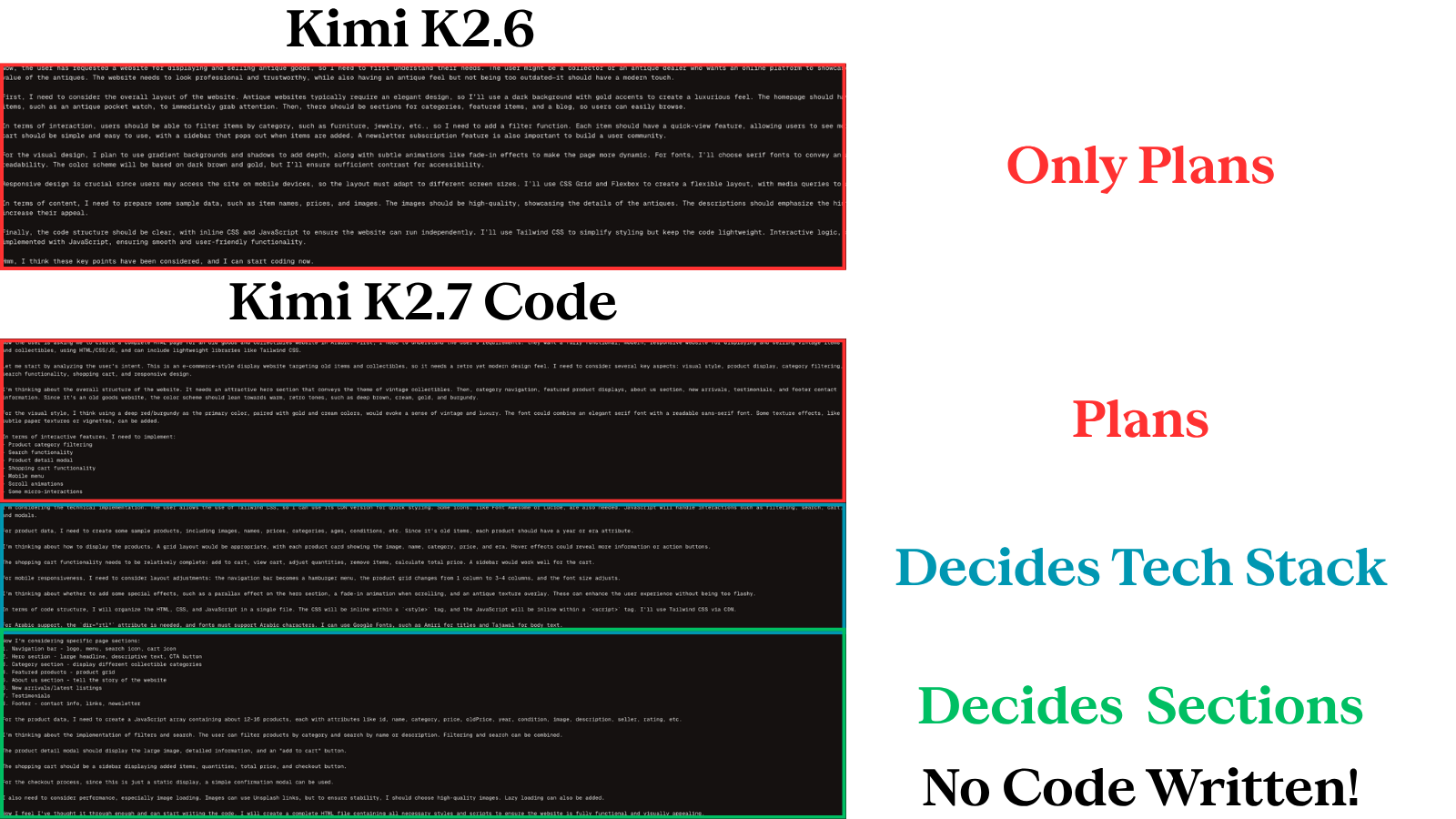
与之相比,该模型产品线此前的模型推理轨迹短得多,也很少编写代码。它们通常只会决定高层细节或页面区块,随后便直接进入最终输出。
如果汇总 Kimi 系列模型的所有生成结果,我们发现,Kimi K3 在推理过程中编写的代码量是其产品线内任何其他模型的 10 倍以上,且 花在编写代码上的推理 token 比真正用于推理的 token 还多。
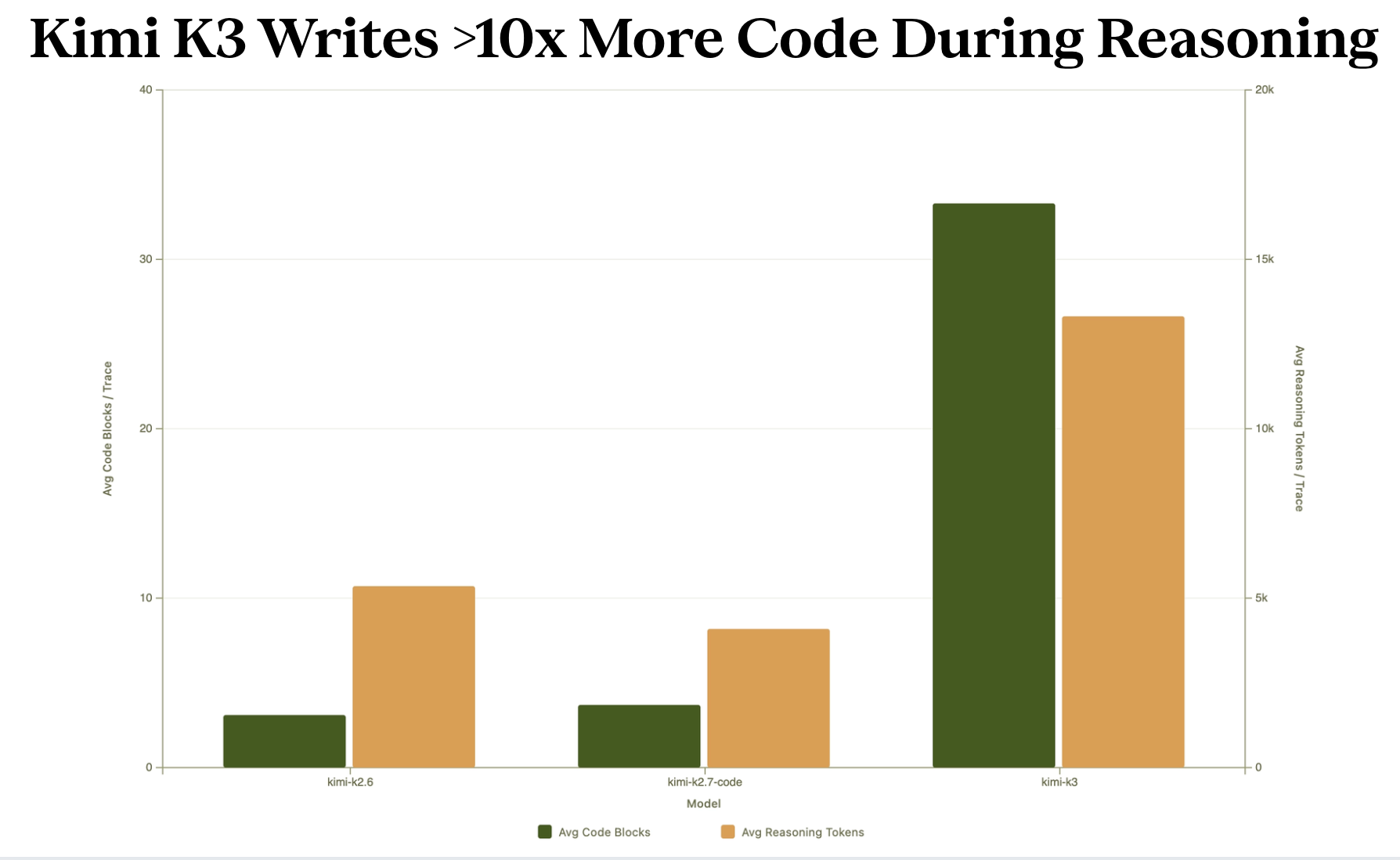
没有其他模型会在推理阶段呈现如此高密度的代码块。这是因为 Kimi K3 会在推理过程中 迭代单个组件,通过“在脑中测试”来替代正常 Agent 循环中会执行的测试。这也意味着,Kimi K3 实际上是在用代码思考:它以代码和具体约束表达计划中的规范,而不是凭感觉形成一个不精确的方案。
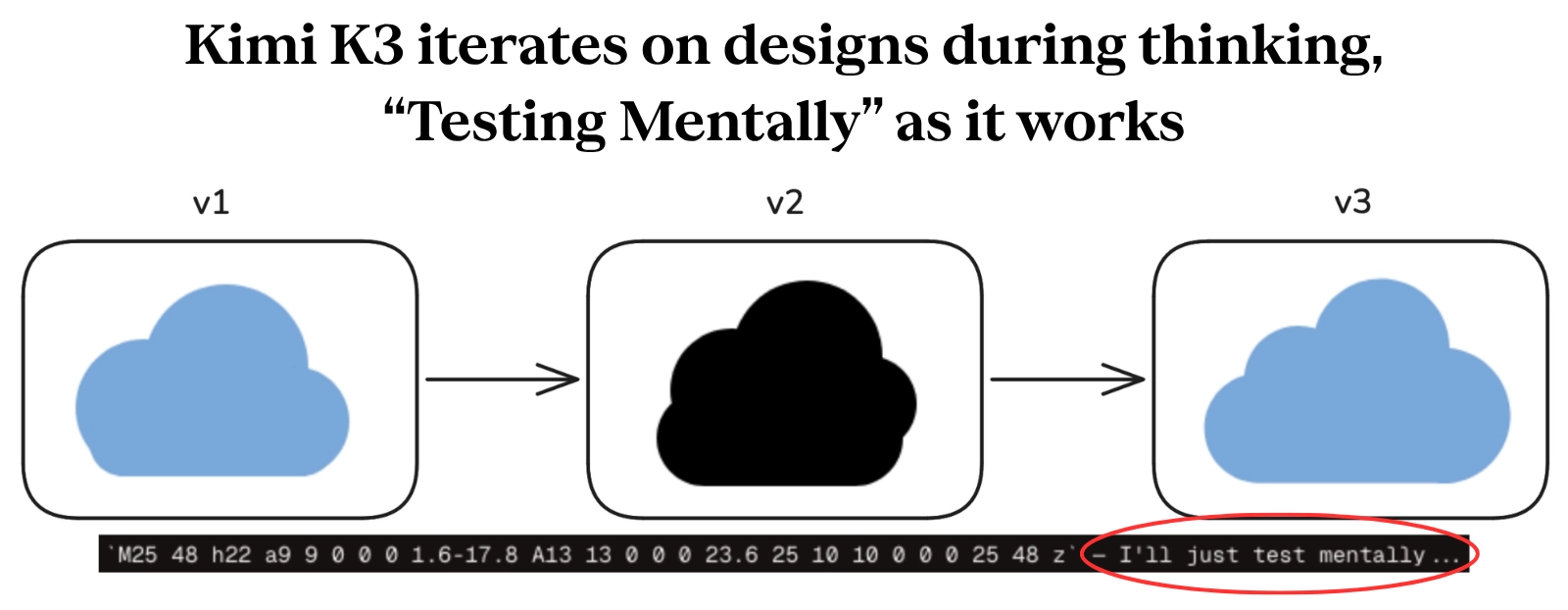
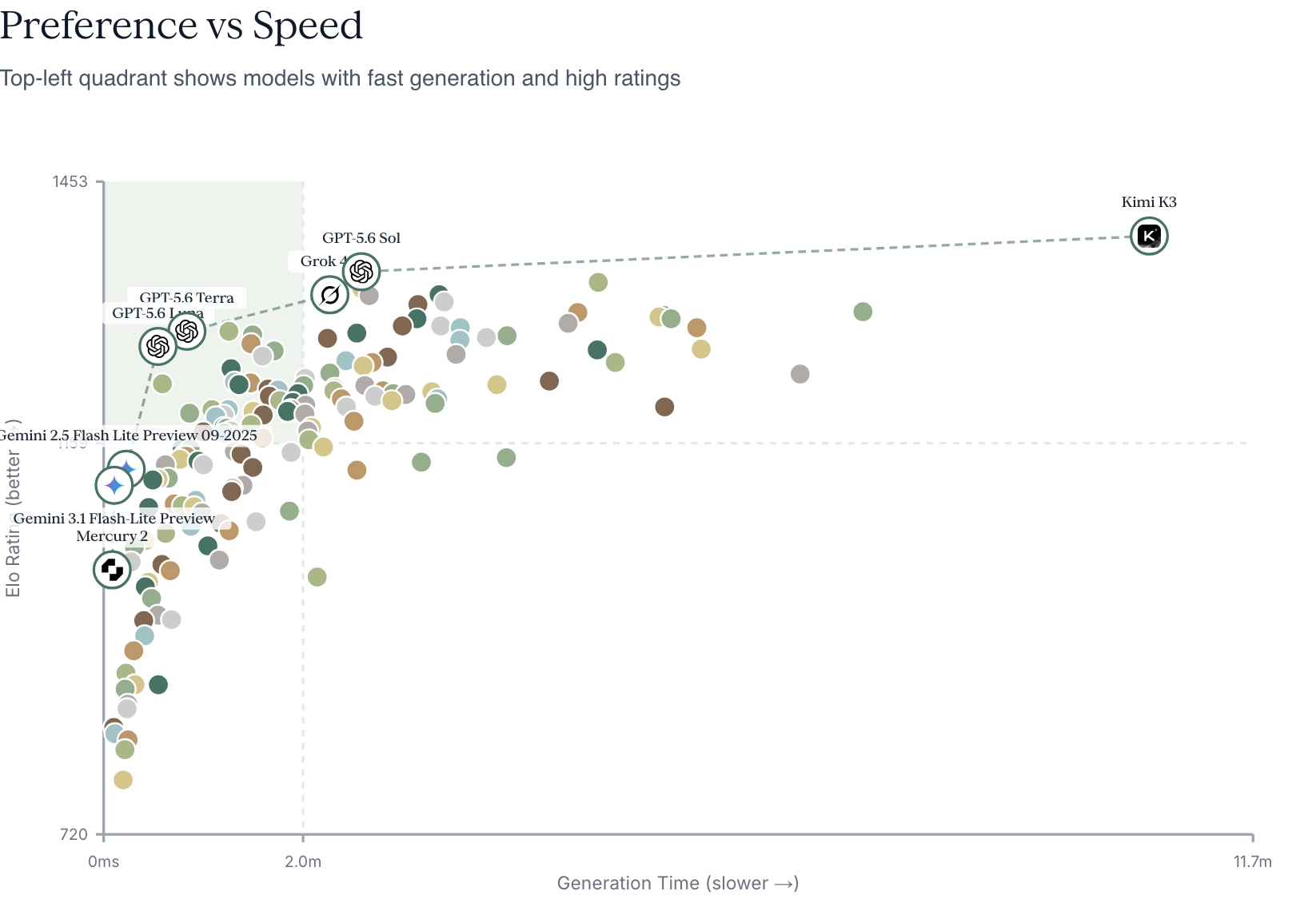
没有其他大型模型会在推理阶段同时进行这种高层规划和低层迭代,因为这一策略会增加花在推理而非执行上的时间。Kimi K3 选择在推理轨迹中采用这一策略,有意产出 token 消耗更多、但表现更好的结果,本质上是在用 token 换取智能。这带来了更慢、但偏好得分更高的生成结果,并在我们的“偏好度 vs. 速度”图表上建立了新的帕累托前沿。
Kimi K3 的思维链将 Unsplash 图片变成武器
不过,Kimi K3 有一项秘密武器:它对训练数据具备出色的索引能力。通常而言,推理的能力远弱于 Agent 轨迹,因为 Agent 无法使用网络搜索等工具来更新其内部思考。但对 Kimi K3 来说,它对互联网形成的学习索引足够强大,因此可以直接检查自己的“心理索引”,判断刚刚输出的推理是否仍然最新且正确。下面是一个 Kimi K3 在 Unsplash 上运用这一能力的例子。Unsplash 是一个免费图片提供商,模型经常用它来寻找主视觉图及其他填充图片。上方是思维链推理,下方则是模型在生成 ID 时所想到的 Unsplash CDN 图片。
Kimi K3 会先思考自己想要什么图片,一次性给出该图片的 Unsplash ID,然后再思考这个 Unsplash ID 是否真的有效,以决定是否采用它。
这意味着,Kimi K3 极其擅长为其网站寻找图片。以下就是由上述思维链生成的网站。
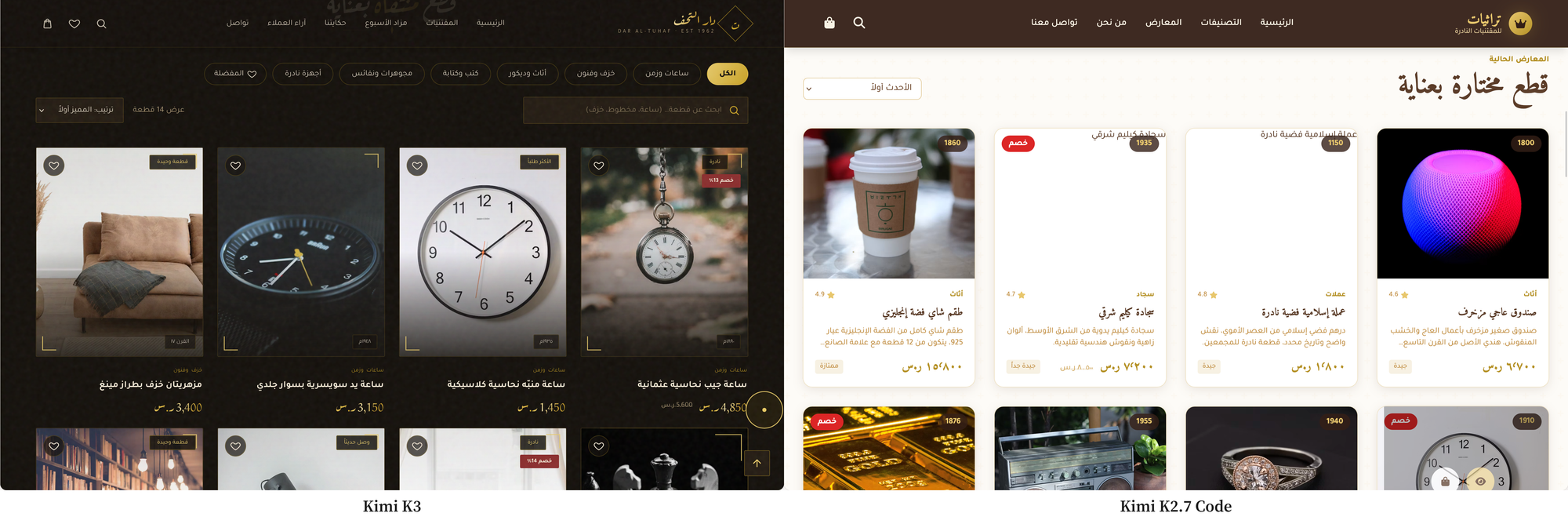
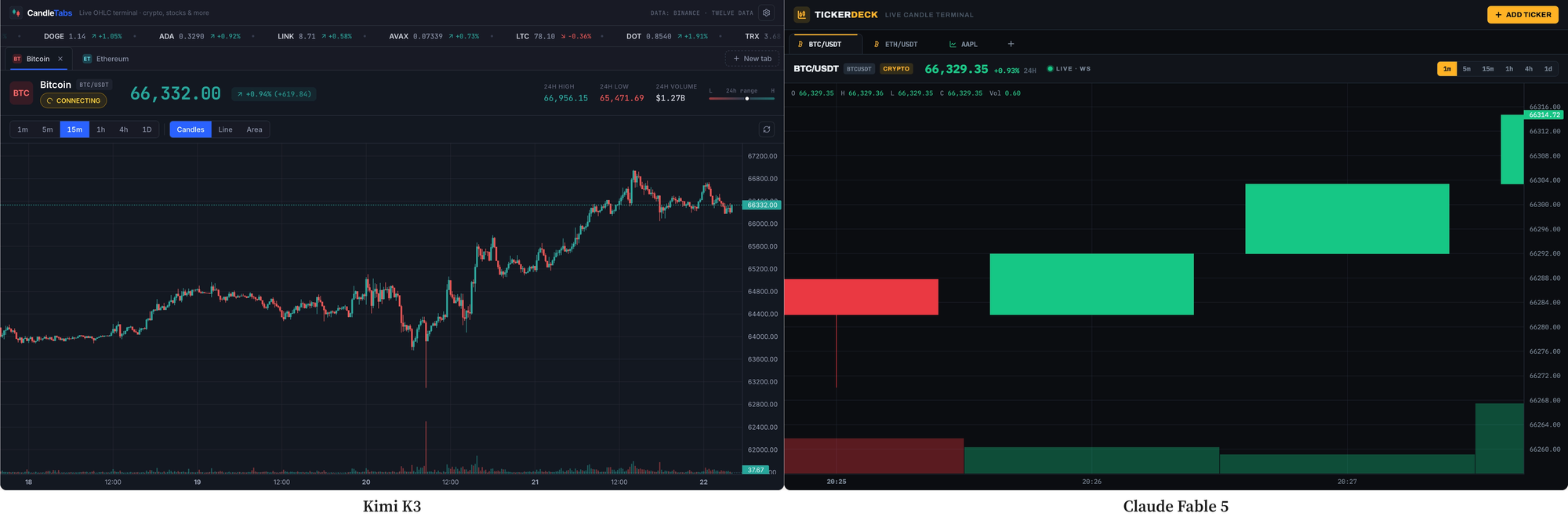
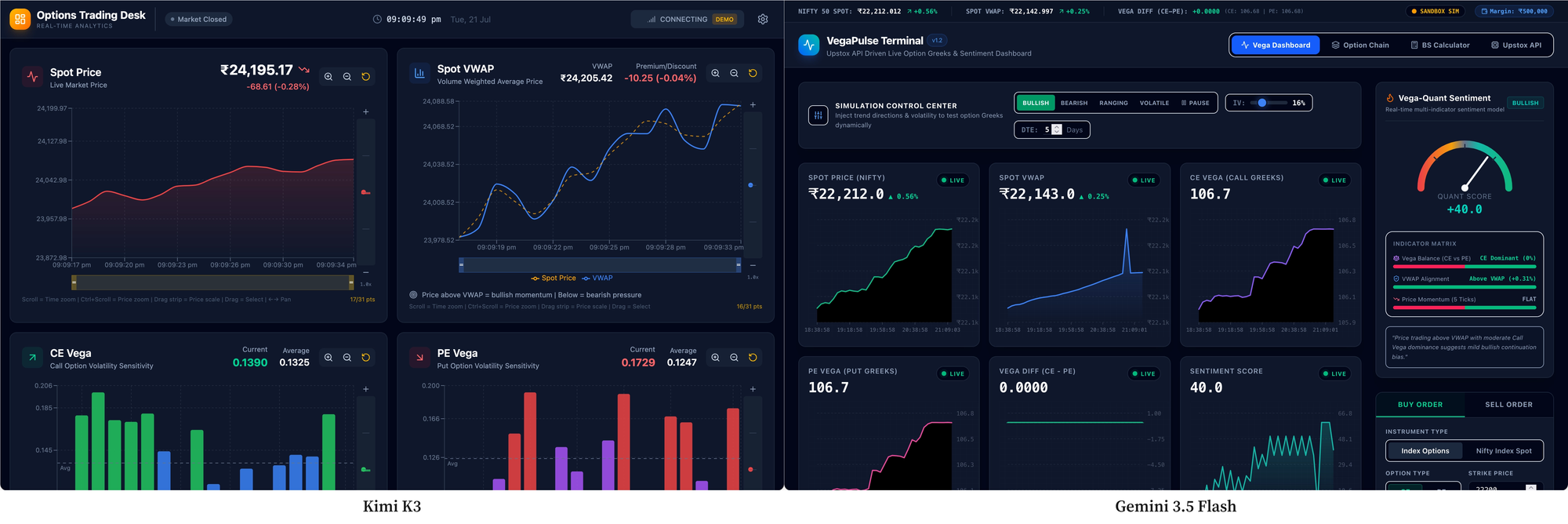
其他模型,例如 Fable 5,并不像 Kimi K3 那样充分使用自己的学习索引,也不会对生成的图片进行同等程度的推理。下面是 Kimi K3 与其他模型的一些生成示例:Kimi K3 没有遗漏任何图片装饰,而 Claude Fable 5 和 Kimi K2.7 Code 则不得不依赖 alt 文本和默认内容。
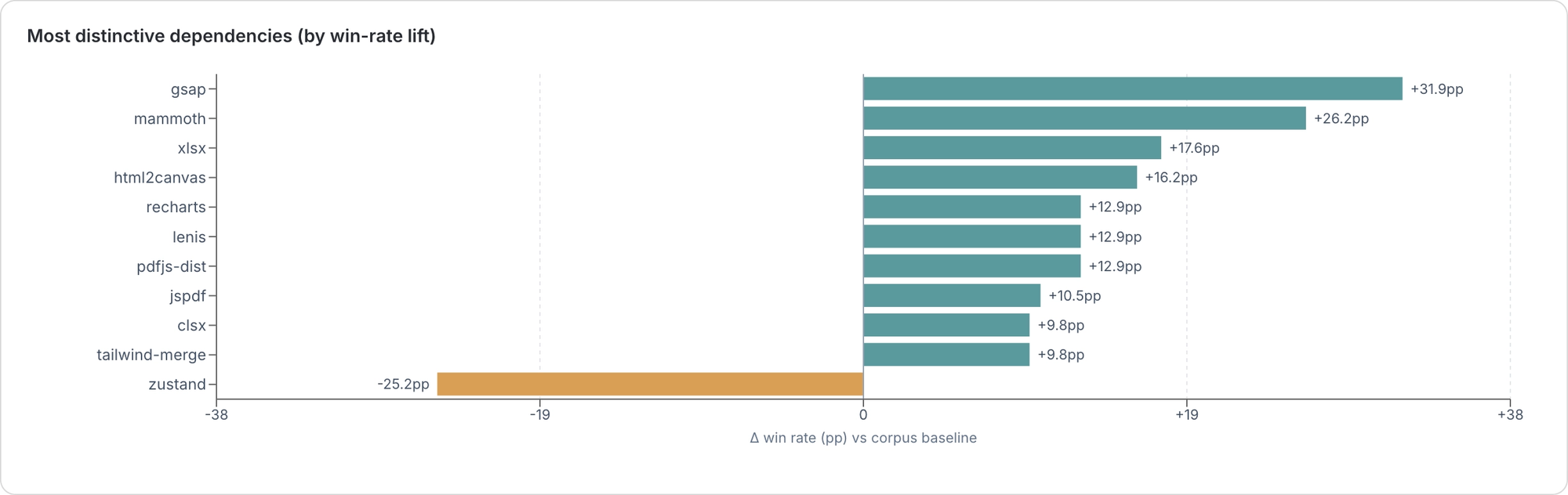
这种思考方式也延伸到了依赖项使用上。Kimi K3 能生成更好的滚动动画、图表和前端 UI,原因就在于它会在推理过程中思考如何使用这些依赖项。
这对模型选择意味着什么
Kimi K3 代表着设计能力的一步前进,也是整个开源模型领域的一次巨大跃升。这类发布提醒我们,开源前沿的发展速度有多快,以及开源模型如何能够提出推动整个行业前进的新思路。每一次这样的发布,都会为研究人员和开发者提供更强大的基础,以继续向前探索。
我们将持续监测 Kimi K3 的表现,以及它与其他模型的对比情况。祝贺 Moonshot AI 团队完成发布;你也可以前往 DesignArena.ai,看看自己是否比起其他模型更喜欢 Kimi K3。
想要产出这样的洞察?欢迎加入 intelligence.ai。
English / 原文
Kimi K3, Moonshot AI’s latest open-weight1 model, ranks 1st on our single-shot Frontend Arena with an Elo of 1392. This is 10 positions higher than Kimi K2.6 and 16 positions higher than Kimi K2.7 Code, marking the largest jump we’ve seen in the Moonshot model line.
However, we found that Kimi K3 uses an extreme amount of thinking tokens, using over 12x more reasoning than Claude Opus 4.8 and over double that of Kimi K2.6.
This is a lot of reasoning, and we decided to dig deeper to find out exactly what Kimi K3 is thinking about.
We find that Kimi K3’s performance can be primarily ascribed to its unique chain-of-thought approach where it appears to iterate upon designs much like how a full AI agent would , but inside its chain of thought. This strategy produces intricate, intentional websites with creative component design, as well as improves Kimi K3's ability to integrate with outside dependencies.
How Kimi K3 Simulates an Agent in its Chain of Thought
A brief scan through Kimi K3’s thinking traces is all we need to explain its performance. Kimi K3 has unique multi-staged thinking traces, where it switches from planning to decision making to designing individual parts of the final website. This is exactly the agentic workflow, and it’s a pattern we’ve never seen before. In fact, during the final design phases, Kimi K3 writes out sample code so that in the final generation, it can correctly create the interactions it had painstakingly designed.
Compare this to the previous models in the model line, which have much shorter reasoning traces and rarely write code. Instead, they just decide on high-level details or sections before diving straight into the final output.
If we aggregate across all the generations from the Kimi models, we find that it writes over 10x as much code during reasoning than any other model in its model line, with more reasoning tokens spent coding than actually reasoning.
No other model has this density of code blocks during reasoning, and it’s because Kimi K3 iterates on individual components during the reasoning, “testing mentally” instead of using the normal tests it would have in an agent loop. This also implies that Kimi K3 is effectively thinking in code, expressing its planned specification in the form of code and concrete constraints rather than vibing up an inexact plan.
No other large model does this sort of high-level planning and low-level iteration during the reasoning stage, as this strategy increases the amount of time spent reasoning instead of working. By choosing this strategy for its reasoning traces, Kimi K3 deliberately produces results that take more tokens but perform better, essentially trading tokens for intelligence. This results in much slower generations with higher preference scores, setting a new Pareto frontier on our Preference vs Speed chart.
Kimi K3’s Thinking Weaponizes Unsplash Images
However, Kimi K3 has a secret weapon: phenomenal indexing on its training data. Ordinarily, reasoning is much weaker than an agentic trace because the agent can’t use tools like web search to update its internal thinking. However, for Kimi K3, its learned index of the Internet is so strong that it can simply check its mental index for if the reasoning it just output was up-to-date and correct. Below is an example of Kimi K3 using this for Unsplash, a free images provider that models commonly use to find hero visuals and other filler images. On top is the chain-of-thought reasoning, and below is the Unsplash CDN image that the model thought about when it generated the ID.
Kimi K3 thinks about what image it wants, one-shots an Unsplash ID for that image, then thinks about whether than Unsplash ID is actually valid to see if it wants to use it.
This means that Kimi K3 is astoundingly good at finding images for its websites. Here’s the website that the above chain-of-thought generated.
Other models, like Fable 5, don’t utilize their learned index as much as Kimi K3 does, nor do they reason as much about the images they generate. Below are some example generation of Kimi K3 versus other models, where Kimi K3 didn’t miss a single image decoration while Claude Fable 5 and Kimi K2.7 Code had to rely on alt text and defaults instead.
This thinking also extends to dependency usage, where Kimi K3 creates better scroll animations, charts, and frontend UIs simply because it’s thinking about how to use those dependencies during reasoning.
What this means for model selection
Kimi K3 is a step forward in design improvements and a huge leap forward for open source models as a whole. Launches like this are a reminder of how fast the open source frontier is moving, and how open source models can present new ideas that push everyone ahead. Every release like this gives researchers and developers more powerful foundations to push from.
We will continue monitoring Kimi K3 performance and how it compares to other models. Congratulations to the Moonshot AI team on the launch, and see if you like Kimi K3 more than other models on DesignArena.ai.
Want to make insights like these? Join us at intelligence.ai.