面向 AWS 推出 Claude 应用网关
英文标题:Introducing Claude apps gateway for AWS
Anthropic 宣布推出面向 AWS 的 Claude 应用网关,一个自托管控制平面,为 Claude Code 和 Claude Desktop 提供统一的访问、成本与策略管控。组织可通过 Amazon Bedrock 或 Claude Platform on AWS 部署,告别为每位开发者单独分发凭证、手动推送设置和分散跟踪支出的难题。该网关集成企业单点登录(SSO),颁发短期令牌,无长期密钥留存,并可设定每日、每周和每月的支出上限。这一发布让开发团队能够安全、可治理地规模化采用 Claude 工具。
 74.7 KB
 116.5 KB
 118.7 KB
 239.4 KB
 104.1 KB
 164.1 KB
 25.4 KB
 29.3 KB
 309.5 KB
 117.0 KB
 170.9 KB
中文
在开发团队中大规模部署 Claude Code 和 Claude Desktop 的企业,需要集中管理访问、成本和策略。这在规模化时难以实现:每位开发者都需要独立的凭证,设置必须手动分发,支出难以跟踪或设置上限。缺少集中控制点,治理就任由各个团队各自实施工具。
今天,我们宣布推出面向 AWS 的 Claude 应用网关,这是一个自托管控制平面,为组织提供对 Claude Code 和 Claude Desktop 的访问、成本和策略的单点控制。它取代了为每位开发者单独配发云凭证、手动向每台设备推送设置,或单独搭建工具跟踪支出的需求。您可以通过 Amazon Bedrock 部署,将数据保留在 AWS 安全边界内;或通过 Claude Platform on AWS 部署,在获得相同网关控制的同时,享受原生的 Claude 平台体验。
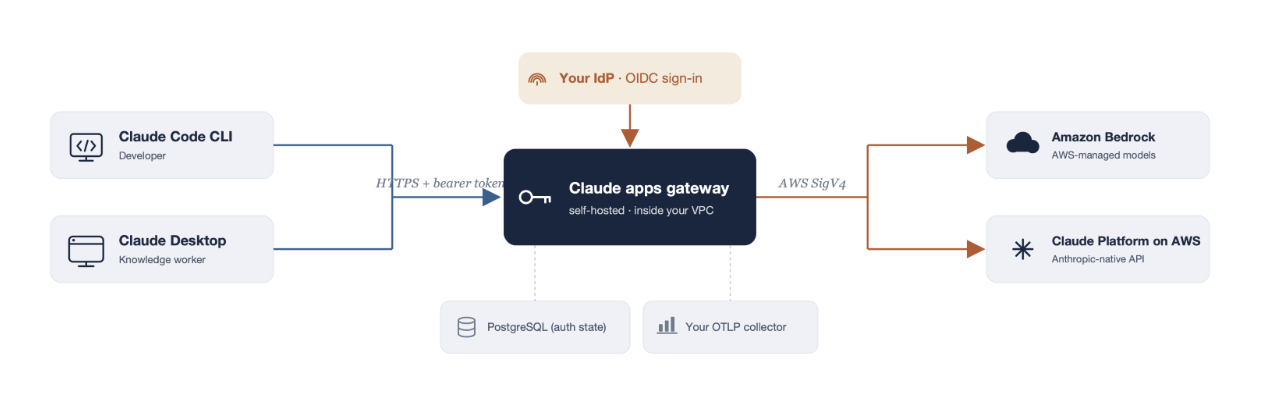
Claude 应用网关 for AWS 高层概览
本文将展示如何使用 Amazon Bedrock 和 Claude Platform on AWS 设置并运行 Claude 应用网关 for AWS。
Claude 应用网关的工作原理
该网关由 Anthropic 内置于开发者已经在用的 Claude Code CLI 二进制文件中交付。您可以在自己基础设施上以一个无状态容器运行它,并用一个 PostgreSQL 数据库存储短期登录状态和速率限制计数器。由于网关和客户端是一同构建的,/login 流程是网关感知的。客户端登录时自动应用托管设置,并且每次请求都会一致地强制执行策略。
入职和离职流程遵循您现有的身份工作流。要授予访问权限,只需将开发者添加到您的身份提供程序 (IdP)。要撤销权限,将其移除,其会话将在配置的令牌有效期内过期(默认为一小时)。开发者设备上不会留存长期密钥。
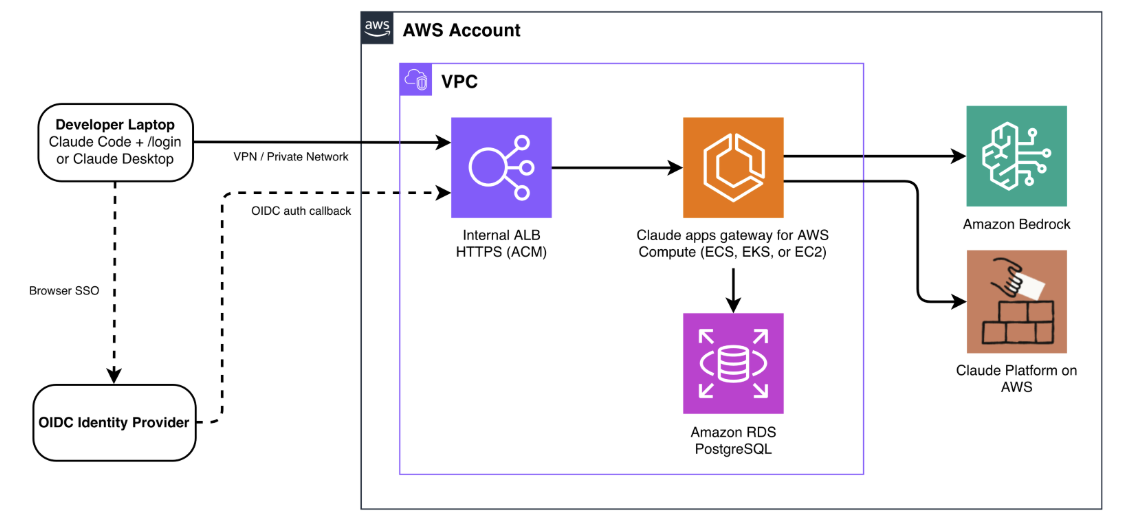
图1:Claude 应用网关 for AWS 架构
该网关承担五项核心职责:
- 身份(Identity): 网关连接到任何符合标准的 OpenID Connect (OIDC) 身份提供程序。开发者通过浏览器单点登录 (SSO) 后,网关会颁发一个短期令牌,CLI 在所有后续请求中使用该令牌。
- 策略(Policy): 您在服务器上一次性定义托管设置。客户端在登录时接收策略,网关在每次请求时强制执行。您可以集中调整允许的模型、工具权限和默认设置,并按 IdP 组进行范围限定。
- 遥测(Telemetry): 客户端为每个请求标记使用量指标,网关将其通过 OpenTelemetry 协议 (OTLP) 转发到您配置的收集器,如您自己账户中的 Amazon CloudWatch 或 Amazon Managed Service for Prometheus,或者第三方平台。您控制遥测数据的去向和保留时长。
- 路由(Routing): 网关持有您的上游凭证,并代表开发者将推理请求路由到 Amazon Bedrock 或 Claude Platform on AWS,同时可在 AWS 区域之间或跨多个账户进行可选的故障转移。
- 支出上限(Spend caps): 按组织、组或用户设置每日、每周和每月的支出限制。当开发者超出其上限时,网关会阻止进一步请求,直到周期重置或管理员提高限额。
当 Claude 应用网关与 Amazon Bedrock 一起使用时,推理请求将通过您在 AWS 中配置的区域中的 Amazon Bedrock,保持与您账户中任何其他 Amazon Bedrock 工作负载相同的数据处理和隐私控制。当 Claude 应用网关与 Claude Platform on AWS 一起使用时,请求由 Anthropic 处理。
配置
网关在启动时读取单个 YAML 文件。以下是最小化生产配置的样子:
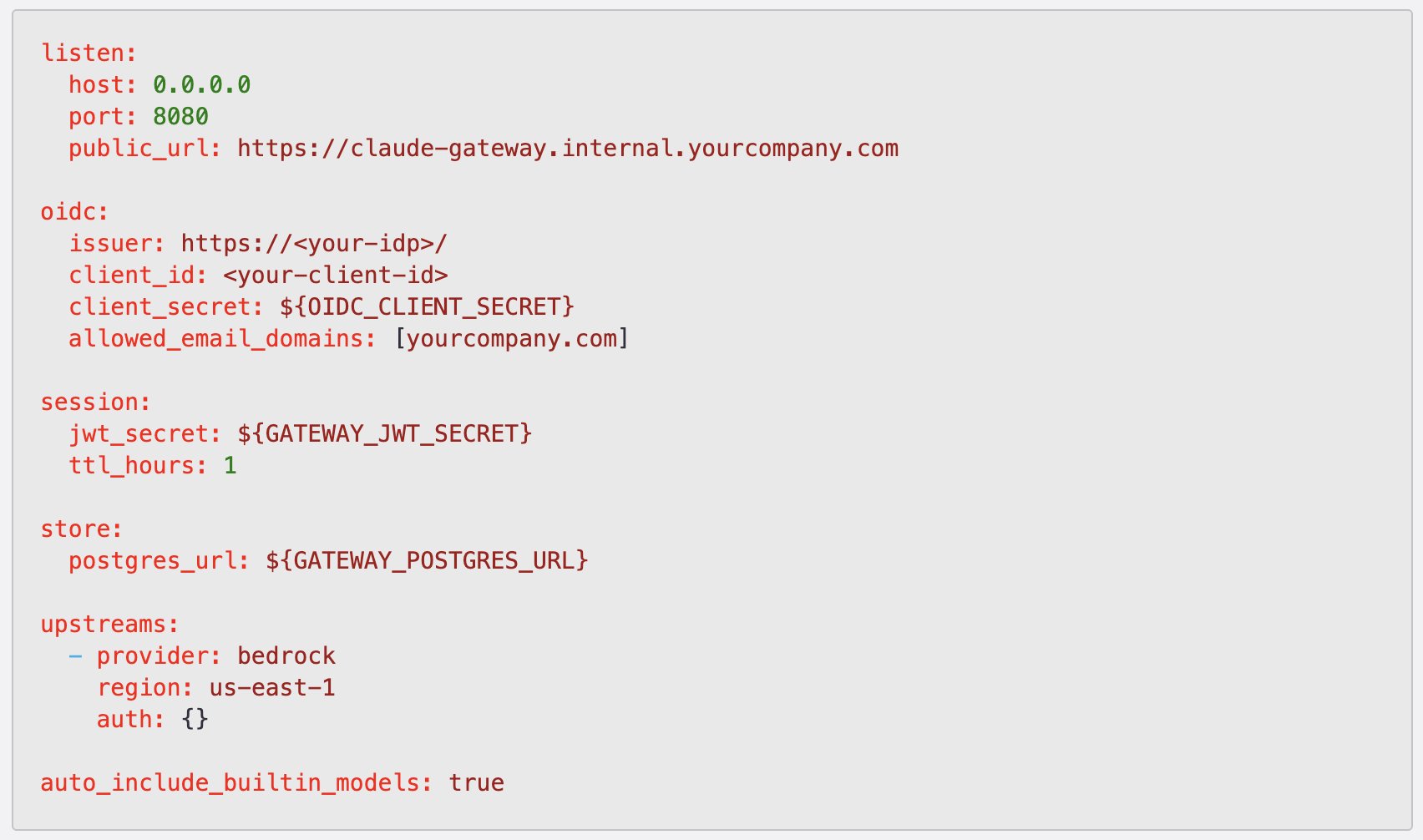
gateway.yaml —— Amazon Bedrock 部署的完整配置
该文件包含六个部分,密钥保留在环境变量中。Bedrock 上游使用容器的 IAM 角色,因此无需管理静态凭证。要通过 Claude Platform on AWS 进行路由,请替换 upstreams 块:
upstreams:
  - provider: anthropicAws
    region: us-east-1
    workspace_id: wrkspc_...
    auth: {} # AWS default credential chain (IAM role)
模型 ID 与 Anthropic API 中的相同(claude-sonnet-5、claude-opus-4-8)。无需 Amazon Bedrock ARN 或推理配置文件。
该网关以无状态容器的形式运行在私有网络中,支持 Amazon Elastic Container Service (Amazon ECS)、Amazon Elastic Kubernetes Service (Amazon EKS) 或 Amazon Elastic Compute Cloud (Amazon EC2)。您将其置于内部 Application Load Balancer 后面,并使用来自 AWS Certificate Manager 的 TLS 证书。Amazon Relational Database Service (Amazon RDS) for PostgreSQL 存储短期登录状态。开发者通过私有网络抵达网关,网关使用 IAM 任务角色代表他们调用上游提供程序。
开发者登录
部署网关后,开发者运行 claude /login。管理员通过设备管理工具将托管设置文件推送到开发者机器,预先填入网关 URL,因此开发者会直接看到 Claude 应用网关登录界面。
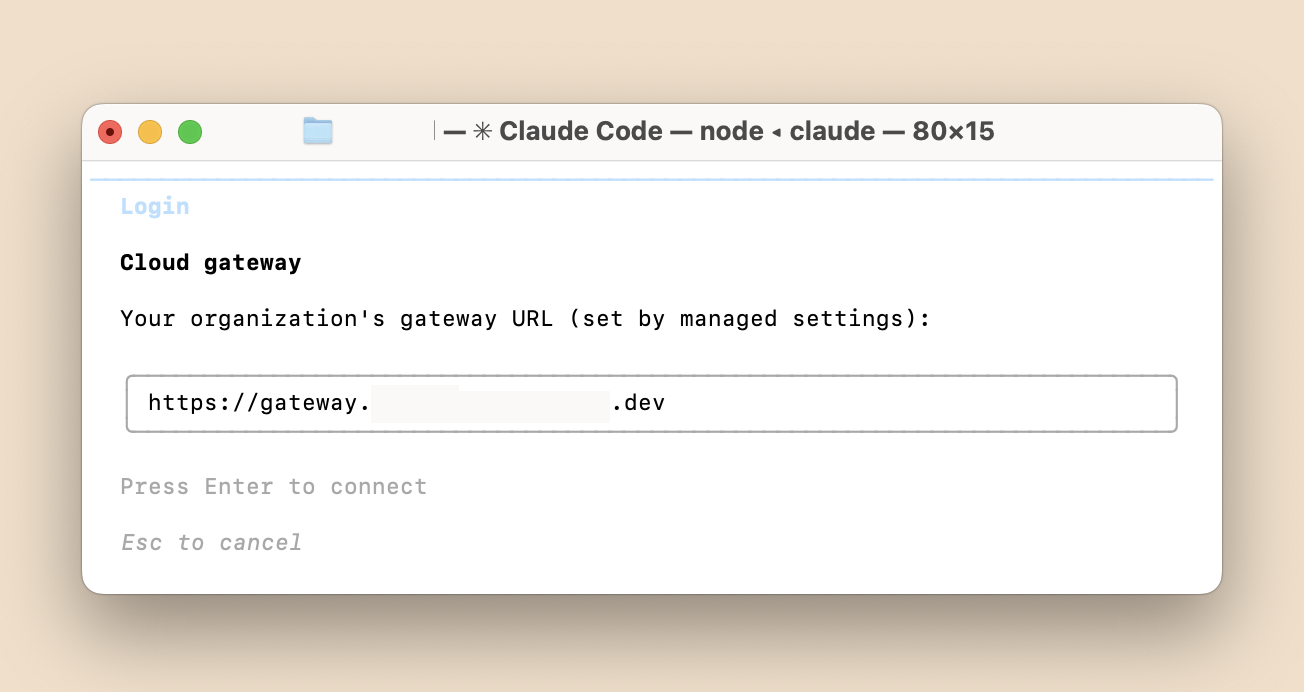
Claude Code 中的 Claude 应用网关登录界面
他们按下 Enter,浏览器随即打开企业 SSO。
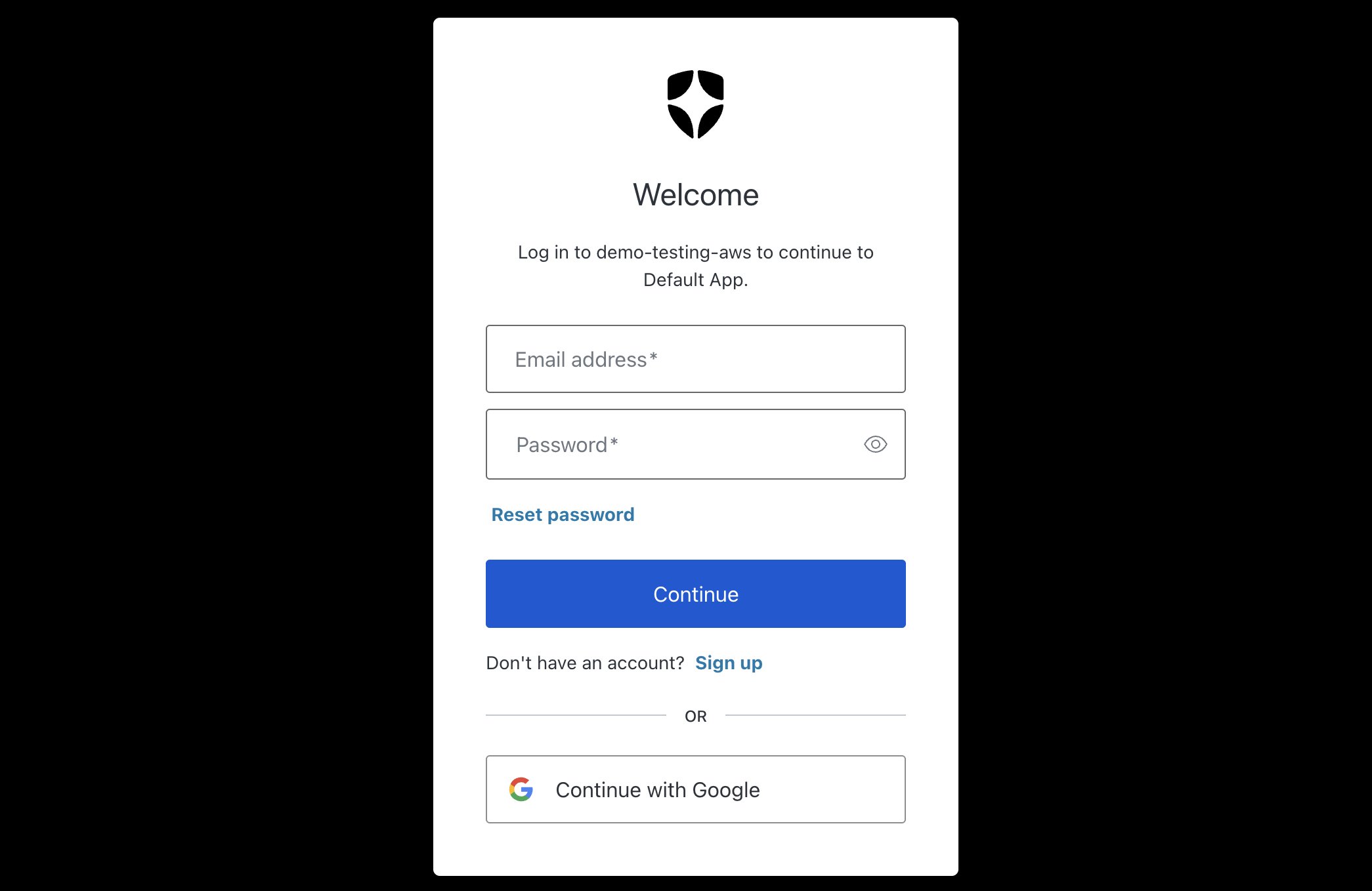
通过身份提供程序进行的浏览器 SSO 认证
一次登录即可完成连接。会话在后台通过 OIDC 刷新令牌静默刷新,因此开发者在重启后仍保持认证状态,无需反复通过浏览器登录。如果用户从 IdP 中被移除,其会话将在下次刷新时过期。
使用 Claude Code
登录后,开发者像使用其他任何一种认证方式一样使用 Claude Code。他们编写代码、运行命令,与 Claude 正常交互。对他们而言,区别是不可见的:每个请求都通过网关认证,通过您配置的上游路由,并受到集中设置的策略管控。
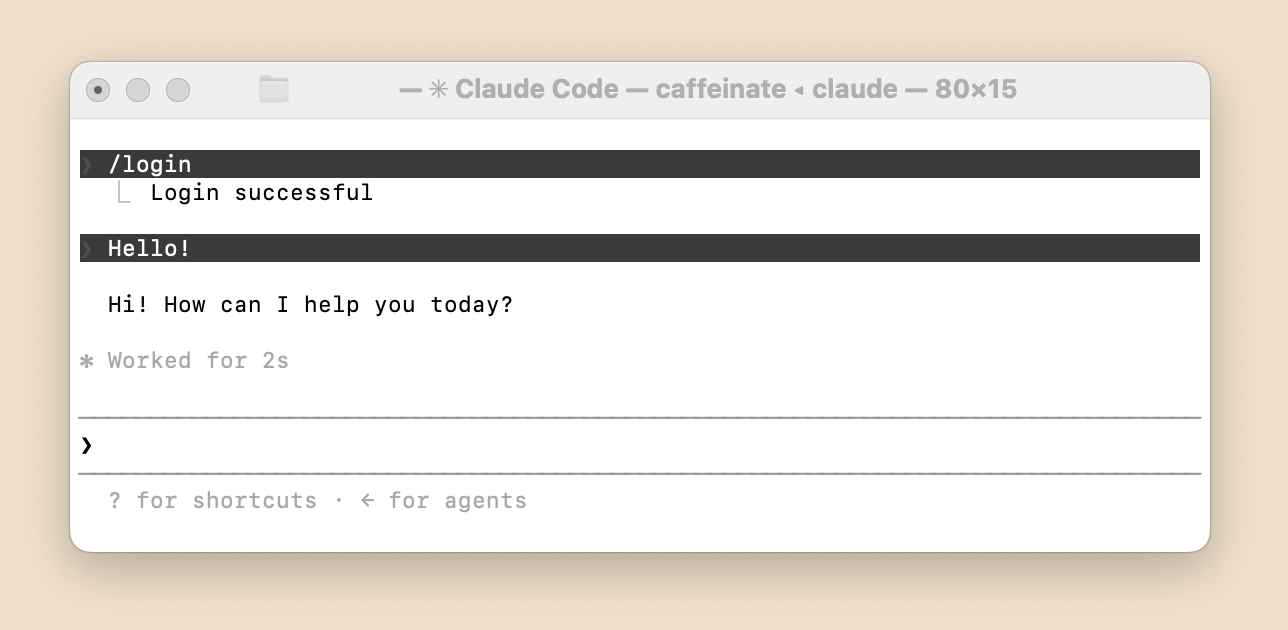
Claude Code 响应提示,通过网关经由 Amazon Bedrock 路由
/model 选择器仅显示策略允许的模型。除了模型访问外,策略还能控制工具权限,例如限制文件写入或网络访问。它们还能强制执行开发者无法在本地覆盖的权限规则,并推送环境变量或钩子,从而跨团队标准化工作流程。用量归因于每位开发者的身份,支出根据其上限进行追踪。如果他们离开公司,从 IdP 中移除即可在配置的会话有效期内撤销访问权限。
总结
借助面向 AWS 的 Claude 应用网关,您可以扩大 Claude Code 和 Claude Desktop 在组织内的采用,同时从一处集中管理身份、策略和成本。身份通过现有的 IdP 流转,策略集中执行,成本按用户归属,且开发者设备上不留存长期密钥。
由于网关是自托管的,您可以将其部署在任何 AWS 区域,并将推理请求路由到 Amazon Bedrock 或 Claude Platform on AWS,包括跨区域和跨账户的配置。当数据必须保持在 AWS 安全边界内时选择 Amazon Bedrock,或者选择 Claude Platform on AWS 以获取 Anthropic 原生平台体验,同时使用 AWS 认证和计费。
要开始使用,请下载 Claude Code CLI 并查阅 Claude 应用网关文档。请通过 AWS re:Post for Amazon Bedrock 或您常用的 AWS Support 联系人发送反馈。
关于作者
Dani Mitchell
Dani 是 AWS 的资深 GenAI 专家解决方案架构师,也是 Amazon Bedrock 知识库的 SA 负责人。他帮助全球企业利用 Amazon Bedrock 和 Anthropic 的模型及能力设计和部署生成式 AI 解决方案,构建可扩展的生产就绪应用。
Harshetha Narayan
Harshetha 是 AWS 的 Amazon Bedrock AgentCore 技术产品营销经理。她帮助企业大规模构建、部署和治理 AI 智能体。工作之余,她喜欢徒步和探索新地方。
Sofian Hamiti
Sofian 是一位技术领导者,拥有超过 12 年构建 AI 解决方案的经验,带领高绩效团队实现客户成果的最大化。他热衷于赋能多样化人才,推动全球影响力并实现职业抱负。
Ayan Ray
Ayan Ray 是 AWS 的首席合作伙伴解决方案架构师和 AI 技术负责人,担任 AWS 上 Anthropic 的全球技术负责人。他工作在云架构和人工智能的交汇点,帮助组织采纳并扩展 Anthropic 技术在 AWS 上的应用。
English / 原文
Enterprises deploying Claude Code and Claude Desktop across development teams need centralized control over access, cost, and policy. At scale, this is hard to manage: each developer needs an individual credential, settings must be distributed manually, and spend is difficult to track or cap. Without a centralized control point, governance is left to whatever tooling each team can implement independently.
Today, we’re announcing the Claude apps gateway for AWS, a self-hosted control plane that gives organizations a single point of control over access, cost, and policy for Claude Code and Claude Desktop. It replaces the need to provision a separate cloud credential per developer, push settings to every laptop by hand, or stand up separate tooling to track spend. You can deploy it through Amazon Bedrock to keep data within the AWS security boundary, or through Claude Platform on AWS to get the same gateway controls with the native Claude platform experience.
High level overview of Claude apps gateway for AWS
In this post, we show how to set up and run Claude apps gateway for AWS with Amazon Bedrock and Claude Platform on AWS.
How the Claude apps gateway works
The gateway is delivered by Anthropic inside the same Claude Code CLI binary your developers already use. You can run it in one stateless container on your infrastructure, backed by a PostgreSQL database that stores short-lived sign-in state and rate-limit counters. Because the gateway and the client are built together, the /login flow is gateway-aware. The client applies managed settings automatically at sign-in, and policy is enforced consistently on every request.
Onboarding and offboarding follow your existing identity workflows. To grant access, add a developer to your identity provider (IdP). To revoke it, remove them, and their session expires within the configured token lifetime (one hour by default). No long-lived secrets live on developer machines.
Figure 1: Claude apps gateway architecture for AWS
The gateway handles five core responsibilities:
- Identity: The gateway connects to any standards-compliant OpenID Connect (OIDC) identity provider. After a developer signs in through browser single sign-on (SSO), the gateway issues a short-lived token that the CLI uses for all subsequent requests.
- Policy: You define managed settings once on the server. Clients receive policy at sign-in, and the gateway enforces it on every request. You can adjust allowed models, tool permissions, and default settings centrally, scoped by IdP group.
- Telemetry: The client stamps a usage metric for every request, and the gateway relays it over OpenTelemetry Protocol (OTLP) to a collector you configure, such as Amazon CloudWatch or Amazon Managed Service for Prometheus in your own account, or a third-party platform. You control where telemetry goes and how long it’s retained.
- Routing: The gateway holds your upstream credential and routes inference requests to Amazon Bedrock or Claude Platform on AWS on behalf of developers, with optional failover between AWS Regions or across multiple accounts.
- Spend caps: Set daily, weekly, and monthly spend limits per organization, group, or user. When a developer exceeds their cap, the gateway blocks further requests until the period resets or an admin raises the limit.
When Claude apps gateway is used with Amazon Bedrock, inference requests go through Amazon Bedrock in the AWS Regions you configure, maintaining the same data handling and privacy controls as any other Amazon Bedrock workload in your account. When Claude apps gateway is used with Claude Platform on AWS, requests are processed by Anthropic.
The configuration
The gateway reads a single YAML file at startup. Here’s what a minimal production configuration looks like:
gateway.yaml — the full configuration for an Amazon Bedrock deployment
The file contains six sections and the secrets stay in environment variables. The Bedrock upstream uses the container’s IAM role, so there are no static credentials to manage. To route through Claude Platform on AWS instead, replace the upstreams block:
upstreams:
- provider: anthropicAws
region: us-east-1
workspace_id: wrkspc_...
auth: {} # AWS default credential chain (IAM role)
Model IDs are the same as the Anthropic API (claude-sonnet-5, claude-opus-4-8). No Amazon Bedrock ARNs or inference profiles needed.
The gateway runs as a stateless container in your private network on Amazon Elastic Container Service (Amazon ECS), Amazon Elastic Kubernetes Service (Amazon EKS), or Amazon Elastic Compute Cloud (Amazon EC2). You place it behind an internal Application Load Balancer with a Transport Layer Security (TLS) certificate from AWS Certificate Manager. Amazon Relational Database Service (Amazon RDS) for PostgreSQL stores short-lived sign-in state. Developers reach the gateway through your private network, and the gateway uses an IAM task role to call the upstream provider on their behalf.
Developer sign-in
Once the gateway is deployed, developers run claude /login. Administrators push a managed settings file to developer machines via their device management tool that pre-fills the gateway URL, so developers see the Claude apps gateway screen directly.
The Claude apps gateway login screen in Claude Code
They press Enter, and a browser opens with your corporate SSO.
Browser SSO authentication through your identity provider
One sign-in, and they’re connected. The session refreshes silently in the background using OIDC refresh tokens, so developers stay authenticated across restarts without repeated browser logins. If a user is removed from the IdP, their session expires at the next refresh.
Working with Claude Code
After sign-in, developers use Claude Code exactly as they would with any other authentication method. They write code, run commands, and interact with Claude normally. The difference is invisible to them: every request is authenticated through the gateway, routed through your configured upstream, and governed by the policies you set centrally.
Claude Code responding to a prompt, routed through Amazon Bedrock via the gateway
The /model picker shows only the models your policy allows. Beyond model access, policies can control tool permissions, such as restricting file writes or web access. They can also enforce permission rules that developers cannot override locally, and push environment variables or hooks to standardize workflows across teams. Usage is attributed to each developer’s identity, and spend is tracked against their cap. If they leave the company, removing them from the IdP revokes access within the configured session lifetime.
Conclusion
With the Claude apps gateway for AWS, you can expand Claude Code and Claude Desktop adoption across your organization while managing identity, policy, and cost from one place. Identity flows through your existing IdP, policy is enforced centrally, and cost is attributed per user, with no long-lived secrets on developer machines.
Because the gateway is self-hosted, you can deploy it in any AWS Region and route inference to Amazon Bedrock or Claude Platform on AWS, including cross-Region and cross-account setups. Choose Amazon Bedrock when data must stay within the AWS security boundary, or Claude Platform on AWS for access to Anthropic’s native platform experience with AWS authentication and billing.
To get started, download the Claude Code CLI and review the Claude apps gateway documentation. Send feedback to AWS re:Post for Amazon Bedrock or through your usual AWS Support contacts.
About the authors
Dani Mitchell
Dani is a Sr GenAI Specialist Solutions Architect at AWS and the SA lead for Amazon Bedrock Knowledge Bases. He helps enterprises across the world design and deploy generative AI solutions using Amazon Bedrock and Anthropic’s models and capabilities to build scalable, production-ready applications.
Harshetha Narayan
Harshetha is a Technical Product Marketing Manager for Amazon Bedrock AgentCore at AWS. She helps companies build, deploy, and govern their AI agents at scale. Outside of work, she enjoys hiking and exploring new places.
Sofian Hamiti
Sofian is a technology leader with over 12 years of experience building AI solutions, and leading high-performing teams to maximize customer outcomes. He is passionate about empowering diverse talents to drive global impact and achieve their career aspirations.
Ayan Ray
Ayan Ray is a Principal Partner Solutions Architect and AI Tech Lead at AWS, serving as the Worldwide Tech Lead for Anthropic at AWS. He works at the intersection of cloud architecture and Artificial Intelligence, helping organizations adopt and scale Anthropic’s technologies on AWS.