Claude Opus 5.5 现已在 AWS 上推出
英文标题:Claude Opus 5.5 is now available on AWS
Anthropic 面向 Agent 编程、知识工作和长时运行任务的 Claude Opus 5.5,现已登陆 Amazon Bedrock 和 Claude Platform on AWS。该模型据称可用更少 Token 完成更多工作,结合更低的单 Token 价格和显著降低的缓存读取费用,平均单任务成本低于 Claude Opus 5。Opus 5.5 默认启用自适应思考,并强化了任务过程中的沟通与可解释性;同时引入类似 Claude Fable 5.1 的生物学、网络安全和 AI 开发安全分类器,因此相较此前 Opus 版本会更频繁地拒绝请求。开发者可通过 Bedrock 控制台、Boto3、Converse API、Invoke API 或 Anthropic Messages API 调用该模型。
 1.3 MB
 101.1 KB
 124.1 KB
 345.0 KB
 141.2 KB
 346.5 KB
 293.6 KB
 162.2 KB
 15.1 KB
 16.6 KB
 15.5 KB
 15.8 KB
 147.0 KB
中文
今天,我们很高兴宣布,Claude 5.5 模型家族的首个模型 Claude Opus 5.5,现已在 Amazon Bedrock 和 Claude Platform on AWS 上推出。Claude Opus 5.5 是 Anthropic 能力最强的 Opus 模型,适用于 Agent 编程、知识工作和长时运行任务。
本文介绍 Claude Opus 5.5 的改进、实用使用建议,以及如何开始在 Amazon Bedrock 上使用该模型进行构建。
Claude Opus 5.5 有何不同
Anthropic 表示,Claude Opus 5.5 能以比 Claude Opus 5 更少的 Token 完成更多工作,新的定价也将这些效率收益直接传递给客户。更低的单 Token 价格和大幅降低的缓存读取费用,进一步叠加了效率提升带来的收益。最终,Claude Opus 5.5 的平均单任务成本低于 Claude Opus 5,使团队能够大规模运行更具雄心的 Agent 工作负载。
Claude Opus 5.5 经过训练,能够进行更清晰的沟通。在工作过程中,它会呈现自己做了什么、发现了什么以及需要什么,使长时运行任务更易于跟踪。自适应思考始终处于启用状态,Opus 5.5 会自行判断每项任务所需的推理量。你可以使用 effort 作为控制方式,而无需手动设置思考预算。
Claude Opus 5.5 是首个配备类似 Claude Fable 5.1 安全分类器的 Opus 模型,涵盖生物学、网络安全和 AI 开发领域。与此前的 Opus 版本相比,该模型将更频繁地拒绝请求。
使用场景
Claude Opus 5.5 的能力非常适合那些最重视一致性和深度的行业。在软件开发中,Opus 5.5 相较 Opus 5 改进了长时运行会话的表现,具备清晰的沟通能力和可解释性,因此更便于使用、审查和信任。对于知识工作,在处理和创建长文档及报告时,它相比 Opus 5 需要更少的修正。
在 Amazon Bedrock 上开始使用 Claude Opus 5.5
要试用 Claude Opus 5.5,请打开 Amazon Bedrock 控制台,选择 Test,然后选择 Playground,并将 Claude Opus 5.5 选为模型。之后,你可以直接针对该模型运行提示词。
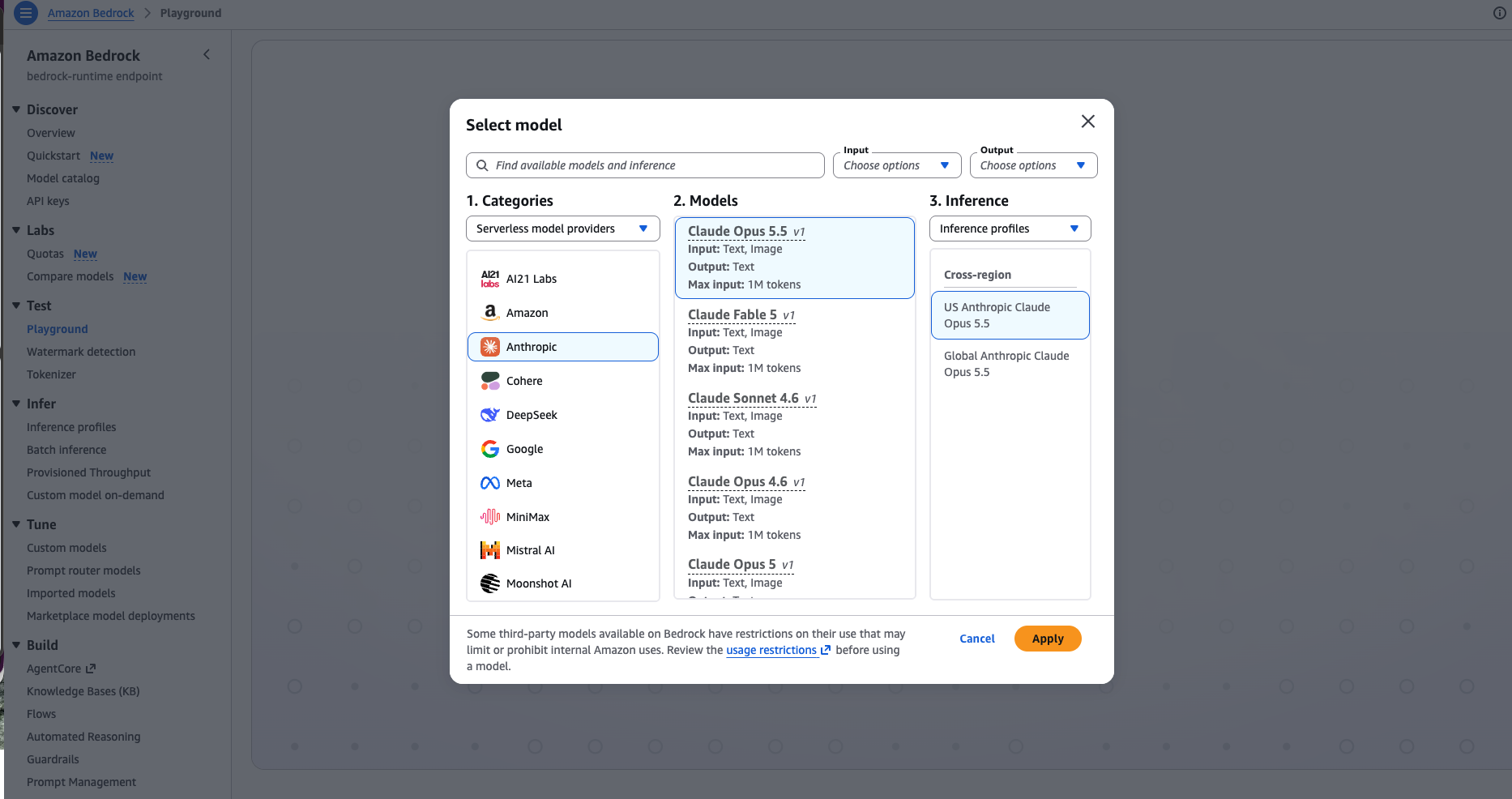
图 1:在 Amazon Bedrock 控制台 Playground 中选择 Anthropic Claude 模型
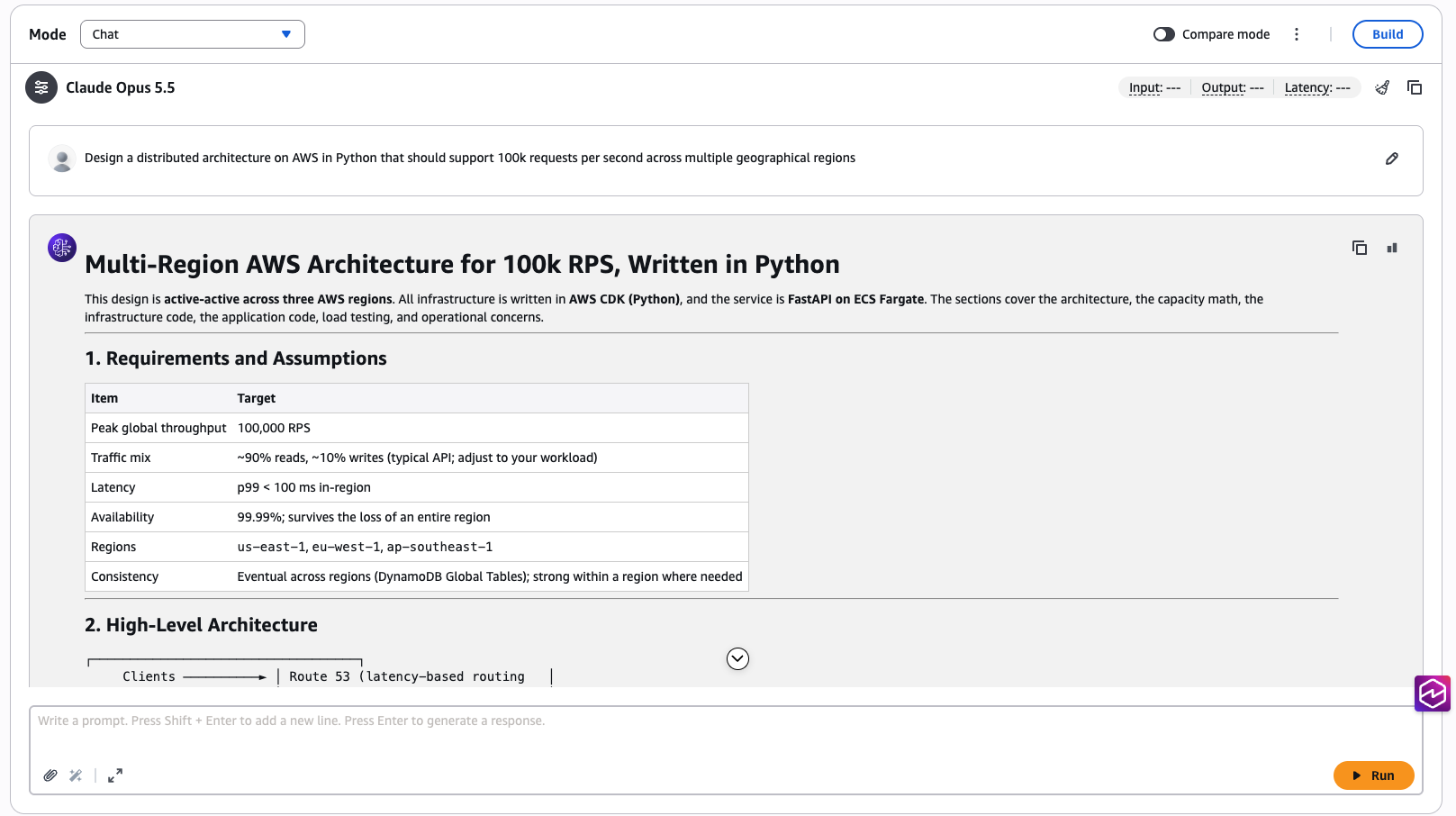
图 2:在 Amazon Bedrock 控制台 Playground 中针对 Claude 模型运行提示词
在编程调用方面,你可以通过 Anthropic Messages API,针对 bedrock-runtime 和 bedrock-mantle(通过 Anthropic SDK)调用该模型。你也可以通过 AWS Command Line Interface (AWS CLI) 和 AWS SDK,继续使用 bedrock-runtime 上的 Invoke 与 Converse API。
前置条件
- 拥有可访问 Amazon Bedrock 的有效 AWS 账户。
- 已安装并配置 AWS Command Line Interface(AWS CLI)。
- Python 3.10 或更高版本。
- 已安装 Boto3:
pip install boto3。 - 已安装 Anthropic SDK:
pip install anthropic。 - 已安装用于 Amazon Bedrock 身份验证的 Amazon Bedrock Token Generator:
pip install aws_bedrock_token_generator。 - 具备 AWS Identity and Access Management(IAM)权限:
bedrock:InvokeModel和bedrock:InvokeModelWithResponseStream。
下面是使用 Python AWS SDK(Boto3)的快速示例:
import boto3
import json

# Create a Bedrock Runtime client
bedrock_runtime = boto3.client(
    service_name="bedrock-runtime",
    region_name="us-east-1"
)

# Invoke Claude Opus 5.5
response = bedrock_runtime.invoke_model(
    modelId="global.anthropic.claude-opus-5-5",
    contentType="application/json",
    accept="application/json",
    body=json.dumps({
        "anthropic_version": "bedrock-2023-05-31",
        "max_tokens": 4096,
        "messages": [
            {
                "role": "user",
                "content": "An S3 bucket serves 40 TB/month egress. Estimate the monthly egress cost at $0.09/GB, and state one architecture change to cut it. Show the calculation, keep it under 120 words."
            }
        ]
    })
)

result = json.loads(response["body"].read())
# Opus 5.5 is a reasoning model: the response may include a thinking block
# before the text block, so select the text block rather than a fixed index.
print(next(b["text"] for b in result["content"] if b["type"] == "text"))
你也可以使用 Amazon Bedrock Converse API,以获得统一的多模型体验:
import boto3

# Create a Bedrock Runtime client
bedrock_runtime = boto3.client(
    service_name="bedrock-runtime",
    region_name="us-east-1"
)

# Invoke Claude Opus 5.5
response = bedrock_runtime.converse(
    modelId="global.anthropic.claude-opus-5-5",
    messages=[
        {
            "role": "user",
            "content": [
                {
                    "text": "Can you explain the features of Amazon Bedrock?"
                }
            ]
        }
    ],
    inferenceConfig={
        "maxTokens": 4096
    }
)

if 'output' in response:
    blocks = response['output']['message']['content']
    print('\n'.join(b.get('text', '') for b in blocks if 'text' in b))
你还可以通过 anthropic SDK 包使用 Anthropic Messages API,以获得更简化的体验:
from anthropic import Anthropic
from aws_bedrock_token_generator import provide_token

token = provide_token(region="us-east-1")

client = Anthropic(
    base_url="https://bedrock-runtime.us-east-1.amazonaws.com/anthropic",
    api_key=token,
)

# Invoke Claude Opus 5.5
response = client.messages.create(
    model="global.anthropic.claude-opus-5-5",
    max_tokens=1024,
    messages=[{"role": "user", "content": "Can you explain the features of Amazon Bedrock?"}],
)
print(response)
你可以查阅 入门 Notebook 了解更多示例。随着需求增长,你可以通过 Amazon CloudWatch 和 AWS Cost Explorer 监控使用情况、性能和成本,并扩展应用规模。
可用性
Claude Opus 5.5 现已通过 bedrock-runtime 上的美国 Geo CRIS(us.)、欧洲 Geo CRIS(eu.)、澳大利亚 Geo CRIS(au.)、日本 Geo CRIS(jp.)和全球 CRIS(global.)推理配置文件在 Amazon Bedrock 中提供。该模型也可在 bedrock-mantle 上运行,覆盖美国东部(弗吉尼亚北部)区域(us-east-1)和亚太东南部(墨尔本)区域(ap-southeast-4)。
有关支持区域的完整列表,请参阅 Amazon Bedrock 文档。有关定价信息,请参阅 Amazon Bedrock 定价。该模型也已通过 Claude Platform on AWS 在北美地区提供。
欢迎在 Amazon Bedrock 控制台、Claude Platform on AWS 中试用 Claude Opus 5.5,或在 GitHub 上浏览入门 Notebooks。
关于作者
Aamna Najmi
Aamna 是一名专注于生成式 AI 的高级专家解决方案架构师,重点关注 Anthropic 模型,以及在 Amazon Bedrock 上大规模实现生成式 AI 系统的运营和治理。她帮助 ISV 解决挑战、拥抱创新,并利用 Amazon Bedrock 创造新的商业机会。
Dani Mitchell
Dani 是 AWS 的高级生成式 AI 专家解决方案架构师,也是 Amazon Bedrock Knowledge Bases 的解决方案架构负责人。他帮助全球企业使用 Amazon Bedrock、Anthropic 的模型和能力,设计并部署可扩展、适于生产环境的生成式 AI 应用。
Sofian Hamiti
Sofian 是一名技术领导者,拥有超过 12 年构建 AI 解决方案和带领高绩效团队以最大化客户成果的经验。他热衷于赋能多元化人才,以推动全球影响力并实现职业目标。
Eugenio Soltero
Eugenio 是 AWS Amazon Bedrock 的高级产品营销经理。他拥有多年生成式 AI 经验,帮助客户了解不断演变的基础模型和生成式 AI 格局,并采用能够带来可衡量价值的解决方案。
English / 原文
Today, we’re excited to announce the availability of Claude Opus 5.5 on Amazon Bedrock and Claude Platform on AWS, the first of the Claude 5.5 model family. Claude Opus 5.5 is Anthropic’s most capable Opus model suitable for agentic coding, knowledge work, and long-running tasks.
This post covers Claude Opus 5.5’s improvements, practical guidance, and how to start building with the model on Amazon Bedrock.
What makes Claude Opus 5.5 different
According to Anthropic, Claude Opus 5.5 does more with fewer tokens than Claude Opus 5, and new pricing passes those gains straight to customers. Lower per-token prices and much cheaper cache reads stack on top of the efficiency gains. The result is an average lower cost per task than Claude Opus 5, so teams can run more ambitious agentic work at scale.
Claude Opus 5.5 is trained to communicate more clearly. As it works, it surfaces what it did, what it found, and what it needs, making long-running tasks easier to follow. Adaptive thinking is always on, and Opus 5.5 decides how much reasoning each task needs. You can use effort as your control instead of manual thinking budgets.
Claude Opus 5.5 is the first Opus model that comes with safety classifiers similar to Claude Fable 5.1 in biology, cyber security, and AI development. Requests will be refused more frequently as compared to previous Opus versions.
Use cases
Claude Opus 5.5 capabilities are a good fit for industries where consistency and depth matter most. In software development, Opus 5.5 is an improvement over Opus 5 for longer-running sessions with clear communication and explainability, making it easier to use, review, and trust. For knowledge work, it requires fewer corrections compared to Opus 5 while working with and creating long documents and reports.
Getting started with Claude Opus 5.5 on Amazon Bedrock
To try Claude Opus 5.5, open the Amazon Bedrock console, choose Test , then Playground , and select Claude Opus 5.5 as the model. From there, you can run a prompt directly against it.
Figure 1: Selecting an Anthropic Claude model in the Amazon Bedrock console Playground
Figure 2: Running a prompt against a Claude model in the Amazon Bedrock console Playground
Programmatically, you can call the model with the Anthropic Messages API against bedrock-runtime and bedrock-mantle (through the Anthropic SDK). You can also stay on the Invoke and Converse APIs on bedrock-runtime through the AWS Command Line Interface (AWS CLI) and AWS SDK.
Prerequisites
- Active AWS account with Amazon Bedrock access.
- AWS Command Line Interface (AWS CLI) installed and configured.
- Python 3.10+.
- Boto3 installed:
pip install boto3. - Anthropic SDK installed:
pip install anthropic. - The Amazon Bedrock Token Generator for Amazon Bedrock authentication installed:
pip install aws_bedrock_token_generator. - AWS Identity and Access Management (IAM) permissions:
bedrock:InvokeModelandbedrock:InvokeModelWithResponseStream.
Here’s a quick example using the AWS SDK for Python (Boto3):
import boto3
import json

# Create a Bedrock Runtime client
bedrock_runtime = boto3.client(
    service_name="bedrock-runtime",
    region_name="us-east-1"
)

# Invoke Claude Opus 5.5
response = bedrock_runtime.invoke_model(
    modelId="global.anthropic.claude-opus-5-5",
    contentType="application/json",
    accept="application/json",
    body=json.dumps({
        "anthropic_version": "bedrock-2023-05-31",
        "max_tokens": 4096,
        "messages": [
            {
                "role": "user",
                "content": "An S3 bucket serves 40 TB/month egress. Estimate the monthly egress cost at $0.09/GB, and state one architecture change to cut it. Show the calculation, keep it under 120 words."
            }
        ]
    })
)

result = json.loads(response["body"].read())
# Opus 5.5 is a reasoning model: the response may include a thinking block
# before the text block, so select the text block rather than a fixed index.
print(next(b["text"] for b in result["content"] if b["type"] == "text"))
You can also use the Amazon Bedrock Converse API for a unified multi-model experience:
import boto3

# Create a Bedrock Runtime client
bedrock_runtime = boto3.client(
    service_name="bedrock-runtime",
    region_name="us-east-1"
)

# Invoke Claude Opus 5.5
response = bedrock_runtime.converse(
    modelId="global.anthropic.claude-opus-5-5",
    messages=[
        {
            "role": "user",
            "content": [
                {
                    "text": "Can you explain the features of Amazon Bedrock?"
                }
            ]
        }
    ],
    inferenceConfig={
        "maxTokens": 4096
    }
)

if 'output' in response:
    blocks = response['output']['message']['content']
    print('\n'.join(b.get('text', '') for b in blocks if 'text' in b))
You can also use the Anthropic Messages API through the anthropic SDK package for a streamlined experience:
from anthropic import Anthropic
from aws_bedrock_token_generator import provide_token

token = provide_token(region="us-east-1")

client = Anthropic(
    base_url="https://bedrock-runtime.us-east-1.amazonaws.com/anthropic",
    api_key=token,
)

# Invoke Claude Opus 5.5
response = client.messages.create(
    model="global.anthropic.claude-opus-5-5",
    max_tokens=1024,
    messages=[{"role": "user", "content": "Can you explain the features of Amazon Bedrock?"}],
)
print(response)
You can explore the Getting Started notebook for more examples. You can monitor usage, performance, and costs through Amazon CloudWatch and AWS Cost Explorer to scale your applications as demand grows.
Availability
Claude Opus 5.5 is available today on Amazon Bedrock through the US Geo CRIS (us.), EU Geo CRIS (eu.), AU Geo CRIS (au.), JP Geo CRIS (jp.) and Global CRIS (global.) inference profiles on bedrock-runtime. The model also runs in the US East (N. Virginia) Region (us-east-1), AP SouthEast (Melbourne) Region (ap-southeast-4) on bedrock-mantle.
See the Amazon Bedrock documentation for the full list of supported Regions. For pricing information, see Amazon Bedrock pricing. It is also available through Claude Platform on AWS in North America.
Give Claude Opus 5.5 a try in the Amazon Bedrock console, in Claude Platform on AWS, or explore the Getting Started notebooks on GitHub.
About the authors
Aamna Najmi
Aamna is a Senior Specialist Solutions Architect for Generative AI focusing on Anthropic models and operationalizing and governing generative AI systems at scale on Amazon Bedrock. She helps ISVs solve their challenges, embrace innovation, and create new business opportunities with Amazon Bedrock.
Dani Mitchell
Dani is a Sr GenAI Specialist Solutions Architect at AWS and the SA lead for Amazon Bedrock Knowledge Bases. He helps enterprises across the world design and deploy generative AI solutions using Amazon Bedrock and Anthropic’s models and capabilities to build scalable, production-ready applications.
Sofian Hamiti
Sofian is a technology leader with over 12 years of experience building AI solutions, and leading high-performing teams to maximize customer outcomes. He is passionate about empowering diverse talents to drive global impact and achieve their career aspirations.
Eugenio Soltero
Eugenio is a Sr. Product Marketing Manager for Amazon Bedrock at AWS. With several years of experience in generative AI, he helps customers navigate the evolving landscape of foundation models and generative AI to adopt solutions that deliver measurable value.